

A Simple, Evidence-Based Plan You Can Follow at Home
There is no magic exercise that melts visceral fat.
There is no special drink you need to buy.
There is no supplement you have to take.
And you do not need an expensive gym membership.
What you do need is a practical routine that helps you become more active, eat in a way that supports gradual fat loss, preserve muscle and keep going long enough to see meaningful change.
That is what this plan is designed to do.
It is deliberately simple.
You can do most of it at home or outdoors.
You do not need special food, specialist equipment or a complicated diet.
The plan is based on the same fundamentals explained in our main guide, Visceral Fat: What It Is, Why It Matters and How to Reduce It.
The aim is not to promise a certain amount of visceral-fat loss in 12 weeks. Visceral fat is not something you can accurately measure at home without specialised imaging.
Instead, this programme focuses on the behaviours that research supports for reducing visceral adiposity and improving health: regular aerobic activity, resistance training, sensible energy intake, healthier food choices, sufficient recovery and consistency.
Before You Start The Visceral Fat Reduction Plan
This is a general educational programme, not an individual medical prescription.
If you have a significant medical condition, major mobility limitation, chest pain, unexplained breathlessness, recent injury, uncontrolled blood pressure, or another concern that could affect exercise safety, discuss the plan with an appropriate healthcare professional before beginning.
Do not start by trying to do everything.
The first two weeks are deliberately gentle.
The objective is to establish the habit.
Your 12-Week Goals
Over the next 12 weeks, you will work towards four simple goals:
1. Move more
Gradually increase your walking and other aerobic activity.
2. Get stronger
Complete regular full-body resistance sessions.
3. Improve your eating pattern
Reduce the habits that make excess calorie intake easy and build meals around nutritious foods.
4. Track the trend
Monitor weight, waist circumference, activity and habits without becoming obsessed with daily fluctuations.
These goals work together.
You do not need to become perfect at any one of them.
What You Do Not Need
Let’s get this out of the way first.
You do not need:
- a detox
- fat-burning supplements
- metabolism-boosting pills
- special “visceral fat” foods
- a juice cleanse
- expensive gym equipment
- a personal trainer
- a fasting app
- a zero-carbohydrate diet
- daily HIIT
- hundreds of abdominal exercises
You can start with ordinary food, comfortable footwear and some space to move.
If you already own simple equipment such as resistance bands, dumbbells, a treadmill or an exercise bike, you can use it.
But nothing special is required.
Your Basic Weekly Structure
The programme uses four kinds of activity.
Walking or other aerobic activity
Helps increase daily energy expenditure and improves cardiovascular fitness.
Strength training
Helps maintain and build muscle while you lose excess fat.
Everyday movement
Helps prevent your day from becoming one long period of sitting.
Recovery
Allows your body to adapt and gives you a plan you can actually sustain.
A typical later-stage week will look roughly like this:
| Day | Main activity |
|---|---|
| Monday | Walk + strength |
| Tuesday | Walk |
| Wednesday | Walk or other cardio |
| Thursday | Strength + short walk |
| Friday | Walk |
| Saturday | Longer enjoyable activity |
| Sunday | Recovery + gentle movement |
This is a framework, not a rigid rule.
Move the days around to fit your life.
Weeks 1–2: Build the Habit
The first two weeks are about establishing consistency.
Do not worry about burning as many calories as possible.
Your first target is simply:
Show up.
Walking
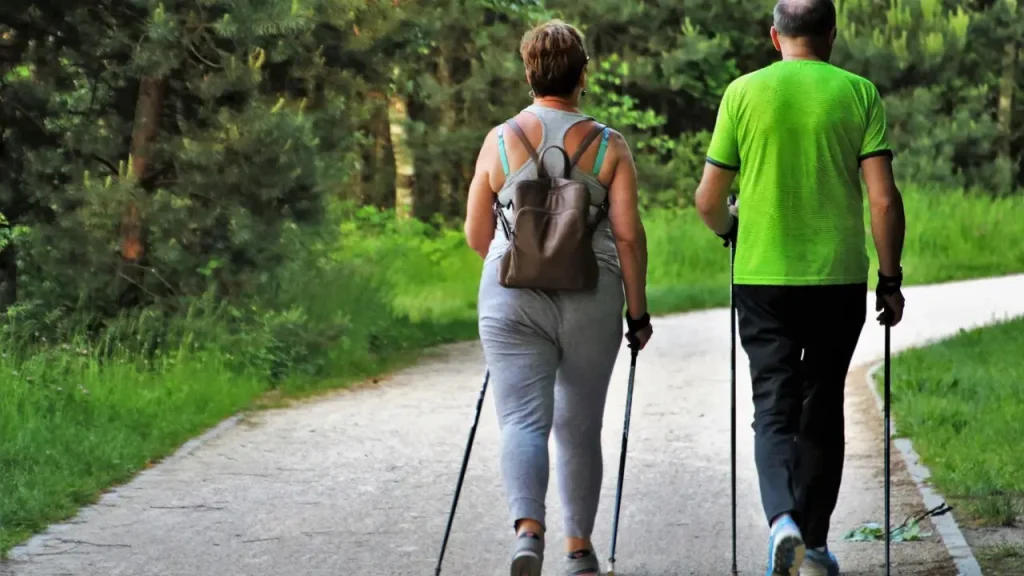
Aim for 10–20 minutes of comfortable walking on five days each week.
If that is too much initially, start with a shorter period and build gradually.
You can split your walking into two shorter sessions.
For example:
10 minutes in the morning
10 minutes later in the day
That still counts.
Strength
Complete two short full-body sessions each week.
Each session can take around 10–15 minutes.
Start with one set of each exercise.
Simple Home Strength Session
1. Sit-to-stand from a sturdy chair
5–10 repetitions
2. Wall push-up
5–10 repetitions
3. Hip hinge
5–10 repetitions
4. Standing row with a resistance band
5–10 repetitions
5. Supported calf raise
5–10 repetitions
Rest when needed.
The objective is to learn the movements.
Do not train to exhaustion.
Everyday Movement
Choose three opportunities each day to move for a few minutes.
For example:
- walk around the house
- stand up from your desk
- take a short stroll after a meal
- do a household task
- walk while talking on the phone
Food
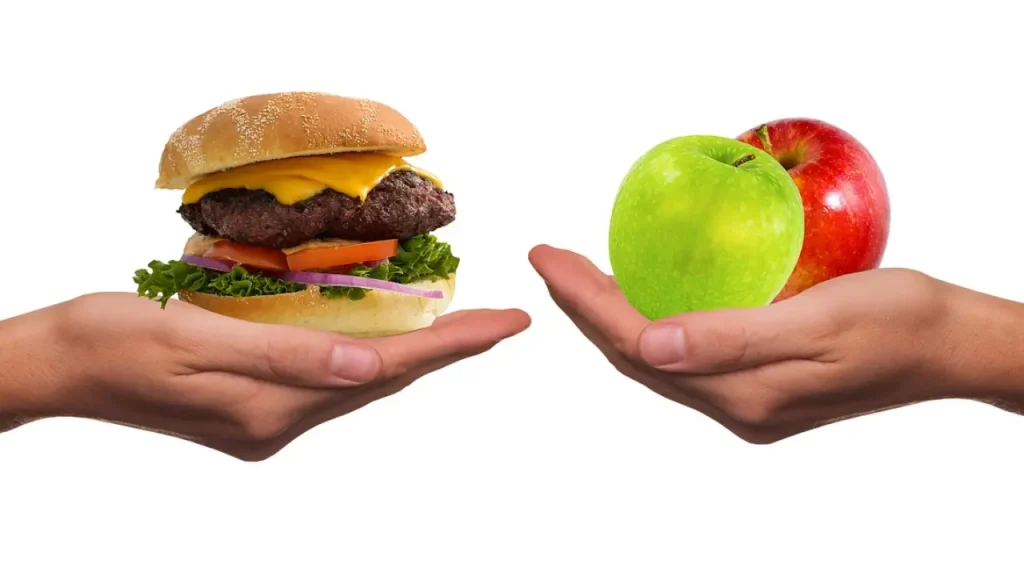
Do not overhaul everything at once.
Make these three changes:
Eat vegetables with at least two meals each day.
Include a sensible source of protein at each main meal.
Reduce one habitual high-calorie snack or drink.
That’s enough for Week 1.
Weeks 3–4: Increase the Volume
You should now have a routine.
It is time to make it slightly more challenging.
Walking
Aim for 20–25 minutes on five days each week.
One of those sessions can be slightly longer if you feel comfortable.
Keep the pace brisk enough to feel that you are moving with purpose, but not so hard that you cannot speak in short sentences.
Strength
Move to two sessions per week with one or two sets of each exercise.
Use the same movements.
If an exercise feels easy, add a few repetitions rather than making a dramatic jump in resistance.
Everyday Movement
Continue your short movement breaks.
Add one additional walk of 5–10 minutes on days when you have been sitting for long periods.
Food
Make three more improvements:
Choose water or another low-calorie drink more often.
Reduce highly processed snack foods.
Make portions slightly more deliberate.
You do not need to eliminate favourite foods.
You are building a better pattern, not entering a food prison.
Weeks 5–6: Build Strength and Stamina
Now we start making the programme more substantial.
Walking
Aim for 25–30 minutes on five days each week.
If you enjoy another form of cardio, substitute cycling, swimming or another appropriate activity.
Strength
Complete two or three sessions per week.
Use one or two sets of:
- sit-to-stand or squat variation
- wall or incline push-up
- band or dumbbell row
- hip-hinge movement
- supported calf raise
- optional light shoulder exercise
Aim for around 8–12 controlled repetitions where appropriate.
The final repetitions should feel like work without sacrificing good technique.
Optional Progression
You can make an exercise harder by:
- adding a few repetitions
- slowing the movement
- increasing resistance slightly
- using a more challenging version
- adding another set
Change only one thing at a time.
Food
Start paying more attention to the foods that contribute the most calories without leaving you particularly satisfied.
Common examples include:
- sugary drinks
- alcohol
- large portions
- frequent evening snacks
- takeaway meals
- calorie-dense desserts
You do not have to eliminate them.
You need to make them less automatic.
Weeks 7–8: Make It Part of Your Lifestyle
By now the routine should start feeling familiar.
That is good.
The goal is not to keep making exercise harder forever.
The goal is to make healthy activity normal.
Walking
Aim for 30 minutes on five days each week or an equivalent amount of activity.
One day can be a longer enjoyable activity.
Strength
Continue two or three sessions each week.
Progress the resistance gradually where appropriate.
Optional Intervals
If you already have a reasonable base of fitness and your health allows it, you can add a few short periods of faster walking during one or two sessions.
For example:
2 minutes comfortable
30 seconds slightly faster
Repeat several times.
This is optional.
You do not need HIIT to succeed.
Food
At this stage, start thinking about your entire day rather than individual foods.
A useful pattern is:
Protein + vegetables or fruit + sensible carbohydrate + healthy fat in appropriate portions.
For example:
Breakfast
Yoghurt with fruit and oats.
Lunch
Chicken, tuna, eggs, beans or another protein source with vegetables and a sensible carbohydrate portion.
Dinner
Fish, poultry, lean meat, beans or another protein source with plenty of vegetables and a sensible portion of potato, rice or another carbohydrate.
Snack
Only if genuinely useful rather than automatic.
Weeks 9–10: Consolidate
This is where many short-term programmes make a mistake.
They become more extreme.
We are going to do the opposite.
We are going to make the plan more sustainable.
Weekly Target
Aim for:
150+ minutes of moderate aerobic activity across the week
2–3 strength sessions
Regular movement throughout the day
These targets align with widely used physical-activity recommendations for adults. If you are starting from a much lower level, it is fine to build towards them progressively.
Food
Choose the three habits that have made the greatest difference so far.
Keep them.
For example:
Fewer evening snacks
Smaller portions
More vegetables
Or:
Less alcohol
More protein
More meals prepared at home
Do not keep adding rules just because the programme says Week 9.
Weeks 11–12: Turn the Plan Into Your Normal Life
The final two weeks are not the finish line.
They are the transition to maintenance.
Activity
Keep your walking and strength routine.
If you enjoy your current programme, there is no need to keep making it harder.
Food
Keep the eating pattern that you can realistically live with.
There should be room for birthdays, holidays, restaurants and enjoyable foods.
The objective is to return to your normal routine afterwards.
Review
At the end of Week 12, compare:
Starting weight
Current weight
Starting waist
Current waist
Average activity
Strength
Fitness
Eating habits
Energy
How you feel
Then ask:
What worked?
What did not work?
What am I willing to continue?
That becomes your next 12-week plan.
The Simple Home Strength Routine
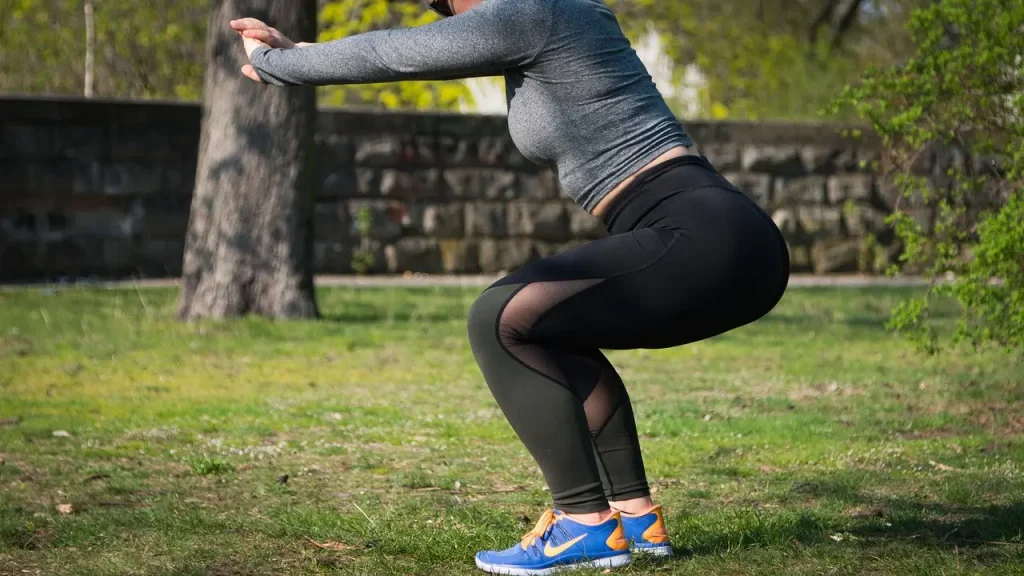
You do not need a gym for this programme.
A sturdy chair, a wall and optionally a resistance band or pair of light dumbbells are enough.
Exercise 1: Sit-to-Stand
Sit on a sturdy chair.
Stand up under control.
Sit down slowly.
Repeat.
This trains your legs and helps everyday function.
Exercise 2: Wall Push-Up
Stand facing a wall.
Place your hands on the wall.
Bend your elbows and bring your chest closer.
Push back to the starting position.
As you become stronger, you can progress to an incline surface.
Exercise 3: Hip Hinge
Stand with feet comfortable apart.
Keep your back neutral.
Push your hips backwards.
Return to standing.
This teaches a useful movement pattern for the hips and helps strengthen the posterior chain.
Exercise 4: Resistance-Band Row
Anchor the band securely.
Pull the band towards your torso while keeping your shoulders controlled.
Return slowly.
This trains your upper back.
If you do not have a band, another safe pulling exercise can be substituted.
Exercise 5: Supported Calf Raise
Hold a sturdy surface for balance.
Rise onto your toes.
Lower slowly.
Repeat.
Exercise 6: Optional Dumbbell Press
If you have suitable light dumbbells and the movement is comfortable, a simple pressing exercise can be added.
If not, the programme works perfectly well without it.
How Hard Should the Strength Exercises Feel?
Use a sensible effort level.
You should feel that the muscles are working.
You should not need to hold your breath, swing the weights or sacrifice technique.
A useful principle is:
Finish the set feeling that you could probably have done a few more controlled repetitions.
As the exercises become easier, gradually increase repetitions or resistance.
The Food Rules
You asked for a plan that does not require special products.
So here are the rules.
Rule 1: Eat Mostly Ordinary Food
Build your diet around foods such as:
- vegetables
- fruit
- potatoes
- oats
- rice
- wholegrain foods
- beans
- lentils
- eggs
- fish
- poultry
- lean meat
- yoghurt
- nuts and seeds in sensible portions
No special “fat-burning” products are required.
Rule 2: Include Protein Regularly
Include a sensible protein source at meals.
This supports muscle maintenance and can help meals feel more satisfying.
Rule 3: Increase Fibre
Vegetables, fruit, beans, lentils, oats and wholegrain foods are useful choices.
Rule 4: Watch Portions
Healthy foods still contain energy.
You do not need to weigh every gram.
Simply become more aware of portion size.
Rule 5: Reduce Liquid Calories
Sugary drinks and alcohol can add substantial calories without providing much fullness.
Reducing them can be one of the simplest improvements available.
Rule 6: Don’t Create a Forbidden-Food List
You do not need to ban chocolate, dessert, bread, potatoes or other enjoyable foods.
The overall pattern matters.
Rule 7: Avoid the “I’ve Blown It” Trap
One large meal does not have to become a large weekend.
Return to your normal routine at the next opportunity.
Do You Need to Count Calories?
Not necessarily.
Calorie tracking can be useful for some people.
It can also become unnecessarily complicated.
Start by improving:
- portions
- food quality
- protein
- fibre
- snacks
- drinks
- meal consistency
If progress stalls, more detailed tracking can be introduced.
You do not need to begin by turning every meal into a maths problem.
What About Fasting?
This programme does not require fasting.
Some people use time-restricted eating successfully.
Others find it makes them overly hungry.
There is no requirement to fast in order to reduce visceral fat.
If fasting fits your lifestyle and is safe for you, it can be considered as one possible eating pattern.
But this plan does not depend on it.
What About Alcohol?
Alcohol deserves an honest look.
It contributes calories.
It can also make food choices less deliberate and reduce inhibition around snacking.
You do not necessarily have to eliminate it.
But if reducing visceral fat is an important goal, ask yourself:
How often do I drink?
How much do I usually drink?
Does drinking lead to additional food?
Could I reduce the frequency or quantity?
A small reduction can be meaningful if alcohol is currently contributing a lot of energy.
How to Track Your 12-Week Journey
Your progress chart does not need to be complicated.
Once a Week
Record:
Weight
Waist
Average daily steps or activity
Strength sessions completed
Walking/cardio sessions
Sleep
Overall energy
Once Every Four Weeks
Take a broader look at:
Weight trend
Waist trend
Fitness
Strength
Clothing fit
Eating habits
How sustainable the routine feels
Don’t judge the programme by one week’s result.
Look at the direction over several weeks.
Your Weekly Progress Chart
| Week | Weight | Waist | Walking/Cardio | Strength | Eating Habits | Energy |
|---|---|---|---|---|---|---|
| Start | ||||||
| 1 | ||||||
| 2 | ||||||
| 3 | ||||||
| 4 | ||||||
| 5 | ||||||
| 6 | ||||||
| 7 | ||||||
| 8 | ||||||
| 9 | ||||||
| 10 | ||||||
| 11 | ||||||
| 12 |
A Simple Weekly Checklist
At the end of each week, tick these off:
- I completed my planned walks/cardio.
- I completed at least two strength sessions.
- I moved regularly during the day.
- I ate vegetables regularly.
- I included protein in my main meals.
- I kept portions reasonably controlled.
- I limited unnecessary snacking.
- I kept liquid calories sensible.
- I got reasonable sleep.
- I measured progress without obsessing over it.
You do not need ten ticks every week.
A difficult week is not a failed programme.
What to Do If Progress Stalls
If your weight and waist have not changed for several weeks, don’t immediately slash your food intake.
Ask:
1. Has my activity dropped?
Maybe your walking has gradually declined.
2. Have portions increased?
Small changes can accumulate.
3. Are weekends very different?
A structured weekday followed by a high-calorie weekend can cancel much of the weekly deficit.
4. Has alcohol increased?
Review the numbers honestly.
5. Am I snacking more?
Especially in the evening.
6. Am I sleeping badly?
Poor sleep can make healthy eating and activity harder.
7. Am I being patient enough?
A few days is not a plateau.
Look at several weeks.
Only make changes when the evidence suggests you need them.
What If the Scale Goes Up?
Don’t panic.
Body weight can fluctuate because of:
- water
- salt
- carbohydrate intake
- food volume
- digestion
- exercise
- other normal factors
A single higher reading does not tell you that you gained a meaningful amount of body fat.
Look at the trend.
What If You Miss a Workout?
Nothing dramatic happens.
Do the next scheduled session.
Do not try to punish yourself with an extra-long workout.
One missed session is simply one missed session.
What If You Have a Bad Eating Day?
Do not turn one meal into a weekend.
Do not starve yourself the next day.
Return to your normal routine.
This is one of the most important skills in the entire programme.
The 12-Week Rules
If you remember nothing else, remember these ten rules:
1. Start gently.
2. Walk regularly.
3. Strength-train at least twice a week.
4. Move throughout the day.
5. Eat mostly ordinary, nutritious food.
6. Include protein and fibre.
7. Keep portions sensible.
8. Limit excess alcohol and liquid calories.
9. Track trends, not daily drama.
10. Keep going after imperfect days.
What Success Should Look Like After 12 Weeks
Success is not necessarily a particular number on the scales.
A successful 12 weeks might mean:
- a smaller waist
- better fitness
- greater strength
- more daily movement
- healthier eating habits
- fewer evening snacks
- better control of portions
- less alcohol
- better confidence
- more consistency
- a routine you genuinely intend to continue
Those changes matter.
They also give you something more valuable than a temporary result:
a repeatable lifestyle.
The Bottom Line
You do not need to buy anything special to begin reducing visceral fat.
You do not need a miracle food.
You do not need a detox.
You do not need a gym.
You do not need to fast.
You do not need to do hundreds of abdominal exercises.
You need a sustainable combination of:
better food choices
sensible portions
regular walking or other aerobic activity
strength training
everyday movement
adequate recovery
consistency
This 12-week programme is deliberately simple because complicated programmes are easy to abandon.
Start where you are.
Build gradually.
Track what happens.
Adjust when necessary.
Then keep the parts that work for you.
The real objective is not to complete 12 weeks.
It is to make Week 13 look surprisingly similar to Week 12.
Frequently Asked Questions
Do I need special foods or supplements?
No. Ordinary nutritious foods are enough. Products marketed specifically as visceral-fat burners are not required.
Do I need a gym?
No. Walking and home resistance training can form the basis of the programme.
Do I need to count calories?
No. You can begin with portions, food quality, protein, fibre, snacks and drinks. More detailed calorie tracking can be added later if useful.
Do I need to fast?
No. Fasting is optional and not a requirement for reducing visceral fat.
How much walking should I do?
Build gradually. The programme starts below standard adult activity targets and works towards roughly 150 minutes or more of moderate activity per week.
How many strength sessions should I do?
Aim for at least two sessions per week. Three can be useful if recovery is good and the programme is appropriate for you.
Can I do the strength exercises without equipment?
Yes. The basic programme can be done using a sturdy chair, a wall and your bodyweight. Bands or light dumbbells are optional.
Can I lose visceral fat even if my weight doesn’t change much?
It is possible for exercise and changes in body composition to reduce visceral fat even when scale weight changes relatively little. This is why waist and fitness should also be tracked.
How quickly will I lose visceral fat?
There is no universal timetable. The aim is steady progress rather than a dramatic short-term result.
What should I do after the 12 weeks?
Keep the habits that worked. Review your results, adjust the plan and create another 12-week phase rather than returning to the old routine.
Suggested Further Reading:
- Visceral Fat: What It Is, Why It Matters and How to Reduce It
- How to Track Your Weight Loss Progress: More Than Just the Scales
- Do You Need a Gym to Lose Weight?
- Can You Really Boost Your Metabolism to Lose Weight?
- Why Sustainable Weight Loss Beats Short-Term Dieting
- Lose Weight Without Starving Yourself
- 7 Ways to Reduce Your Appetite
- How to Reward Yourself for Weight Loss Without Using Food
Medical Disclaimer
This programme is for general educational purposes and is not a substitute for individual medical or exercise advice. If you have a medical condition, significant mobility limitation, chest pain, unexplained breathlessness, uncontrolled blood pressure, recent injury or another concern that could affect exercise safety, speak with an appropriate healthcare professional before starting.
Do not use the programme as a substitute for medical treatment.