
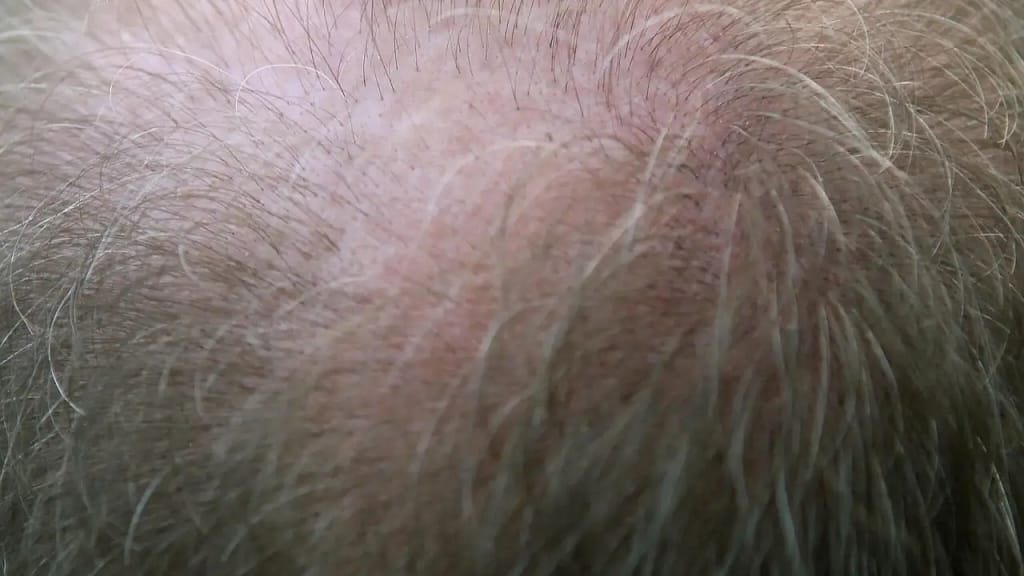
Hair loss can be surprisingly upsetting. A few extra hairs in the shower may be normal, while noticeable thinning, bald patches, or sudden shedding can have many causes.
That is why the first question should not be “What product should I buy?”
It should be:
Why am I losing my hair?
Normal hair shedding is part of everyday life. The NHS says it is normal to lose around 50 to 100 hairs a day, often without noticing. Some types of are temporary, while others are longer-lasting and may need treatment. NHS:
The American Academy of Dermatology makes the same central point: it has many causes, and identifying the cause is the key to choosing the right treatment. AAD: Hair loss — Who gets and causes
This guide explains the most common types, what can cause them, which treatments have evidence behind them, where supplements fit in, and when it is sensible to see a doctor.
How Much Hair Loss Is Normal?
Hair does not grow continuously.
Each hair follicle goes through a cycle that includes growth, a transition period and a resting period. Eventually, the hair is shed, and a new growth cycle can begin.
That means finding loose hairs on your brush, pillow or clothes is not automatically a sign of a problem.
The NHS estimates that losing around 50 to 100 hairs a day can be normal.
What matters more is a noticeable change.
For example, you may see:
- overall thinning
- a widening part
- a receding hairline
- a bald patch
- more hair coming out in clumps
- a change in the thickness or texture of your hair
Sudden or unexplained changes are worth discussing with a healthcare professional.
What Causes Hair Loss?
There are many possible causes.
Common examples include hereditary loss, illness, stress, rapid weight loss, iron deficiency, hormonal changes, some medicines, scalp conditions and certain immune disorders.
Some causes are temporary, and hair can regrow once the underlying problem is addressed.
Others can cause progressive or permanent loss if treatment is delayed.
That is why there is no single “best hair-loss remedy”.
The right approach depends on the diagnosis.
Male Pattern Hair Loss
Male pattern hair loss is the most common form of hereditary loss.
It typically develops gradually, often beginning with a receding hairline or thinning at the crown.
The follicles gradually shrink and produce thinner hairs.
Genetics strongly influences the condition, and it can begin relatively early in adulthood.
It is not caused simply by poor hair care, poor scalp circulation, or a failure to “detox” the body.
Treatment can slow progression and, in some people, improve hair growth.
The NHS identifies finasteride and minoxidil as the main treatments for male pattern baldness.
Female Pattern Hair Loss
Female pattern loss is also hereditary and is the most common type of persistent hair loss in women.
A typical early sign is gradual thinning over the top of the scalp or a widening part rather than a receding hairline.
The condition can become more noticeable with age and around menopause.
It can also be confused with other causes of hair loss, which is another reason diagnosis matters.
Minoxidil is a recognised treatment for female pattern loss. The American Academy of Dermatology notes that 2% and 5% minoxidil products are approved for this purpose and that treatment needs to be continued to maintain benefits. AAD: Female pattern hair loss
Women should speak with a doctor or dermatologist about diagnosis and suitable treatment, especially when hair loss is sudden or accompanied by other symptoms.
Hair Shedding After Illness, Stress or Weight Loss
Not all hair loss is caused by hereditary pattern baldness.
Some people experience a noticeable increase in shedding after a significant physical or emotional stress.
Possible triggers include:
- an illness
- surgery
- major stress
- rapid weight loss
- pregnancy or childbirth
- some medications
The NHS lists illness, stress, cancer treatment, weight loss and iron deficiency among possible causes of temporary hair loss.
This type of shedding can be confusing because it may not begin immediately after the triggering event.
Hair grows in cycles, so the change may become noticeable later.
Hair Loss After Pregnancy
Hair shedding after childbirth is common.
The NHS notes that women may lose more hair than usual up to around three months after giving birth.
It can look dramatic, but it does not automatically mean permanent baldness.
Hormonal changes can affect the hair-growth cycle, and the excess shedding often settles as the cycle returns towards normal.
Discuss persistent or severe hair loss after pregnancy with a healthcare professional, especially if you have other symptoms or concerns about nutrition or thyroid function.
Alopecia Areata
Alopecia areata is different from ordinary pattern hair loss.
It is an immune-mediated condition in which the immune system attacks hair follicles.
It often causes one or more smooth, round bald patches, although more extensive hair loss can occur.
Some people may regrow hair without treatment, while others may need it.
The American Academy of Dermatology describes a range of possible treatments depending on the person’s age, the amount of hair lost and how long the condition has been present. AAD: Alopecia areata
Because several conditions can cause patchy hair loss, assess unexplained bald patches rather than treating them with random hair-growth products.
Traction Alopecia
Repeated pulling on the hair can cause traction alopecia.
Tight ponytails, buns, braids, cornrows, extensions and other styles that place continual tension on the scalp can contribute.
Early traction alopecia may improve when you remove the source of tension.
Long-term traction can damage follicles and cause permanent hair loss.
This is one area where simple prevention really can make a difference: avoid hairstyles that cause persistent pain or pulling.
Scalp Conditions and Infections
Scalp problems can sometimes cause hair loss.
Scalp infections can lead to scaling, inflammation and patchy loss.
Inflammatory conditions can also damage follicles.
Scarring forms of alopecia are particularly important because once a follicle has been destroyed, it cannot produce hair again. Early recognition may help prevent further permanent loss.
Persistent scalp inflammation, pain, scaling or scarring therefore deserves professional assessment.
Thyroid Problems and Other Medical Conditions
Thyroid disease can cause thinning hair or increased shedding.
Other medical conditions can also affect the hair-growth cycle.
If hair loss occurs alongside symptoms such as unexplained fatigue, weight changes, changes in menstrual cycles, skin changes or other new health problems, it is worth discussing the combination with a doctor.
Hair loss can sometimes be the clue that prompts investigation of an underlying condition.
Nutritional Deficiencies and Hair Loss
Your hair follicles need adequate nutrition to function normally.
The American Academy of Dermatology identifies deficiencies of iron, protein, zinc or biotin among possible causes of hair loss.
But that does not mean taking a “hair vitamin” is a good default treatment.
The correct approach is to establish whether a deficiency actually exists.
If you have a nutritional deficiency, correcting it can help.
If you are not deficient, taking extra amounts is not automatically useful.
In fact, excessive amounts of some nutrients can cause problems of their own.
Does Biotin Help Hair Growth?
Biotin deserves special attention because it is included in so many hair supplements.
Biotin deficiency can cause hair loss.
But biotin deficiency is uncommon, and there is not good evidence that taking high-dose biotin makes hair grow better in people who already get enough.
That is why hair-loss treatment should start with finding the cause rather than assuming everyone with thinning hair needs biotin.
High-dose biotin can also interfere with some laboratory tests, which is another reason to tell your healthcare professional about any supplements you take.
Should You Take Hair Supplements?
Be careful.
The American Academy of Dermatology warns that taking supplements to regrow hair may sound appealing, but too much of certain nutrients can actually worsen hair loss.
A supplement can make sense when a clinician has identified a deficiency, or there is a specific nutritional reason for using one.
Buying a large collection of hair-growth supplements simply because the packaging promises thicker hair is a very different proposition.
“Natural” does not mean “proven”.
And more vitamins do not necessarily mean more hair.
What About Diet?
A balanced diet supports normal hair growth because hair follicles, like the rest of the body, need adequate energy and nutrients.
Useful foundations include:
- adequate protein
- iron-rich foods
- a variety of fruit and vegetables
- whole grains and other fibre-rich foods
- appropriate sources of healthy fats
- enough overall food to meet your body’s needs
Severely restrictive diets and rapid weight loss can contribute to hair shedding.
That does not mean a particular “hair-loss diet” can reverse hereditary baldness.
Good nutrition supports healthy hair, but it is not a universal treatment for every type of hair loss.
Does Stress Cause Hair Loss?
Significant physical or emotional stress can contribute to temporary shedding in some people.
But stress doesn’t explain every case of thinning hair.
People can also experience hereditary hair loss, thyroid problems, nutritional deficiencies, medication-related loss and other conditions at the same time.
So “just relax” is not useful advice for persistent or unexplained hair loss.
Reducing stress is worthwhile for general health, but it should not replace finding the cause of the hair loss.
Does Scalp Massage Improve Hair Growth?
Scalp massage is popular because it is simple and inexpensive.
Gentle massage can feel pleasant and may help with relaxation.
However, the evidence is not strong enough to recommend scalp massage as a proven treatment for common forms of hair loss.
The old idea that hair loss is mainly caused by poor blood circulation to the scalp should not be presented as established fact.
Hair follicles have a complex biology, and the cause of hair loss matters much more than trying to force more blood into the scalp.
What About Cold Showers or Hot-and-Cold Hydrotherapy?
No strong evidence shows that repeatedly alternating hot and cold water on the scalp stops hair loss.
No established mechanism shows how a home hydrotherapy routine can reverse hereditary hair loss.
A comfortable shower is perfectly fine.
You do not need a complicated temperature ritual to protect your hair.
What About Hair Care?
Good hair care cannot cure hereditary hair loss, but it can help reduce avoidable damage.
Try to avoid:
- very tight hairstyles
- excessive heat
- harsh chemical treatments
- rough handling of wet hair
- repeated pulling or brushing that causes breakage
These steps help protect the hair shaft and scalp.
They should not, however, be confused with treatments that change the underlying biology of hair loss.
Minoxidil: Does It Work?
Minoxidil is one of the better-established treatments for pattern hair loss.
It is available in topical forms and can reduce hair loss and stimulate regrowth in some people.
The response varies.
It also takes time.
The American Academy of Dermatology notes that some men may need six to twelve months before the effect is clear.
For female pattern hair loss, continuous treatment is also needed to maintain benefits.
Minoxidil can irritate the scalp, and temporary increased shedding can occur when treatment begins.
It is not a cure that permanently changes the underlying tendency to lose hair.
If it works, the benefit generally depends on continued use.
Finasteride: What Should You Know?
Finasteride is a prescription medicine used for male pattern hair loss.
It works by reducing the conversion of testosterone to dihydrotestosterone (DHT), a hormone that shrinks susceptible hair follicles.
The NHS lists finasteride as one of the main treatments for male pattern baldness.
Finasteride is not suitable for everyone and can cause side effects.
Women who are pregnant or may become pregnant should not handle crushed or broken finasteride tablets because the medicine can harm a developing male fetus.
This is a medicine that should be discussed with a doctor, not treated like an ordinary supplement.
Can Hair Transplants Work?
Hair transplantation can provide a longer-lasting cosmetic solution for some people with suitable types of permanent hair loss.
The procedure moves hair follicles from one part of the scalp to another.
Results depend on the cause of hair loss, the quality and availability of donor hair, age, future hair loss, and the clinician’s skill.
A transplant does not stop hereditary hair loss elsewhere on the scalp.
That means some people still need medical treatment to preserve their existing hair.
What About Hair Clinics?
Commercial hair clinics can offer useful services, but it is wise to establish the medical cause of your hair loss first.
The NHS specifically advises seeing a GP before going to a commercial hair clinic.
This matters because a commercial clinic may focus on selling a procedure, while a medical assessment starts with what is actually causing the loss.
Ask what diagnosis supports the proposed treatment, what evidence exists, what it costs, what the risks are and what happens if it does not work.
Be particularly cautious about guarantees.
Are Hair-Loss Treatments Scams?
Some are genuine.
Some are expensive but have limited evidence.
Some are marketed with claims that go far beyond the research.
The sensible approach is not to label every non-medical product a scam.
Instead, ask:
What type of hair loss is this treatment designed to treat?
What evidence supports it?
How large were the studies?
Did the research measure actual hair growth or only a laboratory marker?
How long did the results last?
What are the risks and costs?
A serious treatment provider should be comfortable answering those questions.
When Should You See a Doctor?
See a GP or other appropriate healthcare professional if you are worried about hair loss.
You should be particularly prompt about assessment if you have:
- sudden or rapid hair loss
- clearly defined bald patches
- eyebrow or eyelash loss
- scalp pain, redness, scaling or scarring
- hair loss alongside other unexplained symptoms
- hair loss after starting a medicine
- significant hair loss in a child
- concern that an eating pattern or weight loss may have caused nutritional problems
The NHS specifically recommends seeing a GP if you are worried about hair loss and advises doing this before considering a commercial hair clinic.
What Happens During an Assessment?
The first step is usually a careful history and examination.
A doctor may ask:
- when the hair loss began
- whether it was sudden or gradual
- whether anyone else in your family has similar hair loss
- whether you recently had an illness or major stress
- whether your diet or weight has changed
- what medicines and supplements you take
- whether you have scalp symptoms
- whether you have other new health problems
Depending on the pattern and suspected cause, blood tests may sometimes be appropriate.
The American Academy of Dermatology notes that testing may be used to look for conditions such as thyroid disease and nutritional problems when the clinical picture suggests it.
What Should You Not Do?
Avoid jumping from one internet remedy to another.
Do not assume that:
hair loss = biotin deficiency
hair loss = poor circulation
hair loss = toxins
hair loss = a bad shampoo
hair loss = a lack of one “superfood”
These explanations may sound simple, but hair loss is not a single condition.
The more useful question is always:
What type of hair loss do I have, and what is causing it?
Five Practical Rules for Hair Loss
Do not panic about a few loose hairs. Some shedding is normal.
Do not assume every hair-loss problem is nutritional. Deficiencies are only one possible cause.
Do not rely on supplements before establishing a reason to use them.
Do not delay medical assessment if hair loss is sudden, patchy, painful or accompanied by other symptoms.
Do not pay for expensive treatment without asking what diagnosis it is intended to treat and what evidence supports it.
The Bigger Picture
Hair loss is not one condition.
For some people, it is a normal part of ageing.
For others, it reflects hereditary pattern hair loss, a temporary change in the hair-growth cycle, a nutritional deficiency, an immune condition, a scalp problem, hormonal changes, medication or another medical issue.
That is why the old-fashioned advice to simply “take more vitamins”, massage your scalp or change your shampoo is so unsatisfying.
Sometimes a simple change is enough.
Sometimes treatment with minoxidil or another medical option can slow or improve hair loss.
And sometimes the most important treatment is finding an underlying condition that needs attention.
The good news is that there is often something useful you can do.
The key is to start with the cause, not the marketing.
If you are worried about hair loss, get it assessed before spending money on commercial treatment programmes.
And remember that hair is only one part of health.
A varied diet, sensible hair care, regular physical activity, adequate sleep and appropriate medical care are much more useful foundations than chasing the latest “miracle” hair product.
For more about nutrition and deficiencies, see Nutrition Terms Explained: RDA, DRI, EAR, AI and UL.
For practical guidance on balanced eating, see Balanced Diet: The Evidence-Based Guide to Healthy Eating.
Medical Disclaimer
This information is provided for general educational purposes only. It is not intended to diagnose, treat or prevent any medical condition and should not be considered a substitute for advice from a qualified healthcare professional.
Hair loss can have many different causes, including medical conditions and medication effects. Diagnosis may require a clinical examination and, in some cases, tests.
Medicines such as minoxidil and finasteride have potential side effects and are not appropriate for everyone. Speak with a doctor, pharmacist or dermatologist before starting or changing treatment, particularly during pregnancy, when planning pregnancy, while breastfeeding, or when taking other medicines.
Do not use this article as a substitute for individual medical assessment or professional guidance.