
There are countless conflicting reports about what constitutes a healthy, balanced diet.
One week carbohydrates are supposedly the problem. The next week fat is the culprit. Breakfast is essential, then intermittent fasting becomes the answer. One expert says you should eat three meals a day, another recommends two.
The reality is considerably less confusing.
When you look beyond headlines, diet trends and social-media nutrition advice, there is broad agreement among major health organisations about the fundamentals of healthy eating.
This fact sheet separates the well-established principles from the areas where there is genuine debate, so you can make sensible decisions based on evidence rather than fashion.
What Does a Balanced Diet Actually Mean?
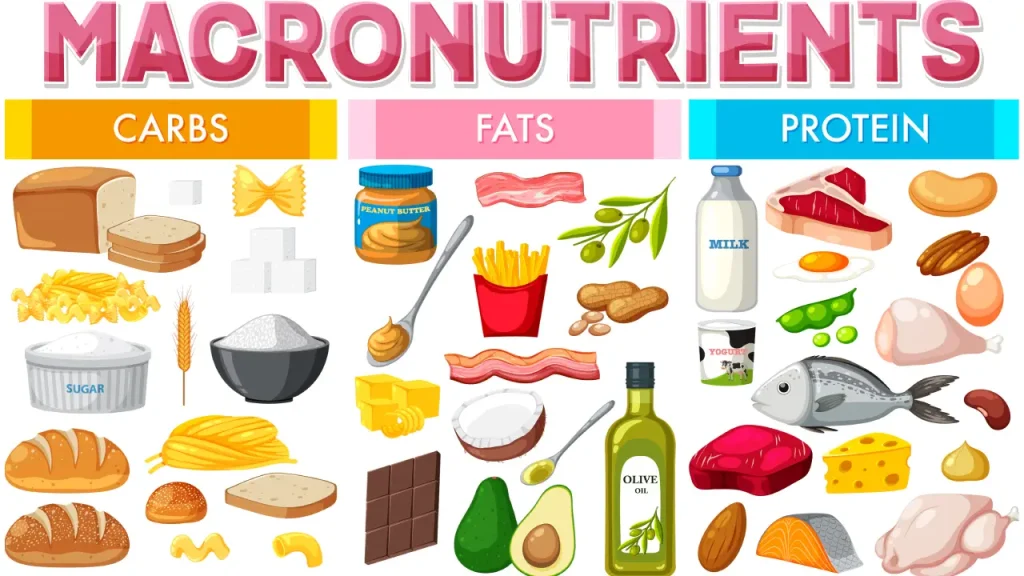
A balanced diet provides your body with the nutrients and energy it needs while maintaining an appropriate overall balance between different types of food.
The four basic principles are adequacy, balance, moderation and variety.
A balanced diet should provide adequate amounts of:
- Protein
- Carbohydrates
- Fat
- Fibre
- Vitamins and minerals
- Fluids
Importantly, balance does not mean that every individual meal has to be perfect.
A healthy diet is better viewed as a pattern that works across an entire day or week rather than something that requires every plate to contain mathematically perfect proportions.
Vegetables and Fruit: The Foundation of a Healthy Balanced Diet
This is one of the areas where the evidence is particularly strong.
The World Health Organization recommends at least 400 grams of fruit and vegetables per day, equivalent to roughly five portions.
Vegetables deserve particular attention because they tend to provide substantial amounts of fibre, vitamins, minerals and beneficial plant compounds without contributing large amounts of calories.
Good choices include:
- Broccoli
- Cabbage
- Spinach
- Carrots
- Tomatoes
- Peppers
- Onions
- Peas
- Cauliflower
- Green beans
Fruit is also highly nutritious and can form an important part of a balanced diet.
There is no need to focus exclusively on exotic “superfoods”. Ordinary foods such as apples, oranges, berries, carrots and broccoli can provide an enormous amount of nutritional value.
Frozen and canned vegetables can also count. Where appropriate, choose varieties without excessive added salt or sugar.
Protein: Essential for Health and Muscle
Protein is essential for building and maintaining muscle and other tissues, as well as supporting many biological functions.
Good sources include:
- Fish
- Eggs
- Chicken and other poultry
- Lean meat
- Greek yoghurt
- Cottage cheese
- Milk
- Beans
- Lentils
- Chickpeas
- Nuts and seeds
- Soy foods
Protein becomes particularly important as we get older because maintaining muscle mass and strength becomes increasingly important for mobility, independence and healthy ageing.
A useful practical rule is to include a worthwhile source of protein with each main meal.
More protein is not automatically better, however. The objective is to consume an adequate amount as part of an overall balanced diet.
Carbohydrates Are Not the Enemy
Carbohydrates have acquired an undeserved reputation in some areas of popular nutrition.
Carbohydrates are an important source of energy and can form a substantial part of a healthy diet.
The more useful question is not:
“Should I eat carbohydrates?”
It is:
“Which carbohydrates should I eat, and how much?”
Better carbohydrate choices include:
- Oats
- Potatoes
- Wholegrain bread
- Brown or wholegrain rice
- Wholewheat pasta
- Beans
- Lentils
- Chickpeas
- Fruit
- Vegetables
Foods such as sweets, sugary drinks, cakes and many highly refined snack foods are also sources of carbohydrate, but they provide considerably less nutritional value.
The key lesson is that carbohydrate quality matters.
A boiled or baked potato is not nutritionally equivalent to a packet of crisps simply because both contain carbohydrate.
Fat: Quality Matters More Than Elimination
Fat is an essential nutrient.
The body needs fat for cell membranes, hormone production and absorption of fat-soluble vitamins.
Rather than attempting to eliminate fat, the emphasis should generally be on choosing healthier sources.
Fats worth favouring include:
- Olive oil
- Rapeseed oil
- Nuts
- Seeds
- Avocado
- Oily fish
Foods high in saturated fat should generally be limited, particularly when they displace healthier fats.
Examples include:
- Butter
- Ghee
- Fatty meats
- Processed meats
- Many pastries and cakes
The old idea that “low fat automatically means healthy” is simply too simplistic.
A food can be low in fat and still be highly processed, high in sugar or otherwise nutritionally poor.
Fibre Deserves More Attention in a Balanced Diet
Fibre is one of the less glamorous nutrients, but it is extremely important.
It supports normal bowel function and is associated with a healthier overall dietary pattern.
Good sources include:
- Vegetables
- Fruit
- Beans
- Lentils
- Chickpeas
- Whole grains
- Nuts
- Seeds
- Oats
WHO recommends at least 25 grams of naturally occurring dietary fibre per day for people over the age of 10.
One of the easiest ways to increase fibre is simply to make vegetables, legumes and whole or less-refined grains regular parts of your diet.
Sugar: Whole Fruit Is Not the Same as Added Sugar
This is another area where nutrition discussions frequently become confused.
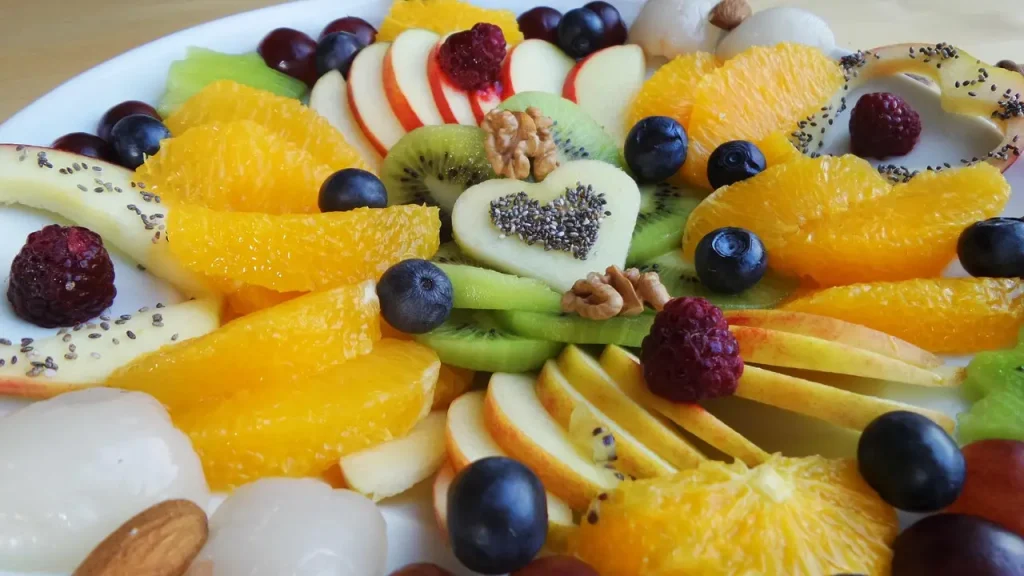
Whole fruit contains naturally occurring sugars, but it also contains water, fibre, vitamins, minerals and other beneficial compounds.
A piece of fruit is therefore not nutritionally equivalent to a sugary soft drink.
The bigger targets for reduction are foods and drinks containing large amounts of free or added sugar, including:
- Soft drinks
- Sweets
- Cakes
- Biscuits
- Sugary cereals
- Sweetened desserts
- Sugary sauces and drinks
WHO recommends keeping free sugars below 10% of total energy intake, with a target below 5% potentially providing additional benefits.
Salt: The Hidden Source You May Not Notice
WHO recommends limiting salt intake to less than approximately 5 grams per day.
Many people assume that most of their salt comes from the salt shaker.
In reality, substantial amounts can come from processed foods such as:
- Bread
- Cheese
- Processed meats
- Ready meals
- Packaged soups
- Sauces
- Stock cubes
- Savoury snacks
This is another reason why basing your diet on minimally processed foods can make healthy eating easier.
What About Processed Food in a Balanced Diet?
The phrase “processed food” is often used as though it automatically means unhealthy.
It doesn’t.
Processing can be completely harmless or even beneficial.
Freezing vegetables is processing.
Canning beans is processing.
Pasteurising milk is processing.
Grinding grains into flour is processing.
The bigger concern is the frequent consumption of highly processed foods that are energy-dense and commonly contain substantial amounts of salt, free sugars or unhealthy fats.
So rather than asking:
“Is this food processed?”
Ask:
“What has been done to this food, and what does the finished product contain?”
That is a much more useful question.
Meat, Fish and Plant-Based Protein
A balanced diet does not require you to eliminate meat.
However, there is good reason to give more prominence to a wider range of protein sources, including:
- Fish
- Beans
- Lentils
- Chickpeas
- Nuts
- Seeds
Replacing some red or processed meat with fish or plant-based protein can be a sensible dietary improvement.
Processed meats such as sausages, bacon, ham and pâté are best kept relatively low.
This does not mean that meat is “bad”.
It means that meat does not have to dominate every meal.
Is Dairy Necessary?
Milk, yoghurt and cheese can provide useful amounts of protein, calcium and other nutrients.
They can certainly form part of a balanced diet.
However, dairy is not the only way to obtain these nutrients. People who do not consume dairy can use suitable alternatives, provided their overall diet supplies the nutrients they need.
Plain yoghurt and less-sweetened dairy products are generally more useful everyday choices than heavily sweetened dairy desserts.
Nuts and Seeds: Small Foods With Big Nutritional Value
Nuts and seeds provide a useful combination of:
- Protein
- Fibre
- Unsaturated fats
- Minerals
- Beneficial plant compounds
They are also energy-dense, however, so healthy does not mean unlimited.
A modest serving can be an excellent addition to a balanced diet.
Alcohol Is Not a Nutrient
Alcohol is sometimes discussed as though a small amount might automatically contribute to a healthy diet.
That is not a useful way to think about it.
There is no need to drink alcohol for nutritional reasons, and there is no compelling reason to start drinking because somebody claims that a particular alcoholic beverage has health benefits.
Alcohol can also contribute a significant number of calories.
The simplest way to think about alcohol is:
Pleasure, not nutrition.
Do You Need to Eat Breakfast in a Balanced Diet?
No.
Breakfast can be a perfectly good meal, but there is nothing magical about eating first thing in the morning.
Some people prefer breakfast.
Others are perfectly comfortable delaying their first meal.
The important issue is the overall pattern of food consumption rather than the simple fact that breakfast was or wasn’t eaten.
Do You Need to Eat Every Few Hours?
No.
Most healthy adults do not have a physiological requirement to eat every two or three hours.
Some people find regular meals useful for appetite control.
Others prefer fewer meals.
The best approach is the one that allows you to consistently consume a nutritious diet without routinely overeating.
Is Three Meals a Day the Correct Pattern?
There is no universally correct number of meals.
Two nutritious meals can be perfectly compatible with a healthy lifestyle.
So can three meals.
Even five meals can work for some people.
The important factors are the quality and quantity of the food, rather than simply the number of times you eat.
Are Calories Important in a Balanced Diet?
Yes.
This point sometimes becomes lost among discussions about “clean eating”, intermittent fasting and special diets.
You can eat entirely natural, minimally processed foods and still consume more energy than your body requires.
Likewise, you can lose weight while eating a nutritionally poor diet.
These are two separate issues.
Energy balance influences body weight.
Nutritional quality influences the quality of the diet.
A genuinely healthy diet needs both.
What About “Anti-Inflammatory” Foods in a Balanced Diet?
The underlying idea has merit, but the term is sometimes used far too loosely.
There is no magic food that switches inflammation off.
Instead, a dietary pattern built around vegetables, fruit, legumes, whole grains, nuts, fish and unsaturated fats, while limiting excessive sugar, unhealthy fats and highly processed foods, is broadly consistent with healthy dietary guidance.
The more useful concept is therefore not an “anti-inflammatory food”.
It is an overall anti-inflammatory dietary pattern.
Does Organic Food Make a Diet Healthy?
Organic food can be a personal preference, but it isn’t a prerequisite for healthy eating.
The nutritional priorities are considerably more important:
- Vegetables and fruit
- Adequate protein
- Fibre-rich foods
- Whole or minimally processed foods
- Healthy fats
- Appropriate calorie intake
- Limited free sugars
- Limited excess salt
A person eating an excellent conventional-food diet is likely to be far better off than someone eating a poor diet simply because it happens to be organic.
What Does a Healthy Plate Look Like?
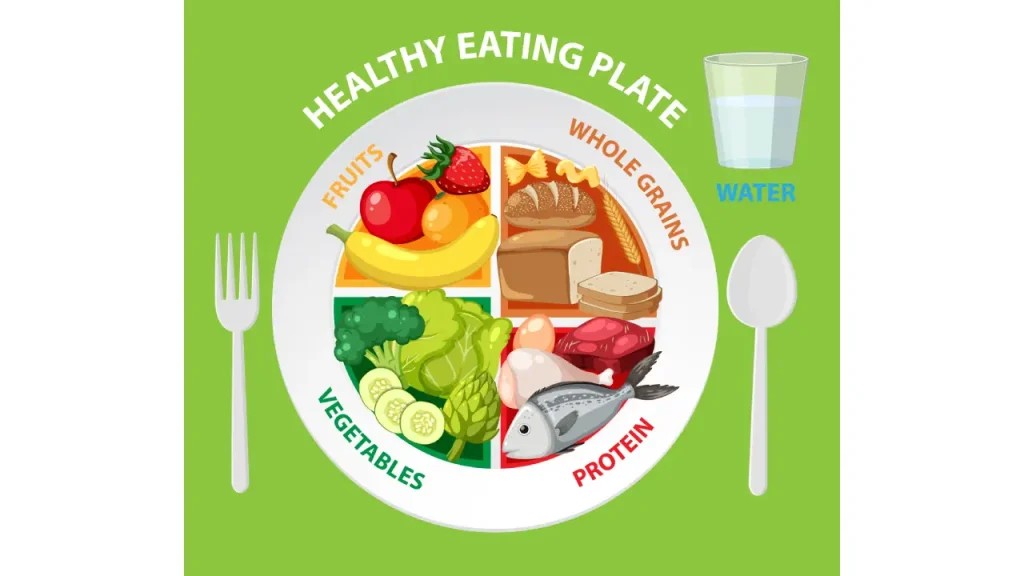
A simple visual approach can make healthy eating much easier.
About Half the Plate
Vegetables and/or salad.
About One Quarter
A good protein source such as:
- Fish
- Chicken
- Eggs
- Lean meat
- Beans
- Lentils
About One Quarter
A fibre-rich carbohydrate source such as:
- Potatoes
- Wholegrain rice
- Wholewheat pasta
- Other whole grains
- Beans or pulses
Then add a modest amount of healthy fat such as olive oil, nuts or seeds.
This is not meant to be a rigid mathematical formula.
It is simply a practical way of constructing balanced meals.
What Are the Biggest Nutrition Myths?
| Claim | What the evidence actually suggests |
|---|---|
| Carbohydrates make you fat | Excess energy promotes weight gain; carbohydrate quality and quantity matter |
| Fat makes you fat | Total energy intake matters, while fat quality also matters |
| You must eat breakfast | Not necessarily |
| You must eat every 2–3 hours | No |
| Fruit is unhealthy because it contains sugar | Whole fruit can be an important part of a healthy diet |
| Potatoes are bad | Potatoes can be a healthy staple food |
| All processed food is unhealthy | Processing ranges from harmless to nutritionally poor |
| You need supplements to eat healthily | Usually not if your diet is nutritionally adequate |
| More protein is always better | Adequacy matters; more isn’t automatically better |
| Organic food is necessary for good health | No |
| You must eliminate carbohydrates to lose weight | No |
| There is one diet that is best for everyone | No |
The 80/20 Approach to Healthy Eating
One of the biggest mistakes people make is trying to make every food choice perfect.
That usually isn’t sustainable.
A much more realistic approach is to make the great majority of your diet nutritious while leaving some room for foods that are there primarily for enjoyment.
Most of the time, your diet might consist of:
- Vegetables
- Fruit
- Legumes
- Whole grains
- Quality protein
- Nuts and seeds
- Healthy fats
Occasionally, you might enjoy:
- Cake
- Chocolate
- Ice cream
- Chips
- Restaurant meals
- Wine
The issue is not whether these foods can ever be eaten.
The issue is whether “occasionally” gradually turns into every day.

The Five Rules That Matter Most in a Balanced Diet
If all of the information above were reduced to five practical rules, they would be:
1. Eat plenty of vegetables every day.
2. Make minimally processed foods the foundation of your diet.
3. Include a good source of protein regularly.
4. Prefer fibre-rich carbohydrates and unsaturated fats.
5. Keep highly processed foods, free sugars, excess salt and alcohol relatively low.
These principles are remarkably consistent across major dietary guidance from organisations such as the World Health Organization, the NHS and European nutrition authorities.
The Bottom Line
There is actually far less disagreement among reputable nutrition authorities than the internet makes it appear.
The arguments tend to occur around the edges:
Should you eat two meals or three?
Low-carb or moderate-carb?
Should you fast?
Is breakfast necessary?
How much protein is optimal?
Is dairy essential?
These questions can be relevant, but they are secondary to the fundamentals.
A balanced diet is not about following the latest nutritional fashion.
It is about consistently eating a wide variety of predominantly minimally processed foods, with plenty of vegetables and fruit, adequate protein, fibre-rich carbohydrates, healthy fats and appropriate overall energy intake.
At the same time, highly processed foods, free sugars, excess salt and alcohol should generally be kept under control.
In other words:
Don’t look for a perfect diet. Build a consistently good one.
That is a much more realistic—and sustainable—definition of healthy eating.
Sources and Further Reading
World Health Organization – Healthy Diet
ANSES – French Dietary Guidelines
EFSA – Dietary Reference Values for Protein
This article is intended for general educational purposes and should not replace personalised medical or nutritional advice.