
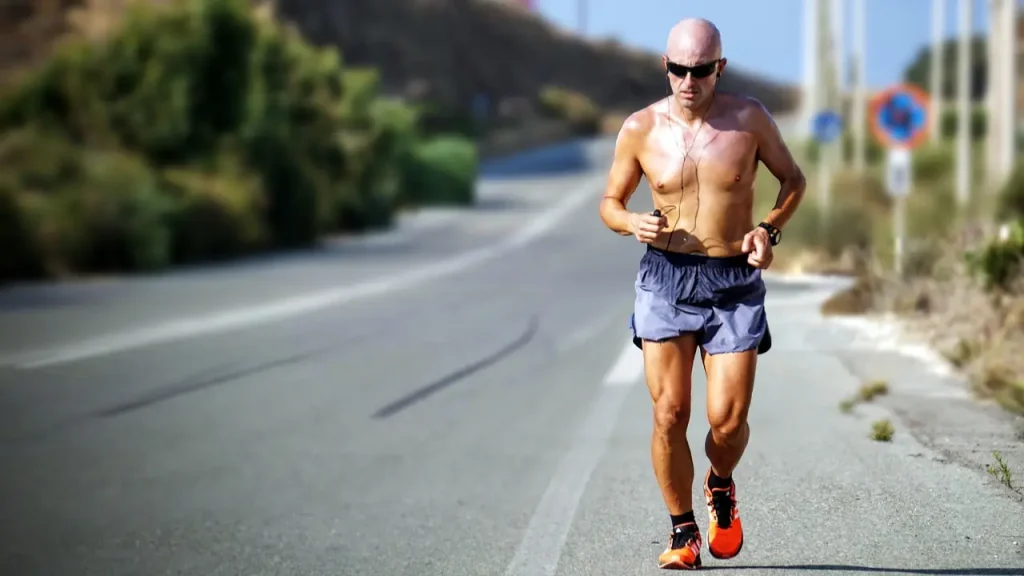
The best cardio for six-pack abs isn’t necessarily the hardest workout.
When you’re trying to make your abdominal muscles more visible, it is tempting to look for the best cardio for six-pack abs.
Should you run?
Cycle?
Walk?
Do interval training?
Or should you make every cardio session so unpleasant that you question all your life choices?
The answer is rather more sensible.
There is no single type of cardio that guarantees visible abs.
Cardio can be useful because it increases physical activity and energy expenditure, and it can be part of a sensible approach to reducing body fat when appropriate. But getting visible abdominal muscles is not simply a matter of finding the hardest cardio workout.
Your results will depend on your starting body composition, nutrition, resistance training, activity levels, recovery and consistency.
And, of course, genetics have a say in how your abdominal muscles look and where your body tends to store fat.
So rather than asking which cardio exercise is best, a better question is:
Which type of cardio can you do consistently while supporting your overall fitness goals?
Do You Need Cardio to Get Six-Pack Abs?
Not necessarily.
Cardiovascular exercise is valuable for health and fitness, but you do not need to spend hours doing cardio simply because you want visible abdominal muscles.
Your abs are muscles. Developing them requires appropriate resistance training, just as developing any other muscle group does.
At the same time, reducing overall body fat may make those muscles more visible when that is appropriate for you.
That means your approach is better thought of as a combination of:
- resistance training
- direct abdominal training
- regular physical activity
- sensible nutrition
- adequate recovery
- consistency over time
Cardio is one part of that picture, not the entire picture.
Steady-State Cardio Can Still Be Useful
There is nothing wrong with walking, cycling, swimming, jogging or other forms of steady-state aerobic activity.
In fact, one of the biggest advantages of this type of exercise is that it can be relatively easy to fit into normal life.
A brisk walk, for example, may be much easier to repeat several times a week than an exhausting interval session.
And that matters.
Current guidance recommends that adults accumulate at least 150 minutes of moderate-intensity aerobic activity per week, or 75 minutes of vigorous-intensity activity, with additional muscle-strengthening activity on at least two days a week.
You therefore do not need to turn every cardio session into a competition.
A regular brisk walk may be far more useful to your long-term plan than an occasional workout that leaves you completely exhausted.
What About High-Intensity Interval Training?
High-intensity interval training, usually called HIIT, involves alternating periods of harder effort with periods of recovery.
It can be an efficient way to train when you have limited time.
For example, a session might involve:
- a warm-up
- short periods of vigorous exercise
- easier recovery periods
- several repetitions
- a cool-down
HIIT can improve cardiovascular fitness and can certainly form part of a well-designed fitness programme.
But there is an important distinction:
HIIT is not a special fat-burning switch that makes abdominal muscles appear.
You do not need HIIT simply because you want a six-pack.
A person who enjoys brisk walking and does it consistently can build a highly active lifestyle without ever performing a traditional HIIT workout.
The best option is the one that fits your fitness level, preferences and ability to recover.
Why Cardio Alone Usually Isn’t Enough
Imagine two people doing the same amount of cardio.
One performs lots of cardio but does little resistance training and pays little attention to nutrition.
The other combines regular cardio with progressive resistance training, sensible eating and adequate recovery.
It should not be surprising if they eventually look quite different.
Cardio can contribute to energy expenditure and overall fitness, but it does not replace resistance training for developing muscle.
And more abdominal exercise does not automatically remove the layer of fat covering those muscles.
This is why the six-pack goal should be approached as a body-composition and fitness goal, rather than simply a cardio goal.
What Actually Helps Make Abs More Visible?
There are several pieces to the puzzle.
1. Build your abdominal muscles
Your abdominal muscles respond to training just like other muscles.
Exercises can help develop them, and a progressive resistance-training programme can improve muscular strength and size.
You do not need to train your abs endlessly.
Quality and progression matter more than simply counting hundreds of repetitions.
2. Reduce body fat when appropriate
Even well-developed abdominal muscles may not be highly visible if they are covered by a layer of body fat.
This is where nutrition and overall energy balance become important.
There is no universal body-fat percentage at which every person suddenly develops a visible six-pack.
People store fat differently, and genetics influence both body shape and fat distribution.
That is why copying somebody else’s body-fat target is unlikely to produce exactly the same result.
3. Keep moving outside your workouts
Your formal workout is only one part of your activity.
Walking, cycling for transport, climbing stairs, doing household tasks and simply spending less time sitting can all contribute to your overall activity level.
All physical activity counts, and replacing sedentary time with physical activity of any intensity can provide health benefits.
4. Eat sensibly
No cardio programme can completely compensate for an eating pattern that consistently provides more energy than your body needs.
For someone trying to reduce body fat, a sensible calorie deficit may be useful.
But extreme dieting is not the answer.
The aim should be a nutritional approach you can maintain while still getting enough protein, nutrients and energy to support training and recovery.
5. Recover properly
More exercise is not automatically better.
Your body needs time to recover, and a programme that constantly leaves you exhausted is unlikely to be sustainable.
Sleep, rest days and sensible progression all matter.
So Which Cardio Is Best for Six-Pack Abs?
Here’s the answer I’d put at the centre of the article:
The best cardio for six-pack abs is the cardio you can perform consistently while supporting your overall fitness and body-composition goals.
For one person that might be brisk walking.
For another it might be cycling.
Someone else may enjoy swimming, running, rowing or interval training.
There is no prize for choosing the most miserable option.
The important thing is that your cardio complements the rest of your programme rather than dominating it.
A Simple Weekly Approach
You don’t need an unnecessarily complicated programme.
For many adults, a sensible week could include regular moderate aerobic activity, some more vigorous activity according to fitness and preference, and at least two days of muscle-strengthening exercise.
For example:
Monday: Strength training + short walk
Tuesday: Brisk walking or cycling
Wednesday: Strength training
Thursday: Easy cardio
Friday: Strength training + optional short cardio session
Saturday: Longer walk, cycle or other activity you enjoy
Sunday: Rest or gentle movement
That is only an example. Your actual schedule should reflect your fitness, experience, health and available time.
Don’t Confuse Exhaustion With Effectiveness
One of the biggest mistakes in fitness is assuming that the workout that hurts the most must be the workout that works the best.
That isn’t necessarily true.
A workout can be extremely demanding and still be a poor choice if you cannot recover from it or cannot maintain it.
For a long-term six-pack goal, consistency beats novelty.
A manageable programme followed for months is far more useful than a punishing programme followed for ten days.
The Bottom Line
There is no magic cardio exercise for six-pack abs.
Walking, cycling, swimming, running and interval training can all have a place in a healthy fitness programme.
The bigger picture matters much more.
Develop your abdominal muscles, build overall strength, eat sensibly, be physically active, manage your recovery and give the process enough time.
Cardio can help.
It just doesn’t get to take all the credit.
Recommended Further Reading:
- Foods That Can Sabotage Your Six-Pack Goals
- How Long Does It Take to Get Visible Abs?
- Best Six-Pack Workout Programs: What Actually Works?
- How to Get Visible Abs: What Really Works
Medical Disclaimer
This article is for general educational purposes and is not a substitute for personalised medical advice, diagnosis or treatment. If you have a medical condition, an injury, concerns about rapid weight loss or questions about starting vigorous exercise, speak with an appropriately qualified healthcare professional.
1