
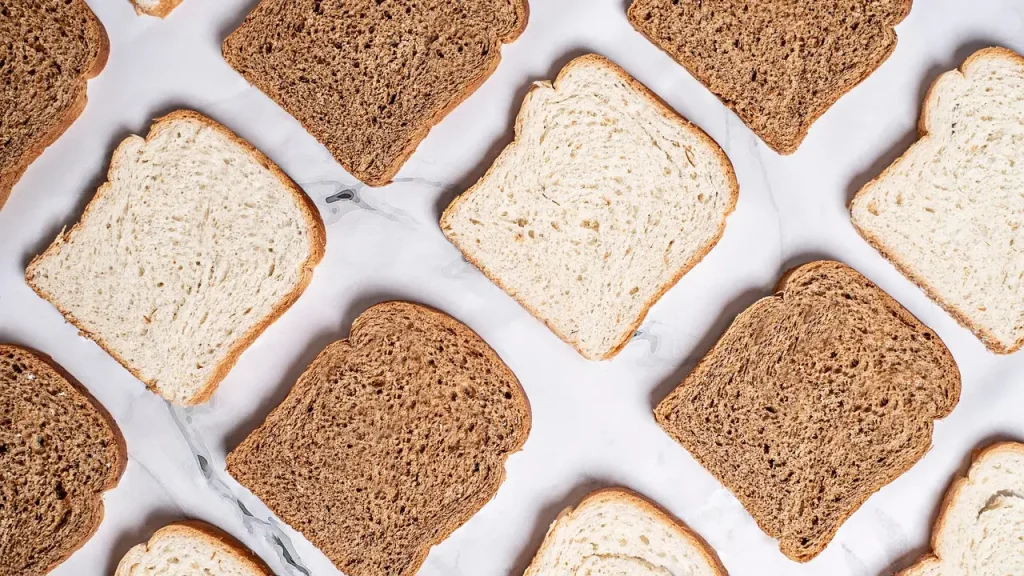
Calories and Carbohydrates for Weight Loss is a subject that causes an enormous amount of confusion when people are trying to lose weight.
One person says that weight loss is simply about calories.
Another says that calories don’t matter because carbohydrates are the real problem.
Someone else recommends cutting bread, pasta and potatoes completely.
And then there are diets that promise you can eat unlimited amounts of fat and protein while losing weight effortlessly.
The reality is much less dramatic.
Calories matter because your body needs to obtain less energy from food and drink than it uses over time for weight loss to occur. But the quality of the food supplying those calories matters too.
Carbohydrates are not inherently fattening, and you do not have to eliminate them to lose weight.
The more useful question is:
How can you manage your overall energy intake while eating a nutritious diet that keeps you satisfied and is realistic enough to maintain?
Let’s take a closer look.
What Are Calories?
A calorie is a unit of energy.
Technically, food labels generally use kilocalories (kcal), although we commonly shorten this to “calories”.
Your body uses energy continuously.
You need energy to:
- keep your heart beating
- breathe
- maintain body temperature
- support your organs and tissues
- digest food
- move around
- exercise
- perform everyday activities
Even when you are asleep and completely inactive, your body is still using energy.
Your total energy needs therefore depend on considerably more than how much exercise you do.
Age, body size, body composition, sex, physical activity and other individual factors all contribute.
Why Do Calories Matter for Weight Loss?
The basic principle is straightforward.
If you regularly consume more energy than your body uses, the excess energy can be stored and body weight can increase over time.
If you consistently consume less energy than your body uses, your body has to draw on stored energy, including stored body fat, and weight generally decreases.
This difference is known as an energy deficit or calorie deficit.
The NHS describes a calorie deficit as taking in fewer calories than your body uses and recommends reducing calorie intake as one way to create this deficit.
That doesn’t mean that weight loss is psychologically or practically simple.
Your appetite can change.
Your energy expenditure can change.
Your food environment can make certain choices much easier than others.
And maintaining a calorie deficit for months is considerably harder than creating one for a few days.
That’s why sustainable weight management requires more than simply knowing that calories exist.
Do You Need to Count Calories and Carbohydrates for Weight Loss?
No.
Calorie counting is a tool, not a requirement.
Some people find tracking useful because it shows them how much energy they are actually consuming.
Others find it tedious or stressful and prefer to control their portions and improve the quality of their meals.
You can reduce your energy intake without recording every calorie by making changes such as:
- reducing oversized portions
- drinking fewer high-calorie beverages
- eating more vegetables
- choosing more fibre-rich foods
- including protein in meals
- reducing highly processed snack foods
- being more aware of oils, sauces and other calorie-dense extras
The best approach is the one that works in your real life.
There is no prize for keeping the world’s most accurate food diary.
How Many Calories Do You Need?
There is no single calorie target that is suitable for everyone.
Two people of the same age and sex can have different energy requirements because their body size, muscle mass, activity levels and other characteristics differ.
Average calorie figures can be useful as general reference points, but they shouldn’t be treated as personalised prescriptions.
The NHS gives average daily figures of around 2,000 calories for women and 2,500 for men for weight maintenance, but individual requirements vary considerably.
Your calorie needs can also change as your body weight changes.
This is one reason why weight loss often slows down over time.
A smaller body generally requires less energy to maintain than a larger one, all else being equal.
You Don’t Need to Fear Calories

It can be tempting to think that calories are somehow the enemy.
They’re not.
Calories are simply a way of measuring energy.
Your body needs energy to live.
The objective during weight loss isn’t to consume as few calories as possible.
It is to consume an appropriate amount while providing your body with enough protein, essential fats, vitamins, minerals, fibre and other nutrients.
The goal is not the smallest possible calorie intake.
The goal is a sensible calorie intake that supports gradual, sustainable progress.
This distinction is important because extremely restrictive diets can be difficult to maintain and may not provide adequate nutrition.
What Are Carbohydrates?
Carbohydrates are one of the three main macronutrients, alongside protein and fat.
They are found in a huge variety of foods.
Common carbohydrate-containing foods include:
- bread
- rice
- pasta
- potatoes
- oats
- breakfast cereals
- beans
- lentils
- fruit
- vegetables
- milk and yoghurt
- cakes and biscuits
- sweets and sugary drinks
That’s already enough to demonstrate why saying “carbohydrates are bad” doesn’t make much sense.
An apple and a doughnut both contain carbohydrate, but they are obviously very different foods.
This is why carbohydrate quality matters.
Are All Carbohydrates the Same?
No.
Carbohydrates exist in foods with very different nutritional profiles.
Some carbohydrate-rich foods also provide:
- fibre
- vitamins
- minerals
- protein
- beneficial plant compounds
Others are highly processed and can provide large amounts of energy with relatively little nutritional value.
WHO’s carbohydrate guidance focuses specifically on carbohydrate quality, recommending that carbohydrates come primarily from whole grains, vegetables, fruits and pulses.
That is a much more useful approach than simply labelling all carbohydrates as good or bad.
Do Carbohydrates Make You Gain Weight?

Carbohydrates are not inherently fattening.
Eating carbohydrate-containing foods doesn’t automatically cause your body to gain fat.
Body weight is influenced by overall energy balance over time.
A diet can be high in carbohydrates and still support weight loss if overall energy intake is appropriate.
Likewise, a low-carbohydrate diet can still provide too many calories to produce weight loss.
This is one reason why the internet’s war between “carbs” and “calories” is unnecessarily simplistic.
They’re not mutually exclusive explanations.
Calories help explain the energy balance. Food composition helps determine nutrition, satiety, diet quality and how easy that energy balance is to manage.
What Happens When You Eat Carbohydrates?
When you eat carbohydrate, your digestive system breaks many carbohydrate-containing foods down into smaller molecules, including glucose.
Glucose can then be used as an energy source.
Some carbohydrate is stored as glycogen in the liver and muscles.
The body’s metabolism is considerably more sophisticated than the old idea that eating carbohydrates automatically means storing them as body fat.
The amount and type of carbohydrate you consume, your overall energy intake, your activity level and many other factors all influence what happens next.
What About Low-Carbohydrate Diets?
Low-carbohydrate diets can certainly produce weight loss.
The question is whether they are inherently superior to other diets.
The evidence doesn’t support such a simple conclusion.
Some studies and meta-analyses have found modest differences between low-carbohydrate and low-fat diets under certain circumstances. For example, a 2022 meta-analysis of 33 randomised trials found slightly greater weight loss with low-carbohydrate diets over 6–23 months.
But that does not mean carbohydrates are uniquely responsible for weight gain.
The effect of a particular diet depends on what people actually eat, how much they eat, how satisfying the diet is and how well they can maintain it.
A 2024 network meta-analysis comparing Mediterranean, low-carbohydrate and low-fat dietary patterns likewise illustrates that there is no single diet that wins every category for every person.
Why can low-carb diets work?
One reason is simply that restricting carbohydrate-rich foods can reduce the number of foods available to eat.
Another is that some people find higher-protein, lower-carbohydrate diets more satisfying.
Removing sugary drinks, sweets, biscuits and highly refined snacks can also substantially reduce calorie intake.
Those are useful effects.
But they don’t prove that carbohydrates themselves are the enemy.
What About Bread, Rice, Pasta and Potatoes?

You don’t need to eliminate them.
The amount you eat matters, but these foods can all form part of a healthy diet.
The bigger question is how they fit into the overall meal.
For example, a meal consisting mainly of a huge portion of refined carbohydrate with a rich sauce may provide considerably more energy than a balanced meal containing a sensible portion of carbohydrate alongside vegetables and protein.
You can also choose higher-fibre options where practical.
Examples include:
- wholegrain bread
- brown rice
- wholewheat pasta
- oats
- potatoes with their skins
The aim isn’t to turn every meal into a nutritional mathematics exercise.
It’s to build meals that are nutritious and satisfying.
Fibre Changes the Conversation
Fibre is a type of carbohydrate that your body doesn’t fully digest.
It is found naturally in plant foods and is important for digestive and overall health.
Good sources include:
- vegetables
- fruit
- beans
- lentils
- peas
- oats
- whole grains
- nuts
- seeds
Fibre can help add bulk and structure to meals and can contribute to feelings of fullness.
It is also an important part of the diet for the gut microbiome.
WHO recommends that adults consume at least 25 grams of naturally occurring dietary fibre per day, with carbohydrates coming primarily from whole grains, vegetables, fruits and pulses.
This provides another reason not to treat carbohydrates as one enormous category.
A fibre-rich food such as lentils is doing something very different nutritionally from a sugary drink.
What About Sugar?
Sugar is a carbohydrate, but the context matters.
Sugar naturally occurs in foods such as fruit and milk, while free sugars include sugars added to foods and drinks as well as those naturally present in honey, syrups and fruit juices.
WHO recommends limiting free sugars to less than 10% of total energy intake for adults and children, with further reduction potentially providing additional benefits.
One of the easiest ways to reduce calorie intake is therefore to pay attention to:
- sugary drinks
- sweets
- biscuits
- cakes
- desserts
- highly sweetened breakfast foods
- added sugars in sauces and other processed foods
This doesn’t mean you can never eat them.
It means they’re best treated as foods to enjoy in moderation rather than as major sources of everyday nutrition.
Does Eating Carbohydrates at Night Cause Weight Gain?
Not simply because the clock says it’s evening.
There is no magical moment at which carbohydrate suddenly becomes fattening.
What matters most for body weight is the overall pattern of energy intake and expenditure.
However, eating at night can sometimes contribute indirectly to weight gain if it involves frequent snacking, large portions or high-calorie foods and drinks.
So the problem may be what and how much you’re eating, rather than the mere fact that you ate carbohydrates after 6pm.
What About “Good” and “Bad” Carbs?
The terms can be useful as shorthand, but they’re not scientifically precise.
A better way to think about carbohydrate foods is:
How nutritious is this food?
How filling is it?
How much fibre does it provide?
How processed is it?
How much added or free sugar does it contain?
How does it fit into my overall diet?
That approach gives you much more useful information than simply asking whether a food contains carbohydrates.
Calories and Food Quality: Which Matters More?
This is where many weight-loss arguments go wrong.
People sometimes argue:
“Calories don’t matter. It’s all about food quality.”
Others say:
“Food quality doesn’t matter. It’s all about calories.”
Neither is a particularly useful way of thinking.
Energy balance matters for weight change.
Food quality matters for health and nutrition.
And food quality can also make weight management easier or harder.
A diet built largely around highly processed, energy-dense foods may make it easier to consume a lot of calories before feeling satisfied.
A diet containing plenty of vegetables, fruit, pulses, whole grains and appropriate protein may provide more volume, fibre and nutritional value.
So the two concepts work together.
A Better Way to Think About Weight Loss
Rather than asking:
“Should I eat carbs?”
ask:
“What combination of foods allows me to eat an appropriate amount of energy while still feeling satisfied and well nourished?”
That question is much harder for the diet industry to sell you a miracle solution to.
It’s also much more useful.
Build meals around nutritious foods
A practical meal might contain:
Protein + vegetables or fruit + a sensible portion of a carbohydrate-rich food + an appropriate amount of healthy fat.
That could mean:
- salmon with potatoes and vegetables
- chicken with brown rice and vegetables
- lentil curry with vegetables and rice
- eggs with wholegrain toast and fruit
- yoghurt with oats, berries and nuts
There is no magic combination.
The important thing is the overall pattern.
Do You Need to Cut Carbohydrates to Lose Belly Fat?
No.
You cannot selectively remove belly fat simply by eliminating carbohydrates.
When body fat decreases, where it comes from is influenced largely by individual biology and genetics.
A calorie deficit can lead to overall fat loss, but no particular carbohydrate restriction guarantees that the fat will come specifically from your abdomen.
This is another reason to be sceptical of diets promising to “target belly fat” by eliminating particular foods.
What About Ketogenic Diets?
Very-low-carbohydrate ketogenic diets are a legitimate dietary approach and can produce weight loss in some people.
But they are restrictive and aren’t necessary for everyone.
They also aren’t appropriate for every person or every medical situation.
The useful question is not:
“Is keto the best diet?”
It is:
“Is this eating pattern appropriate for me, nutritionally adequate and sustainable?”
For some people the answer may be yes.
For others, a less restrictive eating pattern will be easier to maintain.
A Simple Framework for Managing Calories and Carbohydrates
You don’t need to follow complicated rules.
Try this instead:
1. Pay attention to portion sizes.
Calories can add up even when foods are nutritious.
2. Prioritise protein.
Include an appropriate protein source in your meals.
3. Eat plenty of vegetables and fruit.
They contribute fibre, vitamins, minerals and volume.
4. Choose higher-fibre carbohydrate foods regularly.
Think whole grains, potatoes, beans, lentils, fruit and vegetables.
5. Limit highly processed, energy-dense foods.
You don’t need to ban them. Just don’t let them dominate your diet.
6. Watch liquid calories.
Sugary drinks and alcohol can contribute significant energy without providing much fullness.
7. Don’t fear carbohydrates.
Learn to distinguish nutritious carbohydrate-rich foods from highly refined or sugary foods.
8. Don’t chase extreme restriction.
The diet you can maintain is usually more useful than the diet that produces the most dramatic result for two weeks.
Frequently Asked Questions
Can I eat carbohydrates and still lose weight?
Yes. Carbohydrates can be part of a weight-loss diet. Weight loss depends on maintaining an overall energy deficit, while the quality of your carbohydrate choices affects nutrition, fibre intake and diet quality.
Are bread and pasta fattening?
Not inherently. Bread and pasta can contribute to calorie intake, particularly in large portions or calorie-dense meals, but they can also form part of a balanced diet.
Is rice bad for weight loss?
No. Rice can be included in a weight-loss diet. Portion size and the overall meal matter more than simply whether rice is present.
Are potatoes good for weight loss?
Potatoes can be a useful part of a healthy diet. Their calorie content depends partly on preparation and portion size. Potatoes that are boiled or baked are very different from large portions of deep-fried potatoes.
Is low-carb better than low-fat for weight loss?
Neither approach is automatically better for everyone. Some studies show modest advantages for low-carbohydrate diets under certain conditions, but individual response and long-term adherence matter greatly.
Do I need to count calories?
No. Calorie counting can be useful, but portion control and improving food choices can also reduce energy intake.
Should I stop eating carbohydrates at night?
No. Eating carbohydrates in the evening does not automatically cause weight gain. Overall energy intake and eating patterns matter much more.
How many carbohydrates should I eat?
There isn’t one ideal carbohydrate intake for everyone. Your needs depend on factors such as your total energy needs, activity level, health and dietary pattern. WHO emphasises carbohydrate quality and recommends obtaining carbohydrates primarily from whole grains, vegetables, fruits and pulses.
Can cutting carbohydrates reduce belly fat?
Reducing carbohydrates may help some people lose weight if it results in a sustained calorie deficit, but there is no special mechanism that makes carbohydrate restriction selectively remove abdominal fat.
Is sugar the same as carbohydrate?
Sugar is one type of carbohydrate. Carbohydrate also includes starches and fibre, which are found in foods such as whole grains, potatoes, beans, fruit and vegetables.
The Bottom Line
Calories and carbohydrates don’t have to be enemies.
Calories matter because sustained weight loss requires an energy deficit.
Carbohydrate quality matters because the foods supplying those carbohydrates can have very different effects on nutrition, fibre intake, fullness and overall diet quality.
You don’t need to fear bread, rice, potatoes or pasta.
You don’t need to eliminate carbohydrates.
And you don’t need to count every calorie forever.
Instead, build your diet around nutritious foods, sensible portions, adequate protein, plenty of vegetables and other fibre-rich foods, and carbohydrate sources that provide useful nutrition.
The goal is not to find the perfect ratio of carbohydrates, fats and protein.
The goal is to find an eating pattern that gives you good nutrition, keeps you reasonably satisfied and helps you maintain a healthy energy balance over the long term.
That’s considerably less exciting than the latest “no-carb fat-burning secret”.
It’s also a lot more useful.
Suggested Further Reading:
- 5 Evidence-Based Weight Loss Tips That Actually Work
- Gut Health and Weight Loss: What the Evidence Really Tells Us
- Weight Loss Mindset: How to Make Weight Loss Easier
- Do You Need a Gym to Lose Weight?
- Lose Weight Without Starving Yourself: A Practical Guide
Medical Disclaimer
This article is intended for general educational purposes and is not a substitute for individual medical advice. If you have a medical condition, take medication that affects your weight or metabolism, have diabetes, have a history of an eating disorder, or are considering a major dietary change, speak with an appropriately qualified healthcare professional.