
The Honest Answer
Can You Eat Junk Food and Still Lose Weight, YES!
But there is an important distinction.
Being able to lose weight while eating some less-healthy foods is not the same as saying a diet based mostly on junk food is healthy.
Weight loss is influenced by your overall calorie intake, while your health also depends on the nutritional quality of your diet. Portion size matters too: the amount you eat is just as important as what you eat when it comes to managing body weight.
So you don’t necessarily have to say goodbye forever to pizza, burgers, chocolate, chips or ice cream.
The trick is to make them occasional parts of an overall healthy eating pattern rather than the foundation of it.
Can You Eat Junk Food and Still Lose Weight? – Why This Question Matters
Many weight-loss diets create a long list of forbidden foods.
No chocolate.
No chips.
No takeaway.
No cake.
No burger.
No dessert.
That can work for some people for a while, but it can also create an unnecessary feeling of deprivation.
A more sustainable approach is to understand how enjoyable foods fit into your overall diet.
NIDDK notes that successful weight-loss programmes should use a healthy eating plan that is lower in calories and tailored to your preferences and circumstances so that you can stick with it over the long term.
That is the key word:
sustainable.
Weight Loss and Healthy Eating Are Related — But They Are Not the Same Thing
It helps to separate two questions:
Can this eating pattern lead to weight loss?
and
Is this a healthy eating pattern?
They are not identical questions.
A person could theoretically lose weight while eating a large amount of highly processed food if their overall calorie intake remained below their energy needs.
That does not make the diet nutritionally ideal.
A healthier approach is to achieve weight loss while also providing the body with vegetables, fruit, whole grains, protein-rich foods and other nutrient-dense choices. NIDDK recommends a varied eating pattern built around these foods while limiting foods and drinks that are higher in added sugars, saturated fat and sodium.
So the better question is not:
“Can I eat junk food and still lose weight?”
It is:
“How can I enjoy some less-healthy foods without letting them take over my diet?”
Can You Eat Junk Food and Still Lose Weight but What Counts as Junk Food?
There isn’t a single official definition of “junk food.”
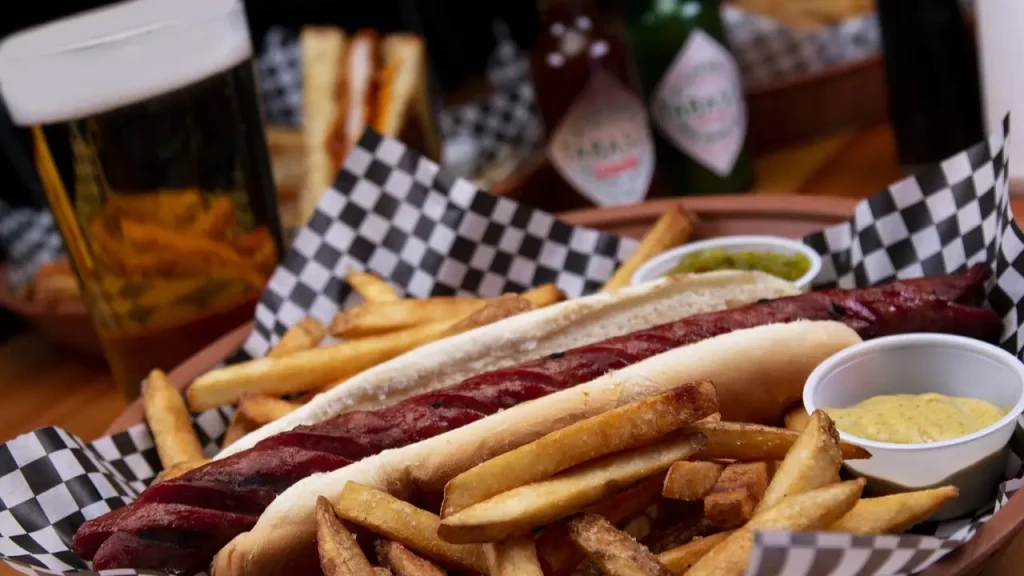
People commonly use the term for foods that are highly processed, energy-dense or relatively high in added sugar, salt or saturated fat.
Examples might include:
- burgers
- chips
- fried chicken
- pizza
- sweets
- chocolate
- biscuits
- cakes
- ice cream
- sugary drinks
- many packaged snack foods
But even this list needs some caution.
Food doesn’t become “bad” simply because it was processed.
A practical way to think about it is to look at the overall nutritional value, portion size and frequency.
A burger occasionally is very different from eating takeaway meals several times every week.
The 80/20 Rule Is a Useful Idea — But It Isn’t a Magic Formula
You may have heard the idea that you should eat healthily 80% of the time and allow yourself treats 20% of the time.
There is nothing magical about those exact percentages.
You don’t need to hit 80/20 every week.
The useful principle is simply this:
Most of what you eat should support your health and your goals, while less-nutritious foods can have a place occasionally.
NIDDK advises that treats can be okay from time to time, provided portions are kept small and they don’t become an everyday habit.
That is a much more practical rule than trying to create a perfect mathematical ratio.
Portion Size Can Change Everything
A major reason that highly processed foods can make weight loss difficult is that they can be very calorie-dense.
A small amount of food can contain a surprisingly large amount of energy.
That doesn’t mean you have to ban it.
It means you need to be aware of how much you’re eating.
NIDDK explains that a portion is simply the amount you choose to eat, and that the number of calories you need varies between people depending on factors such as age, body size, metabolism and physical activity.
For example:
A small serving of chips alongside a healthy meal is very different from eating a large bag of chips without noticing how much you’ve consumed.
The same applies to chocolate, biscuits, ice cream and other calorie-dense foods.
Don’t Eat Straight From the Packet
This is a surprisingly simple trick.
If you sit down with a large packet of crisps, biscuits or sweets, it is remarkably easy to lose track of how much you have eaten.
Instead:
Put a portion on a plate or in a bowl.
Then put the packet away.
NIDDK specifically recommends taking one serving and eating it from a plate rather than eating directly from the package.
You don’t need to feel deprived.
You simply need to make the portion visible.
You Don’t Need to “Save Up” Calories for a Takeaway
Another common mistake is trying to be extremely restrictive all day because you know you’re going out for a meal in the evening.
That can leave you ravenously hungry.
And when you’re extremely hungry, it becomes much harder to make sensible decisions.
A better strategy is to eat normally earlier in the day, focusing on nutritious meals and sensible portions.
Then enjoy the meal.
NIDDK advises eating meals at regular times because delaying or skipping meals may lead to overeating later.
You don’t need to starve all day to “earn” dinner.
How to Make a Takeaway More Weight-Loss Friendly
You can often make a big difference without choosing the most boring option on the menu.
At a burger restaurant
Consider:
- a smaller burger or single rather than a double
- a smaller portion of fries
- water or a lower-calorie drink
- skipping an extra side if you’re already satisfied
At a pizza restaurant
Consider:
- a smaller number of slices
- adding vegetables or a salad
- choosing toppings you enjoy without automatically adding every extra
- stopping when you’re comfortably satisfied
At a Chinese takeaway
Consider:
- steamed or stir-fried dishes
- vegetables
- rice in a sensible portion
- sharing larger dishes
At a fish-and-chip shop
Consider:
- a smaller portion
- more fish and fewer chips
- avoiding automatically adding every extra side
At a coffee shop
Consider:
- a smaller drink
- reducing added sugar or syrups
- choosing a snack intentionally rather than automatically
These aren’t rules.
They’re options.
The aim is to make the easier choice the one that still lets you enjoy your food.
What Should Most of Your Diet Look Like?
If occasional treats are part of your diet, the rest of your eating pattern becomes even more important.
A healthy everyday pattern should contain plenty of:
- vegetables
- fruit
- whole grains
- beans and lentils
- fish
- eggs
- lean meats or other protein sources
- nuts and seeds in sensible portions
- lower-fat dairy or suitable alternatives
NIDDK recommends nutrient-rich foods such as fruits and vegetables, whole grains, seafood, lean meats, poultry, eggs, beans, peas, nuts and seeds as part of a healthy eating pattern.
Think of enjoyable foods as part of the picture, not the whole picture.
Can You Eat Chocolate and Still Lose Weight?
Yes.
You can eat chocolate and lose weight.
But the important questions are:
How much?
How often?
What else are you eating?
A few squares of chocolate after dinner is a very different proposition from eating an entire large bar every evening.
You don’t need to make chocolate forbidden.
You need to make it manageable.
The same principle applies to biscuits, cake, ice cream and other treats.
What About Burgers and Pizza?
Exactly the same principle applies.
A burger occasionally doesn’t make your diet unhealthy.
A pizza with friends doesn’t mean you’ve ruined your week.
The problem comes when foods that are designed to be highly palatable become a dominant part of your diet.
Try thinking in terms of frequency and balance rather than labels.
Having something occasionally is not the same as having it every day.
What If You Have a Big Meal?
Don’t panic.
This is where many people make a second mistake.
They have a large meal and think:
“I’ve blown it now.”
So they continue eating badly for the rest of the evening.
Then the next day becomes another “cheat day.”
And suddenly one meal has turned into three or four days of overeating.
Don’t do that.
One meal is one meal.
Enjoy it.
Then return to your normal eating pattern at the next meal.
NIDDK specifically recommends expecting setbacks, forgiving yourself and adjusting your plan rather than treating a setback as failure.
Don’t Turn Food Into a Reward
This is particularly important when you’re trying to change your habits.
You exercise all week, so you “deserve” a huge takeaway.
You lose a few pounds, so you celebrate with an entire evening of high-calorie food.
You complete a difficult workout, so you reward yourself with sweets.
This can create an unhelpful connection between healthy behaviour and overeating.
There is nothing wrong with enjoying food.
But it is worth having other ways to celebrate your progress.
That is why our article How to Reward Yourself for Weight Loss Without Using Food fits naturally into this Weight Management cluster.
Enjoy Food Without Making Every Meal a Treat
One of the easiest ways to make occasional treats genuinely enjoyable is to stop treating every meal as an opportunity for maximum indulgence.
A takeaway becomes more enjoyable when it is genuinely occasional.
Chocolate feels more satisfying when you aren’t eating it mindlessly every night.
Dessert becomes a pleasure rather than an automatic habit.
The goal isn’t to remove enjoyment from food.
It is to make enjoyment deliberate rather than automatic.
What About “Cheat Days”?
I’m not a fan of the term “cheat day.”
It makes healthy eating sound like a test you can pass or fail.
You don’t need to cheat.
You’re simply living your life.
There will be birthdays.
There will be holidays.
There will be meals out.
There will be weekends.
There will be days when you eat more than planned.
None of these has to become an excuse to abandon your overall approach.
A healthier mindset is:
Enjoy the occasion, then return to normal.
The Bigger Problem Is Often the All-or-Nothing Mindset
Consider these two approaches.
Approach A
“I ate pizza, so I’ve ruined my diet.”
Approach B
“I enjoyed pizza tonight. Tomorrow I’ll go back to my normal meals.”
Approach B is much more useful.
The difference isn’t the pizza.
It’s the mindset.
NIDDK recommends realistic goals and expecting setbacks rather than treating them as reasons to abandon the plan.
A Simple Rule for Occasional Treats
Try this:
Choose it. Enjoy it. Portion it. Then move on.
Don’t eat it secretly.
Don’t feel guilty.
Don’t turn it into an all-day binge.
Don’t punish yourself afterwards.
Just include it deliberately and continue with your normal routine.
That is a much more sustainable relationship with food.
Can Junk Food Be Part of a Healthy Diet?
Technically, an occasional less-nutritious food can fit into an otherwise healthy diet.
But I would avoid using the phrase “junk food diet.”
The word diet can imply that this is what you eat most of the time.
That’s not the goal.
The goal is a predominantly nutritious eating pattern with room for foods you enjoy.
NIDDK’s guidance similarly emphasises nutrient-rich foods while allowing treats occasionally and in small portions.
The Bottom Line
Yes, you can eat junk food and still lose weight.
But don’t confuse that statement with permission to make highly processed food the foundation of your diet.
Build most of your meals around nutritious foods.
Pay attention to portions.
Keep enjoyable foods occasional rather than automatic.
Don’t save up calories by starving yourself beforehand.
Don’t turn one indulgent meal into an indulgent weekend.
And don’t punish yourself afterwards.
A sustainable approach leaves room for real life.
You can enjoy your favourite foods and make progress.
You just don’t need to eat them all the time.
Frequently Asked Questions
Can I eat fast food and still lose weight?
Yes. Fast food can fit into a weight-loss plan when portions and overall calorie intake are managed. But it should not replace the nutrient-rich foods that make up a healthy everyday diet.
How often can I eat junk food when trying to lose weight?
There is no universal number. The important factors are portion size, frequency and how the food fits into your overall eating pattern. NIDDK suggests treating foods such as candy, ice cream and cookies as occasional treats rather than everyday foods.
Is pizza bad for weight loss?
Pizza is not automatically incompatible with weight loss. The portion, toppings, what you eat alongside it and how often you have it all matter.
Can I eat chocolate every day and still lose weight?
It is possible for a small amount of chocolate to fit into a calorie-controlled diet, but whether this is a good choice for you depends on your overall diet and how easily the portion can be controlled. For many people, keeping highly palatable treats occasional may make weight management easier.
Should I have a cheat day?
You don’t need one. A more sustainable approach is to allow occasional foods you enjoy without turning them into a full day of overeating.
What should I do after overeating?
Don’t punish yourself or skip meals to compensate. Return to your normal eating pattern at the next opportunity.
Is calorie counting necessary?
Not necessarily. Some people find tracking useful, while others prefer portion awareness and a consistent eating pattern. The best approach is one you can maintain.
Can I lose weight without giving up my favourite foods?
Yes. In many cases, learning how to manage portions and frequency is more sustainable than creating a long list of permanently forbidden foods.
Suggested articles on our site which should help you:
- Why Sustainable Weight Loss Beats Short-Term Dieting
- Lose Weight Without Starving Yourself
- 7 Ways to Reduce Your Appetite
- 6 Weight Loss Tips That Actually Work
- How to Reward Yourself for Weight Loss Without Using Food
Medical Disclaimer
This article is for general educational purposes and is not a substitute for individual medical advice. If you have a medical condition, take medication that may affect your weight or appetite, have a history of an eating disorder, or are considering a significant dietary change, speak with an appropriate healthcare professional.