

Food allergies can be confusing because the symptoms can look different from one person to another.
A reaction might involve the skin, stomach, breathing or several parts of the body at once. Most reactions are mild, but some can be severe and require emergency treatment.
It is also important to distinguish a food allergy from a food intolerance. They are not the same thing.
A food allergy happens when the immune system reacts to a food. A food intolerance usually means the body has difficulty digesting a particular food or ingredient and does not involve the same immune reaction. NHS: Food allergy NHS: Food intolerance
This article explains the common food allergens, the symptoms worth knowing about and the practical steps that can help keep people with food allergies safer.
What Is a Food Allergy?
A food allergy occurs when the immune system mistakenly treats a particular food as something harmful.
The resulting reaction can happen very quickly, although symptoms do not always appear immediately. NHS guidance says symptoms can affect different parts of the body and can sometimes appear within minutes or after a few hours. NHS: Food allergy
Common symptoms include:
- itchy skin or hives
- swelling of the lips, face or eyes
- coughing, wheezing or breathlessness
- a runny or blocked nose
- feeling sick or vomiting
- stomach pain
- diarrhoea
- dizziness or feeling lightheaded
A person does not necessarily experience all of these symptoms.
Food Allergy Is Not the Same as Food Intolerance
The words “allergy” and “intolerance” are often used interchangeably in everyday conversation, but medically they mean different things.
A food intolerance can cause symptoms such as bloating, abdominal pain, diarrhoea or other digestive symptoms, often several hours after eating the food.
A food allergy involves the immune system and can cause symptoms such as itching, hives, swelling or breathing problems. A severe allergic reaction can be life-threatening. NHS: Food intolerance
This distinction matters because the risks and the appropriate medical assessment are different.
The Most Common Food Allergens
People can be allergic to almost any food.
However, some foods are responsible for a large proportion of recognised allergic reactions. In the UK, food businesses are required to provide information about 14 regulated allergens when they are used as ingredients or processing aids. Food Standards Agency: Allergen guidance
The 14 regulated allergens are:
- celery
- cereals containing gluten
- crustaceans
- eggs
- fish
- lupin
- milk
- molluscs
- mustard
- peanuts
- sesame
- soya
- sulphur dioxide and sulphites above the relevant threshold
- tree nuts
These are the regulated allergens used for UK food-labelling purposes. They are not a complete list of every food that can cause an allergy.
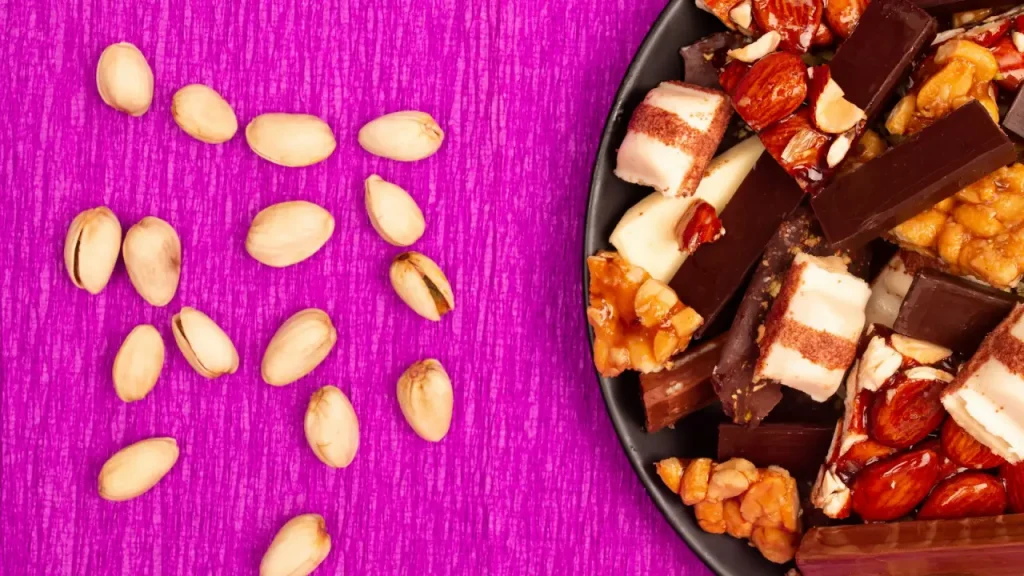
1. Peanuts
Peanut allergy is one of the best-known food allergies.
Peanuts can appear in obvious foods such as peanut butter, but they may also occur in sweets, sauces, snacks and other processed foods.
For someone with a confirmed peanut allergy, careful ingredient checking is essential.
Cross-contact can also matter. A food that does not contain peanuts as an intentional ingredient can still become contaminated during preparation.
2. Tree Nuts
Tree nuts include foods such as:
- almonds
- hazelnuts
- walnuts
- cashews
- pistachios
- pecans
- Brazil nuts
- macadamia nuts
A person who reacts to one tree nut is not necessarily allergic to every other tree nut, but individual medical advice is important because cross-contact and multiple nut allergies can occur.
Nuts can be found in cakes, chocolate, cereals, sauces, desserts, pesto, spreads and many other products.
3. Milk
Cow’s milk allergy is particularly relevant in babies and young children, although adults can also have milk allergy.
Milk and milk ingredients can appear in much more than obvious dairy products. They may be present in chocolate, baked foods, sauces, desserts, processed meats and other foods.
Milk allergy also needs to be distinguished from lactose intolerance.
Lactose intolerance is a problem digesting lactose, the sugar naturally found in milk. It is not the same as an immune-mediated milk allergy. NHS: Food intolerance
4. Eggs
Eggs can cause allergic reactions, particularly in children.
Egg can appear in obvious foods such as omelettes and mayonnaise, but it can also be used in cakes, biscuits, pasta, sauces, breaded foods and desserts.
Egg allergy does not mean a person will necessarily react to chicken meat.
5. Fish
Fish allergy can involve many different species.
The regulated allergen category covers fish, although one person’s allergy may be specific to particular species.
Fish can be found in obvious dishes, but it may also appear in sauces, stocks and processed foods.
People with known fish allergy should follow the advice given by their allergy specialist about which fish and products need to be avoided.
6. Crustaceans
Crustaceans include:
- prawns
- crab
- lobster
- crayfish
- scampi
Reactions can be severe, and cross-contact during food preparation is an important consideration.
A person with a crustacean allergy may also have reactions to other types of shellfish, but this cannot be assumed without appropriate assessment.
7. Molluscs
Molluscs include foods such as:
- mussels
- oysters
- squid
- octopus
- clams
They are a separate regulated allergen category from crustaceans.
Again, do not assume that avoiding one shellfish category automatically means another is safe.
8. Cereals Containing Gluten
In UK allergen labelling, the regulated category includes cereals containing gluten such as wheat, rye, barley and oats.
This category is particularly easy to misunderstand because a reaction to wheat is not automatically the same as coeliac disease or non-coeliac gluten sensitivity.
Coeliac disease is an autoimmune condition triggered by gluten, while wheat allergy is an allergic reaction to components of wheat. NHS: Coeliac disease NHS: Food allergy
The earlier article on this site, How to Tell if You Are Gluten Intolerant: What to Check, explains those differences in more detail.
9. Soya
Soya is used in many foods and ingredients.
It can appear in tofu, soya drinks, miso and textured soya protein, but it may also be found in sauces, vegetarian products, desserts and processed foods.
Because soya is widely used in food manufacturing, reading ingredient labels is important for people with confirmed soya allergy.
10. Sesame
Sesame seeds can be found in foods such as:
- tahini
- hummus
- seeded breads
- crackers
- some sauces
- many Middle Eastern and Asian dishes
Sesame can also be present in foods where it is less obvious, so checking the label is important.
11. Mustard
Mustard can be obvious in sauces and condiments, but it may also be used as an ingredient in dressings, marinades, processed meats and prepared foods.
A person with mustard allergy should not assume that a dish is safe simply because mustard is not visible.
12. Celery
Celery is used in more foods than many people realise.
It may occur in:
- soups
- stocks and stock cubes
- sauces
- salads
- spice blends
- processed meats
The regulated celery category includes the stalks, leaves, seeds and celeriac. Food Standards Agency: 14 allergens
13. Lupin
Lupin is a legume that can be used in flour and baked products.
It is less familiar to many consumers than peanuts or milk, which makes label checking particularly important.
Lupin flour may occur in some breads, pastries and other baked goods.
14. Sulphur Dioxide and Sulphites
Sulphur dioxide and sulphites are used as preservatives in some foods and drinks.
They can be found in products such as some dried fruit, processed foods and alcoholic drinks.
Under UK food law, sulphur dioxide and sulphites are part of the regulated allergen list when present above the specified threshold. Food Standards Agency: Allergen guidance
People with asthma may be more likely to react to sulphur dioxide. Food Standards Agency: 14 allergens
What Does an Allergic Reaction Look Like?

An allergic reaction can involve one or several parts of the body.
Possible symptoms include:
Skin: itching, hives or redness.
Face and mouth: swelling of the lips, face or eyes.
Breathing: coughing, wheezing, breathlessness or a hoarse voice.
Digestive system: nausea, vomiting, abdominal pain or diarrhoea.
Circulation: dizziness or feeling faint. NHS: Food allergy
A reaction can begin shortly after eating, but the timing is not identical for everyone.
When Is a Food Allergy an Emergency?
A severe allergic reaction can develop into anaphylaxis.
The NHS advises calling 999 immediately if someone has signs such as sudden swelling of the lips, mouth, throat or tongue; severe difficulty breathing; a tight throat or difficulty swallowing; marked dizziness or confusion; or if they faint and cannot be woken. NHS: Food allergy
If a person has been prescribed an adrenaline auto-injector or nasal adrenaline spray for severe allergic reactions, it should be used immediately according to their action plan, and an ambulance should be called afterwards. NHS: Food allergy
Do not assume that a severe reaction will settle on its own.
How Are Food Allergies Diagnosed?
If you think you or your child may have a food allergy, speak to a GP.
Depending on the circumstances, assessment may involve:
- a detailed history of the reaction
- a food and symptom diary
- skin-prick testing
- blood testing
- a supervised dietary elimination or food challenge
The NHS notes that allergy specialists may use a combination of these approaches. NHS: Food allergy
Testing needs to be interpreted in the context of the person’s symptoms and history.
A positive allergy test does not automatically mean that eating the food will cause a clinically significant reaction.
Be Careful With Home Allergy Tests
The internet is full of tests claiming to identify dozens of food allergies or intolerances.
Some are not reliable.
The NHS advises against cutting foods out based on unvalidated home intolerance tests because they can encourage unnecessary restrictions. NHS: Food intolerance
For a possible food allergy, a proper medical assessment is a much safer route.
What Is Cross-Contact?
Cross-contact occurs when an allergen gets into food that was not intended to contain it.
This might happen through:
- shared utensils
- chopping boards
- cooking equipment
- food preparation surfaces
- contaminated ingredients
- shared storage
For someone with a severe food allergy, even a small amount may be enough to cause a reaction.
That is why simply removing the visible allergenic ingredient may not always make a dish safe.
Reading Food Labels
If you have a diagnosed food allergy, reading labels is part of everyday safety.
In the UK, the 14 regulated allergens must be clearly identified when they are used as ingredients in foods covered by the relevant rules. Food Standards Agency: Allergen information and labelling
Do not rely only on the front of the packet.
Check the full ingredients list.
Also remember that recipes and ingredients can change. A product that was safe in the past should still be checked each time.
Eating Out With a Food Allergy
Tell the restaurant, café or takeaway about your allergy before ordering.
Food businesses in the UK have legal requirements to provide allergen information when regulated allergens are present in food they serve. Food Standards Agency: Allergen guidance
Ask specific questions where necessary and make sure the staff understand that the issue is an allergy rather than a preference.
When travelling, it can also help to carry written information about your allergy in the appropriate language.
Does Cooking Destroy Food Allergens?
Not necessarily.
Some allergens can remain capable of causing reactions after normal cooking or food processing.
So someone with a confirmed food allergy should not assume that baking, boiling or frying automatically makes an allergenic food safe.
The safest approach is to follow the advice given by your allergy specialist.
Can Food Allergies Be Outgrown?
Some childhood food allergies can improve with age, but this varies by food and by person.
Do not test this at home by deliberately eating a food that has previously caused a significant reaction.
Where supervised assessment is appropriate, an allergy specialist can advise on whether and when a food challenge or other reassessment is suitable.
Food Allergies in Children
Food allergies are particularly important in children because parents and carers may need to manage meals at home, nursery, school, parties and other social situations.
Children should not be placed on unnecessarily restrictive diets because of an unconfirmed allergy.
A confirmed allergy should come with clear advice about avoidance and what to do if a reaction occurs.
Schools and other carers should know about the allergy and the child’s emergency plan where one exists.
Could a Food Allergy Be Causing Your Symptoms?
Possibly, but symptoms alone do not prove an allergy.
For example, bloating and stomach discomfort can occur with food intolerance, IBS, coeliac disease and many other conditions.
Likewise, a rash can have many causes.
A pattern that repeatedly occurs after eating a particular food is worth discussing with a healthcare professional, especially when symptoms include swelling, hives, breathing problems or repeated vomiting.
The Bigger Picture
Food allergies are common enough to deserve respect, but they do not need to make eating unnecessarily frightening.
The key is understanding the difference between an allergy and an intolerance, knowing which foods commonly cause allergic reactions, checking labels carefully and having a clear plan for emergencies.
The UK recognises 14 regulated allergens for food-information purposes, but remember that people can be allergic to foods outside that list too. Food Standards Agency: Allergen guidance
Most importantly, do not diagnose yourself from a list of symptoms or an online test.
If you think you or your child may have a food allergy, speak to your GP or an appropriately qualified allergy professional.
And if someone develops signs of a severe allergic reaction, treat it as an emergency.
For more information about symptoms that may look like food intolerance, see How to Tell if You Are Gluten Intolerant: What to Check.
You can also read Special Nutritional Needs: When Your Diet May Need Extra Attention and How to Improve Digestion: Simple Habits for Better Gut Health.
Medical Disclaimer
This information is provided for general educational purposes only. It is not intended to diagnose, treat or prevent any medical condition and should not be considered a substitute for advice from a qualified healthcare professional.
Food allergy symptoms can overlap with other conditions, and diagnosis should be based on an appropriate medical history and assessment.
Do not deliberately expose yourself or your child to a food that has previously caused a significant allergic reaction in order to test whether the allergy is still present.
If there are signs of a severe allergic reaction, seek emergency medical help immediately.
Do not use this article as a substitute for individual medical assessment or professional guidance.
Sources
- NHS — Food allergy
- NHS — Food intolerance
- NHS — Coeliac disease
- Food Standards Agency — Allergen guidance for food businesses
- Food Standards Agency — Allergen information and labelling for consumers
- Food Standards Agency — 14 allergens