

Eucalyptus essential oil has a distinctive, fresh, sharp aroma and has long been used in fragrances, personal-care products, and aromatherapy.
It is also surrounded by many claims.
You may see eucalyptus described as a natural treatment for colds, congestion, pain, infections, skin problems and many other conditions. Some of those claims are plausible enough to sound convincing.
That does not mean they have been proven.
The National Centre for Complementary and Integrative Health (NCCIH) says there is no strong evidence that eucalyptus essential oil alone prevents or treats colds. Research into aromatherapy is also limited for many proposed uses. NCCIH
The more useful question is therefore not whether eucalyptus oil is “good” or “bad”.
It is:
What is it actually used for, what does the evidence show, and how can it be used safely?
What Is Eucalyptus Essential Oil?
Eucalyptus essential oil is a concentrated plant oil obtained from eucalyptus leaves, generally by distillation.
It is not the same thing as a conventional perfume or fragranced cosmetic.
Essential oils contain concentrated aromatic compounds from the plant. Because they are concentrated, they should not automatically be treated like the leaves themselves.
Different eucalyptus species and products can also differ in composition.
That is why the exact product matters when considering safety or intended use.
Eucalyptus Oil Versus Eucalyptus Fragrance
The old article on this site used “eucalyptus perfume oil” as a broad term.
That can be misleading.
A perfume containing eucalyptus notes may contain fragrance materials designed simply to create a particular scent.
An essential oil is a concentrated botanical extract.
A product labelled as an essential oil may be intended for aromatherapy, cosmetic use or another purpose, depending on the manufacturer and formulation.
Read the label rather than assuming all eucalyptus-scented products are interchangeable.
Why Does Eucalyptus Smell So Strong?
Eucalyptus oil contains aromatic compounds, with 1,8-cineole (eucalyptol) being a major component of many eucalyptus oils.
That compound contributes to the characteristic fresh, medicinal aroma.
This strong smell helps explain why eucalyptus is popular in products meant to create a cooling or refreshing sensation.
A noticeable sensation is not, by itself, evidence that the product is treating an illness.
What Is Eucalyptus Oil Commonly Used For?
Eucalyptus essential oil is commonly used in:
- aromatherapy
- fragranced personal-care products
- massage products
- household fragrance
- some topical preparations
- products intended to create a fresh or cooling sensation
These uses are different from claiming that eucalyptus oil cures a medical condition.
The distinction matters.
A pleasant aroma is a legitimate use.
A medical treatment requires evidence.
Does Eucalyptus Oil Treat Colds?
This is one of the most common claims.
But the evidence does not justify saying that eucalyptus essential oil prevents or treats a common cold.
NCCIH states that there is no strong evidence that eucalyptus essential oil alone prevents or treats colds or influenza-like illness. NCCIH
That does not mean the smell cannot feel refreshing when you have a stuffy nose.
It means that a subjective sensation of easier breathing is not the same as demonstrating that the underlying infection has been treated.
A cold usually improves with time and supportive care.
What About Steam Inhalation?
Breathing warm, moist air can feel soothing for some people.
You may add eucalyptus to steam products because its aroma is strong and distinctive.
But hot steam also carries a scalding risk, particularly for children.
You should not put your face over a bowl of boiling water and inhale steam as a home medical treatment.
The safer approach for nasal symptoms is to follow established advice for the particular problem rather than assuming eucalyptus changes the course of an infection.
Can Eucalyptus Oil Help With Congestion?
Eucalyptus’s strong aroma can create a sensation of clearer breathing for some people.
Some commercial products use eucalyptus or its constituents for this reason.
But that should not be confused with proven treatment of the cause of congestion.
If congestion is persistent, severe or accompanied by other symptoms, consider the underlying cause and seek appropriate medical advice.
Does Eucalyptus Oil Kill Bacteria or Fungi?
Laboratory studies have found antimicrobial activity for eucalyptus oil and its components.
That is interesting, but laboratory activity is not the same thing as proving that applying the oil to a person will safely and effectively treat an infection.
When a product is being used to treat a genuine infection, an established treatment with appropriate evidence is preferable to relying on undiluted essential oil.
Do not put eucalyptus oil into a wound or use it as a substitute for medical treatment of an infection.
Can Eucalyptus Oil Be Used on the Skin?
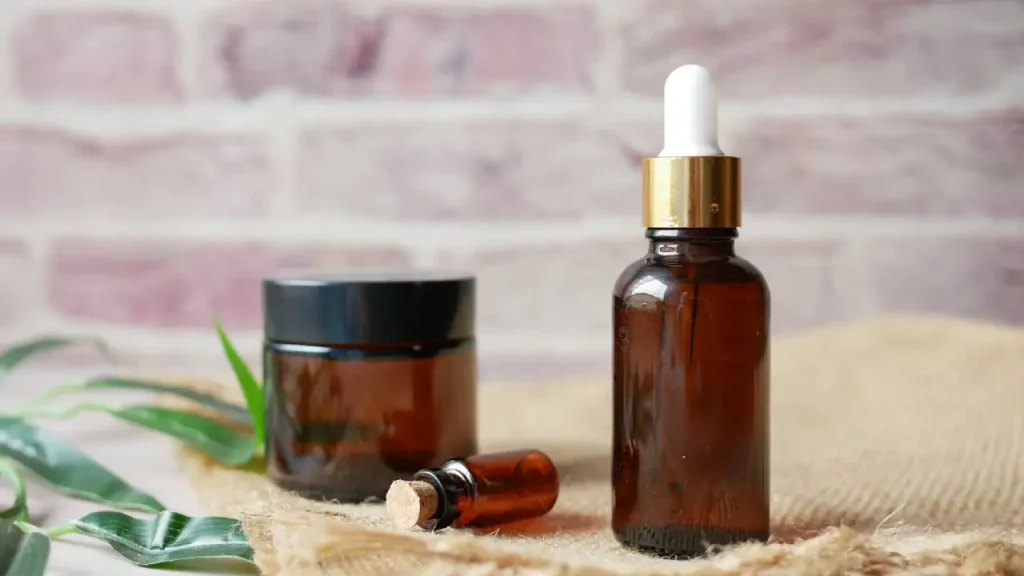
Some properly formulated cosmetic and topical products contain eucalyptus oil.
However, concentrated essential oils can irritate the skin or cause allergic reactions.
NCCIH notes that essential oils can cause skin irritation and allergic reactions when they remain in contact with the skin. NCCIH
That is why essential oils intended for topical use are commonly diluted in a suitable carrier or incorporated into a formulated product.
Do not assume that applying the undiluted oil directly to your skin is safer because it is “pure”.
In this case, pure can mean extremely concentrated.
Should You Use Eucalyptus Oil on Your Face?
Extra caution is sensible.
Facial skin can be more sensitive than skin elsewhere on the body, and essential oils can irritate the eyes and surrounding tissues.
Avoid applying eucalyptus oil near the eyes, inside the nose, or in the mouth.
If a skincare product containing eucalyptus oil causes burning, redness, swelling or itching, stop using it.
Assess persistent or significant reactions appropriately.
Can Eucalyptus Oil Help Dry Skin?
It is not a standard treatment for dry skin.
In fact, a concentrated essential oil may irritate already dry or damaged skin.
For ordinary dry skin, a fragrance-free cream or ointment is a more straightforward and evidence-based starting point.
See Dry Skin: Causes, Simple Treatments and What Actually Helps for a fuller guide.
Can Eucalyptus Oil Treat Acne?
There is not enough high-quality evidence to recommend eucalyptus essential oil as a standard acne treatment.
Acne has established treatments with substantially better evidence, including benzoyl peroxide, topical retinoids, azelaic acid and salicylic acid, depending on the situation.
Applying concentrated essential oil to inflamed spots may further irritate the skin.
For a fuller evidence-based guide, see Acne: What Actually Helps and Which Treatments Work?
What About Eucalyptus Oil for Pain?
Eucalyptus-containing topical products are sometimes marketed for aches and pains.
Some people may enjoy the cooling or warming sensation produced by fragranced topical products.
That sensory effect should not automatically be interpreted as evidence of treatment of the underlying cause.
Persistent or severe pain deserves appropriate assessment rather than repeated use of essential oils.
Does Eucalyptus Oil Help Relaxation?
This is one area where the claim is more modest.
Aromatherapy is often used for relaxation and well-being.
NCCIH notes that research on aromatherapy is still limited for many health conditions, although studies have explored possible effects on sleep and other outcomes.
So it is reasonable to say:
You may enjoy eucalyptus aromatherapy as part of a relaxing routine.
It is much less reasonable to say:
Eucalyptus aromatherapy treats anxiety, insomnia or another medical condition.
The first is a personal experience.
The second is a medical claim requiring stronger evidence.
How Should Eucalyptus Essential Oil Be Used Safely?
Read the product instructions first.
Essential oils vary in concentration, intended use and formulation.
For topical use, use a product specifically formulated for skin or dilute the oil according to reliable guidance rather than applying concentrated oil indiscriminately.
Do not swallow eucalyptus essential oil unless a product has been specifically designed and professionally recommended for oral use.
Do not put essential oil directly into the eyes.
Do not apply it inside the nose or mouth.
Keep it away from children.
And do not assume that mixing an essential oil with another household ingredient automatically makes it safe.
What Happens If You Swallow Eucalyptus Oil?
Do not deliberately ingest essential oil.
Essential oils are highly concentrated products, and swallowing them can be dangerous.
The exact risk depends on the oil, the amount swallowed and the person exposed.
If eucalyptus oil is swallowed accidentally, seek urgent advice from an appropriate poison information or medical service rather than waiting for symptoms to appear.
Never give essential oils to children by mouth as a home remedy.
Why Children Need Extra Care
Use essential oils with particular caution around children.
Their smaller body size and different physiology can increase the consequences of accidental exposure.
Store eucalyptus oil securely and keep it out of reach.
Do not apply concentrated eucalyptus oil directly to a child’s skin or under the nose unless a product specifically intended for children says it is suitable and you follow its directions.
Do not use essential oils as an improvised treatment for breathing problems.
A child with difficulty breathing needs medical attention, not an essential-oil experiment.
Can Eucalyptus Oil Cause an Allergy?
Yes.
Essential oils can cause skin irritation or allergic contact reactions.
A person may develop:
- redness
- itching
- burning
- swelling
- a rash
Stop using the product if a reaction develops.
More serious symptoms such as widespread swelling or difficulty breathing require urgent medical attention.
Is “Natural” a Guarantee of Safety?
No.
This is worth saying again because so much essential-oil marketing depends on the word “natural”.
Eucalyptus oil is natural.
So are many substances that can irritate, poison or otherwise harm the body.
Safety depends on the particular substance, its concentration, how it is used, how much is used and who is exposed.
NCCIH similarly stresses that complementary products must be considered individually because safety varies by product and use.
What About Oil of Lemon Eucalyptus?
This is an important distinction.
Oil of lemon eucalyptus (OLE) is not simply another name for ordinary eucalyptus essential oil.
OLE is derived from the lemon eucalyptus plant and is used in certain insect-repellent products.
NCCIH notes that the CDC recommends registered insect repellents containing oil of lemon eucalyptus for people who prefer a botanical mosquito repellent, while “pure” oil of lemon eucalyptus essential oil has not been well tested for this purpose and is not recommended as a substitute for a formulated repellent.
So do not assume that any bottle labelled “eucalyptus oil” will work as an insect repellent.
The product formulation matters.
Can Eucalyptus Essential Oil Be Used as Perfume?
Yes, as a fragrance ingredient, it may appeal to people who enjoy its strong, fresh scent.
But essential oil isn’t automatically the same as a finished perfume.
A properly formulated fragrance is designed for its intended use.
Pure essential oil is much more concentrated and may not be suitable for direct application as a perfume.
Follow the manufacturer’s directions for the specific product.
What About Mixing Eucalyptus With Other Essential Oils?
Eucalyptus is often blended with other aromatic oils.
Nothing is inherently wrong with a properly formulated blend intended for the intended use.
The problem comes when people assume that combining several concentrated oils makes a stronger or better treatment.
It may simply create a more irritating mixture.
More ingredients do not automatically mean more benefit.
Eucalyptus Oil and Pregnancy
Pregnancy is a situation where extra caution with concentrated essential oils is sensible.
Essential oils are not automatically safe simply because they are plant-derived.
Appropriate advice can depend on the specific oil, concentration, route of exposure, and intended use.
Pregnant or breastfeeding people should discuss medicinal or concentrated essential-oil use with an appropriately qualified healthcare professional, particularly when considering topical or internal use.
When Should You Seek Medical Advice?
Do not use eucalyptus oil as a reason to delay proper medical care.
Seek medical advice for symptoms such as:
- difficulty breathing
- severe or persistent pain
- a serious or spreading skin reaction
- an infection that is worsening
- unexplained persistent congestion
- significant symptoms in a child
For a real medical problem, identifying and treating the cause matters more than finding the strongest-smelling natural product.
Five Eucalyptus Oil Myths to Retire
“Eucalyptus oil cures colds.”
No strong evidence supports that claim.
“Pure oil is better because it has no chemicals added.”
Pure essential oil is highly concentrated and can be more irritating.
“Natural means safe for children.”
Children need particular caution around concentrated essential oils.
“Eucalyptus oil is a natural antibiotic.”
Laboratory antimicrobial activity does not prove that an essential oil can safely replace an antibiotic medicine.
“Any eucalyptus oil can be used as insect repellent.”
Oil of lemon eucalyptus in an appropriately formulated repellent is a specific product category. It is not interchangeable with every eucalyptus essential oil.

The Bigger Picture
Eucalyptus essential oil is neither a miracle cure nor something to fear unnecessarily.
It has legitimate uses.
People use it for its distinctive aroma in fragrances, aromatherapy, and some formulated topical products.
Some laboratory research into eucalyptus compounds is interesting.
But evidence matters.
At present, claims that eucalyptus essential oil itself cures colds or provides a broad range of medicinal benefits go well beyond what the evidence supports. NCCIH
The safest way to use it is to respect what it actually is:
a concentrated botanical product that needs to be used appropriately.
Use products according to their instructions.
Do not swallow essential oils as a home remedy.
Do not apply concentrated oil indiscriminately to skin.
Keep it away from children.
And do not let an appealing “natural” label replace a proper medical diagnosis when you are genuinely unwell.
That is a much more useful message than calling eucalyptus oil a “superpower”.
For evidence-based skincare, see Dry Skin: Causes, Simple Treatments and What Actually Helps
Plus Acne: What Actually Helps and Which Treatments Work?
For healthy skin nutrition, see Foods for Healthy Skin: What Your Diet Can Really Do.
Medical Disclaimer
This information is provided for general educational purposes only. It is not intended to diagnose, treat or prevent any medical condition and should not be considered a substitute for advice from a qualified healthcare professional.
Essential oils are concentrated products and can cause skin irritation, allergic reactions or other harmful effects if misused. Do not swallow eucalyptus essential oil as a home remedy.
Keep eucalyptus oil and other essential oils out of reach of children. Seek urgent medical advice for accidental ingestion, difficulty breathing, severe allergic reactions or other significant symptoms.
Pregnant or breastfeeding people, children and people with medical conditions should obtain appropriate professional advice before using concentrated essential oils for medicinal purposes.
Do not use this article as a substitute for individual medical assessment or professional guidance.
Sources
- National Center for Complementary and Integrative Health — Travel-Related Ailments and Complementary Health Approaches: What the Science Says: https://www.nccih.nih.gov/health/providers/digest/travel-related-ailments-and-complementary-health-approaches-science
- National Center for Complementary and Integrative Health — Sleep Disorders and Complementary Health Approaches: Usefulness and Safety: https://www.nccih.nih.gov/health/sleep-disorders-and-complementary-health-approaches-usefulness-and-safety
- National Center for Complementary and Integrative Health — Safe Use of Complementary Health Products and Practices: https://www.nccih.nih.gov/health/safety