
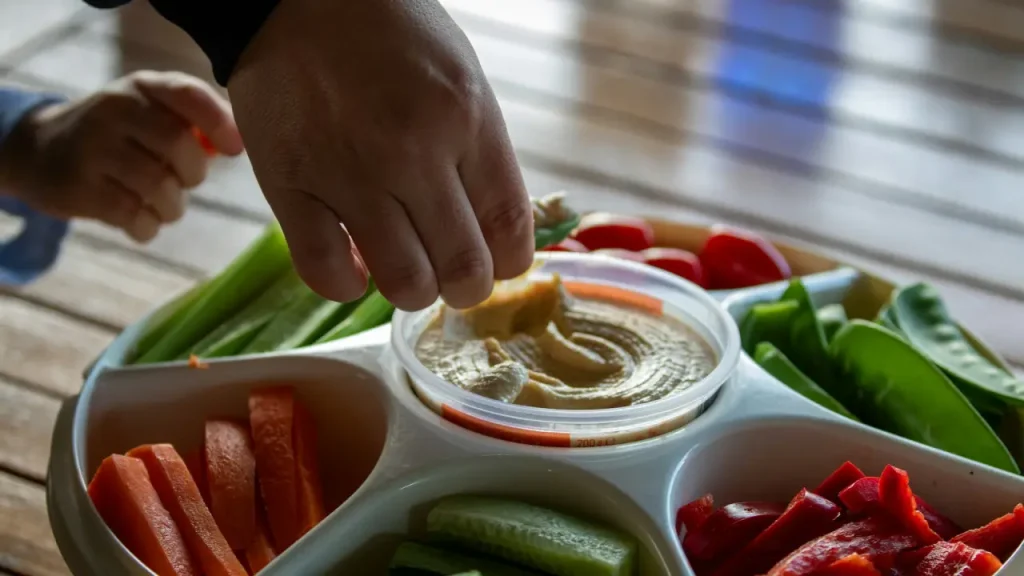
A good dip can make a plate of vegetables much more appealing, and homemade hummus is one of the easiest to prepare.
This lighter hummus recipe combines chickpeas, tahini, garlic, lemon juice and a little olive oil with plain yoghurt. The result is creamy, savoury and fresh, with enough flavour to work as a dip, spread or simple snack.
Unlike many highly flavoured shop-bought dips, making hummus yourself gives you control over the ingredients, seasoning and portion size.
Why Make Your Own Hummus?
Hummus is traditionally made from chickpeas, tahini, lemon juice, garlic and olive oil. Chickpeas are legumes and provide fibre, protein and a range of nutrients, while tahini contributes unsaturated fats.
Harvard’s Nutrition Source includes hummus as a practical accompaniment to vegetables such as carrots, cucumbers, radishes and peppers. The USDA also provides a simple hummus recipe using chickpeas, garlic, lemon juice, tahini and olive oil.
Our version uses a little less olive oil than many traditional recipes and adds plain yoghurt for extra creaminess.
That makes it a useful everyday option, but it is still worth remembering that olive oil, tahini and chickpeas all contribute calories. “Healthy” does not mean unlimited.
Lighter Hummus Ingredients
Makes about 1½ cups
- 1 x 15-ounce (400 g) can chickpeas, drained and rinsed
- 2 cloves garlic, peeled
- 2 tablespoons extra-virgin olive oil
- 1 tablespoon tahini
- 1 tablespoon fresh lemon juice
- 1 tablespoon plain fat-free or low-fat yoghurt
- ¼ teaspoon cayenne pepper, or to taste
- ¼ teaspoon salt, or to taste
- 1–3 tablespoons cold water, as needed for texture
Why add yoghurt?
The original recipe uses a small amount of plain yoghurt to create a creamy texture while keeping the olive oil relatively modest.
You can use Greek yoghurt for a thicker hummus, or ordinary plain yoghurt for a lighter texture.
How to Make Homemade Hummus
- Drain the chickpeas and rinse them thoroughly under cold running water.
- Add the chickpeas, garlic, olive oil, tahini, lemon juice, yoghurt, cayenne pepper and salt to a food processor.
- Blend until the mixture begins to become smooth.
- Scrape down the sides of the processor and blend again.
- Add cold water, 1 tablespoon at a time, until the hummus reaches your preferred consistency.
- Taste and adjust the lemon juice, salt or cayenne pepper.
- Transfer to a bowl and serve immediately, or cover and refrigerate.
How to Get Extra-Smooth Hummus
The biggest difference between average hummus and really smooth hummus is often the blending time.
Don’t stop as soon as the ingredients are combined. Continue processing until the mixture is as smooth as your food processor allows.
If the hummus seems too thick, add a little cold water rather than automatically adding more oil.
You can also remove the skins from the chickpeas for an especially silky texture, although it is not necessary for a good everyday hummus.
How to Adjust the Flavour
Hummus is wonderfully easy to customise.
More lemon
Add another teaspoon or two of fresh lemon juice for a brighter, sharper flavour.
More garlic
Use an additional clove if you enjoy a stronger garlic flavour.
More heat
Increase the cayenne gradually. A small pinch can add warmth without overpowering the chickpeas and tahini.
More savoury depth
A small pinch of ground cumin works particularly well with hummus.
More freshness
Finish with chopped parsley, coriander or a little grated lemon zest.
What Can You Serve with Hummus?
Hummus is much more versatile than a simple dip for carrots.
Try serving it with:
- Cucumber sticks
- Carrot sticks
- Bell peppers
- Radishes
- Celery
- Cherry tomatoes
- Whole-grain crackers
- Whole-wheat pita
- Toasted whole-grain bread
- Falafel or roasted vegetables
The USDA specifically recommends hummus with fresh vegetables, whole-wheat pita, tortillas or crackers, while Harvard also highlights raw vegetables as a practical pairing.
Hummus as a Healthy Snack
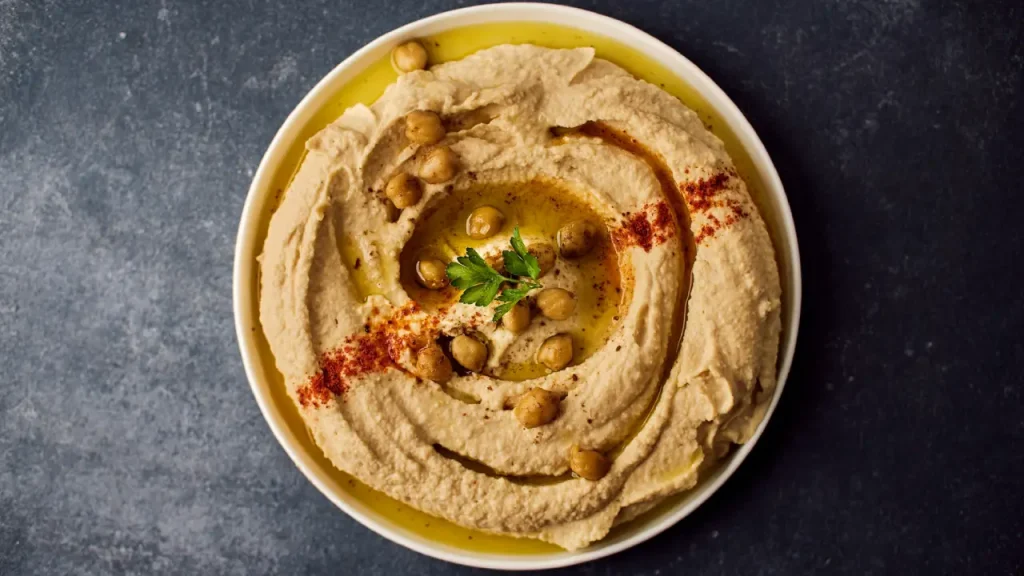
One advantage of hummus is that it can make a simple vegetable snack much more satisfying.
Chickpeas provide fibre and plant protein, while tahini and olive oil contribute unsaturated fats. Pairing hummus with crunchy vegetables gives you a snack with a mix of textures and nutrients, rather than relying on a highly processed dip.
Portions still matter, especially because tahini and olive oil are energy-dense ingredients.
A few spoonfuls with a generous serving of vegetables can be a more sensible snack than eating hummus straight from the bowl with a packet of crackers.
Is This Really a Low-Calorie Hummus Recipe?
It is better described as a lighter hummus recipe than as a specific calorie-saving option.
The original recipe was designed to reduce calories by using less olive oil and adding lower-fat yoghurt. That basic idea still works, but the actual calorie content depends on the exact ingredients and the portion size.
For an accurate calorie figure, you would need to calculate the recipe based on the exact brands and quantities used.
The benefit of making hummus at home is that you can control how much oil, tahini, and other ingredients go into it.
Homemade Hummus vs Shop-Bought Hummus
Shop-bought hummus can be perfectly convenient, but recipes and nutritional values vary widely.
When comparing products, look at:
- Serving size
- Added oils
- Sodium
- Added flavours
- Ingredient list
Harvard’s Nutrition Source notes that hummus can be made from simple ingredients such as chickpeas, tahini, garlic and lemon, while packaged versions can contain additional ingredients depending on the product.
There is nothing wrong with buying hummus when convenience matters. The advantage of making it yourself is simply that you know exactly what went into it.
Can You Make Hummus Without Tahini?
Tahini is a traditional hummus ingredient and adds its characteristic nutty flavour and creamy texture.
You can make chickpea dips without tahini, but technically they will be a variation rather than a classic hummus.
If you don’t have tahini, a small amount of natural nut or seed butter can provide some creaminess, although the flavour will change.
Can You Make Hummus Without Yoghurt?
Yes.
Yoghurt isn’t traditionally required for hummus. We include it here because it helps create a creamy texture while keeping the oil relatively modest.
Simply leave it out and add a little extra cold water while blending if necessary.
Make It Ahead
Hummus is an excellent make-ahead recipe.
Prepare it in advance, transfer it to a clean, covered container and refrigerate it until needed.
The mixture may thicken slightly as it stands. If needed, stir in a teaspoon or two of cold water before serving.
Because hummus is a moist prepared food, keep it refrigerated and use clean utensils when serving.
Can You Freeze Hummus?
Yes, you can freeze hummus in a suitable airtight container.
Leave a little space at the top because the contents can expand when frozen.
Thaw it in the refrigerator, then stir thoroughly. The texture may be slightly different after freezing, but a little cold water and a good stir can often restore some of the original creaminess.
Simple Ways to Use Leftover Hummus
Leftover hummus doesn’t have to become yesterday’s dip.
Try spreading it on:
- Whole-grain toast
- A sandwich or wrap
- A baked potato
- A grain bowl
You can also spoon it alongside roasted vegetables or use it as a creamy base for a simple plate of salad and chickpeas.
Frequently Asked Questions
Is hummus healthy?
Hummus can fit easily into a healthy eating pattern. Chickpeas provide fibre and plant protein, while tahini and olive oil provide mostly unsaturated fats. Overall nutritional value still depends on the ingredients, portion size, and the rest of your diet.
Is hummus good for weight management?
It can be part of a weight-management diet, but hummus isn’t a weight-loss food on its own. Chickpeas and other ingredients can contribute useful nutrients and satiety, but tahini and olive oil are relatively calorie-dense, so portion size remains important.
Can I use dried chickpeas?
Yes. You can use cooked dried chickpeas instead of canned chickpeas. They may give excellent flavour and texture, but they require considerably more preparation.
Why is my hummus bitter?
Tahini can sometimes have a slightly bitter flavour. Too much tahini, older tahini or strongly toasted sesame paste can make the bitterness more noticeable. Fresh lemon juice and a little more chickpea or water can help balance the flavour.
How long does homemade hummus keep?
Keep homemade hummus covered in the fridge, and use it within a few days. If it develops an unusual smell, appearance or flavour, discard it.
Can I make hummus in a blender?
Yes, although a food processor is usually easier for thicker mixtures. A high-powered blender can produce very smooth hummus, but you may need to stop and scrape down the sides several times.
The Bottom Line
Homemade hummus is one of those recipes that is far easier than it first appears.
A can of chickpeas, a little tahini, garlic, lemon juice, yoghurt and olive oil can be turned into a creamy dip in minutes.
This lighter version keeps the familiar flavour while giving you more control over the amount of oil, salt and seasoning.
Serve it with plenty of colourful vegetables, use sensible portions and enjoy it as part of a varied diet.
Sometimes the best healthy recipes are the ones that are so easy you have no excuse not to make them.
Recommended Further Reading:
External References:
- Harvard T.H. Chan School of Public Health — Nutrition Source, Hummus: https://nutritionsource.hsph.harvard.edu/hummus/
- Harvard T.H. Chan School of Public Health — Nutrition Source, Chickpeas: https://nutritionsource.hsph.harvard.edu/food-features/chickpeas-garbanzo-beans/
- USDA MyPlate — Hummus: https://www.myplate.gov/recipes/supplements/hummus