

It is tempting to look for a food or diet that will make depression disappear.
With Nutrition and Depression, the reality is often far more complicated.
What you eat can affect your general physical health, energy and wellbeing, and eating a balanced diet is sensible when you are living with depression. But current evidence does not support the idea that there is one special diet that can reliably treat depression.
Depression is a medical condition. Depending on its severity and circumstances, treatment may include talking therapies, medicines, exercise, guided self-help and other forms of support. Food can be part of the bigger picture, but it should not be presented as a replacement for treatment.
Important: This article provides general health information and is not a diagnosis or a substitute for professional mental-health or medical care.
Can your diet affect your mood?
Yes, but that does not mean food is a cure for depression.
A balanced diet supports general physical health and can make it easier to maintain energy and a regular routine. The NHS recommends eating a healthy diet with regular meals when dealing with low mood or depression.
The British Dietetic Association’s 2026 guidance is more cautious about specific diets: it says the evidence is mixed and there is not yet enough good-quality evidence to know whether following a particular diet can help manage depression.
That is an important distinction.
Healthy eating is worthwhile. A “depression diet” is not an established cure.
Why eating well can become difficult during depression
Depression can affect appetite, motivation, energy and daily routine.
Some people lose their appetite and struggle to eat enough. Others use food for comfort and may eat more than usual. Depression and antidepressants can also affect appetite and weight.
That means telling someone with depression to simply “eat healthier” can miss the real problem.
Sometimes the most useful first step is not cooking a perfect meal. It is making sure you eat something regularly and maintain enough food and fluid intake.
Aim for a balanced diet, not a perfect one
Nutrition and depression is a complex problem, but there is no need to turn eating into another source of stress.
A balanced diet can include:
- plenty of vegetables and fruit
- wholegrain or higher-fibre starchy foods
- beans, peas and lentils
- sources of protein such as eggs, fish, meat, dairy or suitable alternatives
- healthier unsaturated fats
- enough fluids
The British Dietetic Association recommends using the UK’s Eatwell Guide as the basis for balanced eating when someone is experiencing depression.
The goal is not to eat perfectly.
The goal is to eat well enough, regularly enough and sustainably enough to support your health.
Regular meals can help
When motivation is low, it is easy to skip meals and then become exhausted or excessively hungry later.
Try to keep some kind of regular eating pattern.
This does not have to mean three elaborate meals every day.
A simple breakfast, an easy lunch and a straightforward evening meal may be much more realistic.
If cooking feels overwhelming, convenience foods can have a place. The fact that a meal is simple does not make it a failure.
What about carbohydrates?
Carbohydrate-containing foods such as bread, rice, pasta, potatoes and other starchy foods provide glucose, which the brain and body use for energy.
The BDA notes that skipping meals or avoiding carbohydrates completely can contribute to excessive hunger, tiredness, irritability, headaches and dizziness.
There is therefore no good reason to assume that carbohydrates are automatically “bad for your mood”.
The type, amount and overall balance of carbohydrate foods matter more than simply trying to eliminate them.
Protein and essential fats matter too
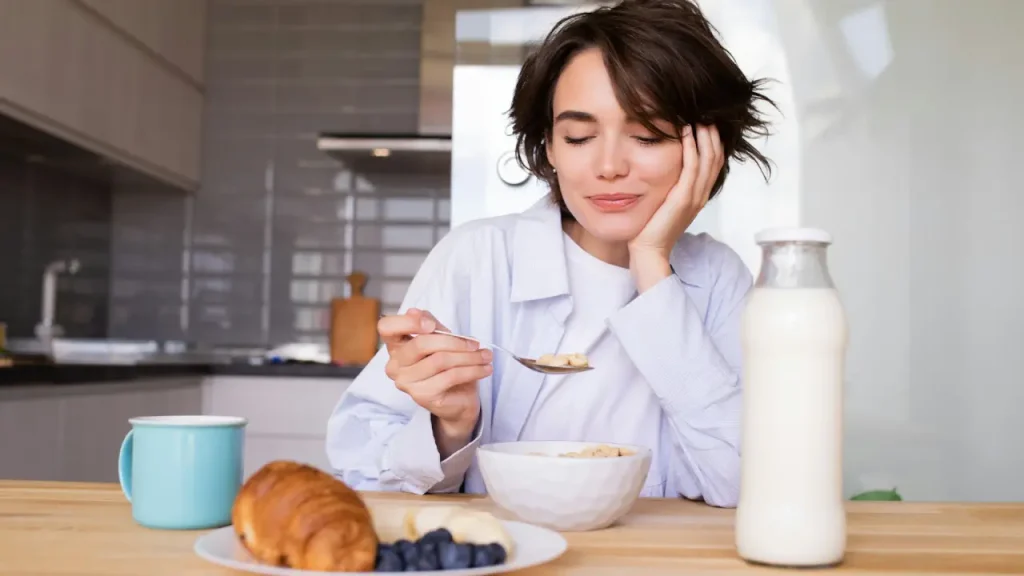
Protein provides amino acids that the body uses to make many important substances, including neurotransmitters.
Dietary fat is also an essential part of a healthy diet, and oily fish is a useful source of omega-3 fatty acids.
That does not mean that eating more protein or taking an omega-3 supplement will automatically treat depression.
It simply means that a varied diet provides the nutrients your body needs to function normally.
What about vitamins and minerals?
A varied diet helps provide the vitamins and minerals your body needs.
The BDA notes that when people do not eat enough nutrient-rich foods, they may lack important vitamins and minerals, which can affect energy and wellbeing.
This is another reason to avoid extreme diets that eliminate large groups of foods without a clear medical reason.
If you suspect you have a nutrient deficiency, it is better to discuss it with a healthcare professional than to assume a supplement will fix the problem.
Is the Mediterranean diet good for depression?
Mediterranean-style eating is often associated with better overall health and is widely recommended for conditions such as cardiovascular disease.
There is also research suggesting possible benefits for depressive symptoms.
However, current evidence is not strong enough to say that a Mediterranean diet is a treatment for depression in the way that established psychological or medical treatments are. The British Dietetic Association’s 2026 review specifically says there is not enough good-quality evidence to know whether a particular diet helps manage depression.
A Mediterranean-style pattern can still be an excellent way of eating because it emphasises vegetables, fruit, wholegrains, pulses, nuts, fish and healthier fats.
Just don’t confuse a healthy dietary pattern with a cure for depression.
Can food replace antidepressants or therapy?
No.
If you have diagnosed depression and have been prescribed antidepressants, do not stop taking them because you have changed your diet.
The NHS states that treatment for depression can involve self-help, talking therapies and medicines, depending on the severity and circumstances.
A healthier diet can sit alongside treatment.
It should not be used to delay or replace treatment that you need.
What about supplements?
Supplements are often marketed as natural ways to improve mood.
Be cautious.
A supplement is not automatically effective or safe because it is sold as natural. Some supplements can interact with medicines, including antidepressants, and taking unnecessary supplements can sometimes create new problems.
The NHS advises checking with a doctor or pharmacist before taking over-the-counter remedies or nutritional supplements alongside antidepressants.
If you think you might have a deficiency, ask a healthcare professional whether testing or supplementation is appropriate.
Alcohol, caffeine and mood
Alcohol can make low mood and sleep problems worse for some people. The NHS advises avoiding using alcohol as a way of coping with low mood.
Caffeine affects people differently. Some find that it increases anxiety or interferes with sleep. The BDA recommends paying attention to whether caffeine is affecting anxiety or sleep.
This does not mean everyone must give up coffee.
It means paying attention to how your own body responds.
When depression makes eating difficult

If you have depression and are struggling to eat, focus on manageable food, not an ideal diet.
Keep easy options available.
For example:
- yoghurt and fruit
- soup and wholegrain toast
- eggs on toast
- porridge
- beans on toast
- a simple sandwich
- a ready-made meal when cooking feels impossible
The BDA specifically recognises that symptoms of depression can make maintaining a healthy lifestyle more difficult.
A realistic meal is better than skipping food because you could not manage the “perfect” meal.
When comfort eating becomes a problem
Some people eat more when depressed, stressed or lonely.
Food can provide temporary comfort, but repeated comfort eating can become frustrating if it leaves you feeling guilty or out of control.
Try to notice the pattern without turning it into another reason to criticise yourself.
Ask:
Was I hungry?
What was I feeling before I ate?
What might have helped in that moment?
You do not need to ban comfort foods.
The aim is to create more choices in how you respond to difficult emotions.
The gut-brain connection
You may have heard a lot about the “gut-brain axis” and claims that changing your gut bacteria can cure depression.
This is an active area of research, but it is not a reason to make confident claims about probiotic foods or supplements curing depression.
Research into nutrition, the gut microbiome and mental health is developing, and we should be careful not to turn promising research into guaranteed treatments before the evidence supports that conclusion.
What actually helps depression?
If you are experiencing depression, food is only one part of the picture.
The NHS recommends a range of approaches depending on the individual and the severity of depression. These can include exercise, guided self-help, talking therapies and antidepressants.
Lifestyle changes can also be valuable.
The NHS recommends regular meals and a healthy diet, along with staying active, keeping in touch with other people and maintaining a routine where possible.
Think of nutrition as supporting your overall health, not as the entire treatment.
When should you seek professional help?
Speak to a healthcare professional if a low mood lasts for around two weeks or more, particularly if it is affecting your everyday life. Depression can cause persistent sadness, loss of enjoyment, hopelessness, difficulty concentrating, sleep problems and other symptoms.
Seek urgent help if you are having thoughts of suicide or self-harm, or if you feel unable to keep yourself safe.
Do not wait for a diet change to “fix” serious depression.
A sensible approach to food and mood

Forget the idea of a miracle food.
Instead:
Eat regular meals where possible.
Aim for a balanced diet rather than a restrictive one.
Include a variety of foods.
Stay hydrated.
Notice whether alcohol or caffeine affects your mood or sleep.
Avoid using supplements as a substitute for treatment.
Get professional help if depression is persistent or severe.
These are not flashy recommendations.
They are realistic ones.
The bottom line
There is a genuine relationship between nutrition and overall mental and physical health, but the evidence does not support the claim that a particular diet can reliably cure depression.
A balanced diet with regular meals can support general wellbeing, energy and routine. It may be a valuable part of living with depression, but it should sit alongside appropriate treatment rather than replace it.
And perhaps the most important point is this:
You do not have to eat perfectly to look after your mental health.
When depression makes everyday life difficult, make food simpler, keep expectations realistic and ask for help when you need it.
Recommended Further Reading:
- Healthy Weight Loss: How to Change Your Habits Without Losing Your Mind
- Unhealthy Habits: How to Break Them and Build Healthier Ones
- Self Improvements to build a better life
- Meditation
Medical Disclaimer
The information provided in this article is for general educational purposes only. It is not intended to diagnose, treat, cure or prevent depression or any other medical condition, and it should not be used as a substitute for professional medical advice, diagnosis or treatment.
Depression can be a serious mental-health condition. If low mood persists, interferes with daily life, or is accompanied by hopelessness or thoughts of self-harm, seek appropriate professional help. In a mental-health emergency, contact your local emergency service or crisis service.
Do not stop antidepressants or other prescribed treatment because of information in this article. Speak to your doctor or pharmacist before starting supplements, particularly if you take medication.
Natural Health Kingdom does not accept responsibility for any loss or injury resulting from reliance on information contained in this article.