
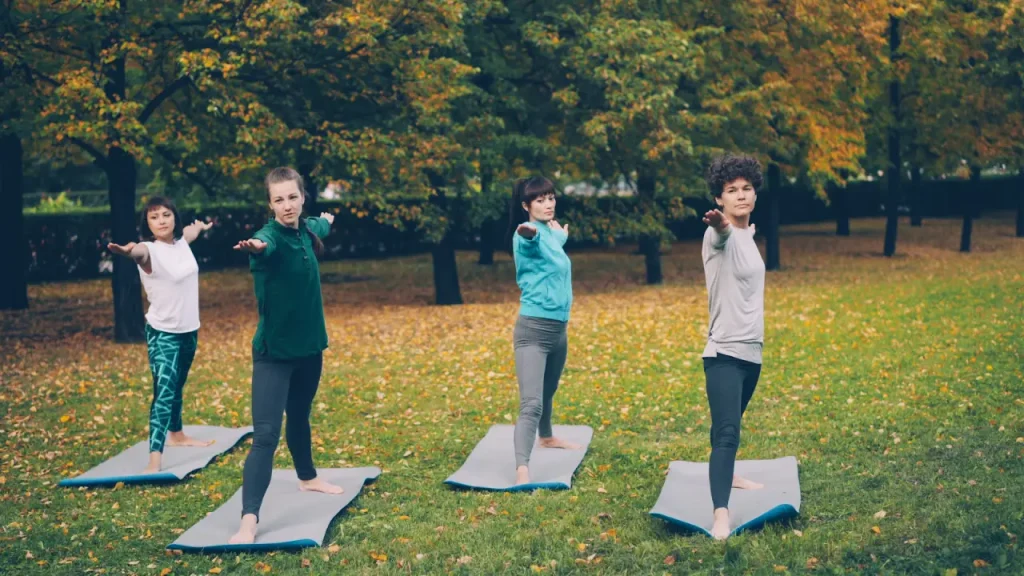
Pilates for weight loss is a surprisingly common search, but can Pilates actually help you lose weight?
Many people turn to Pilates for weight loss, but can Pilates actually help you lose weight?
The answer is yes, it can contribute to weight loss and healthier body composition – but it is not a magic fat-burning workout…
It is often promoted as a way to tone the body, strengthen the core and improve fitness.
But there is another question that comes up again and again:
Can Pilates actually help you lose weight?
The answer is yes, it can contribute to weight loss and healthier body composition — but it is not a magic fat-burning workout, and the evidence does not show that Pilates is superior to other forms of exercise for losing body fat.
That distinction matters.
Pilates can be a very useful form of exercise, particularly for people who enjoy it, prefer lower-impact training or want to improve strength, balance, flexibility and movement quality.
But losing weight is not simply a question of choosing the right exercise.
Your overall eating pattern, activity level, body composition, sleep, behaviour and individual circumstances all matter.
What Is Pilates?
Pilates is a form of exercise developed around controlled movements, posture, breathing, balance, strength and body awareness.
Many Pilates exercises place particular emphasis on the muscles of the trunk, hips and pelvis, while also challenging coordination and flexibility.
There are several forms of Pilates, including mat-based Pilates and equipment-based systems such as reformer Pilates.
The type of Pilates session matters because the intensity and energy expenditure can vary considerably.
Can Pilates Help You Lose Weight?
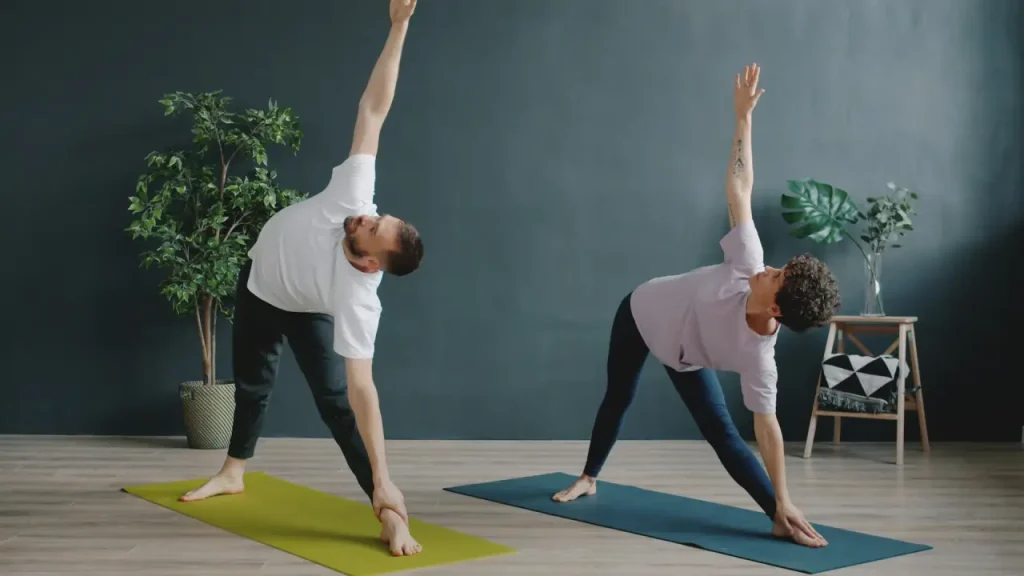
Research in adults with overweight or obesity has found reductions in body weight, BMI and body-fat percentage following Pilates programmes.
For example, a 2021 meta-analysis of 11 randomised controlled trials involving 393 adults with overweight or obesity found that Pilates was associated with reductions in body weight, BMI and body-fat percentage. However, the studies differed in their methods and the amount of training, so the results should not be interpreted as proof that Pilates is a uniquely powerful weight-loss exercise.
Other research is less enthusiastic.
A 2020 systematic review and meta-analysis found that mat Pilates was not more effective than traditional exercise or control conditions for reducing BMI, lean mass, body-fat percentage or abdominal circumference. The authors also found no superiority when looking specifically at overweight or obese participants.
A 2022 systematic review of Pilates in healthy adults concluded that its effects on body composition remained uncertain because the results were inconsistent and high-quality studies were scarce.
So the fairest conclusion is:
Pilates may help with weight and body composition, but it has not been shown to be clearly superior to other effective forms of exercise.
Why Doesn’t the Research Give Us a Simple Answer?
Exercise studies are difficult to compare.
Different studies use:
- different Pilates programmes
- different training frequencies
- different session lengths
- different participants
- different diets
- different comparison groups
- different ways of measuring body composition
Some programmes may be relatively gentle.
Others may be physically demanding.
Some participants may also change their eating habits while taking part in an exercise study.
That means it is difficult to say:
“Do exactly X minutes of Pilates three times a week and you will lose Y amount of weight.”
Real life simply isn’t that predictable.
How Many Calories Does Pilates Burn?
Pilates is generally a light-to-moderate intensity activity, although the intensity can vary substantially with the style and difficulty of the session.
A 2025 systematic review and meta-analysis estimated that typical Pilates sessions averaged about 3.7 METs and approximately 3.8 kcal per minute, with the researchers describing the evidence as low certainty and highly heterogeneous. More conservative analyses estimated around 2.9 kcal per minute.
Those figures are useful for understanding the general intensity of Pilates, but they are not a personal calorie-burn calculator.
Your actual energy expenditure depends on factors including:
- body size
- exercise intensity
- fitness
- session length
- rest periods
- the type of Pilates
- how consistently you perform the movements
And calories burned during one session are not the same thing as long-term weight loss.
Does Pilates Burn Enough Calories to Cause Weight Loss?
It can contribute.
But it is usually more useful to think of Pilates as one part of your activity pattern rather than as a calorie-burning machine.
For example, someone might do Pilates several times a week while also walking regularly and making sensible changes to their diet.
Another person might do Pilates once a week and remain mostly sedentary.
The two situations are obviously very different.
The amount of energy you expend during Pilates is only one small part of the overall picture.
Pilates and Body Fat Are Not Exactly the Same as Weight
This distinction is important.
The number on the scales tells you about body weight.
It does not tell you exactly how that weight is distributed between:
- body fat
- muscle
- water
- bone
- other tissues
Exercise can sometimes change body composition without producing dramatic changes in total body weight.
Some research has reported reductions in body-fat percentage or improvements in lean mass following Pilates programmes, although the overall evidence is mixed.
That is one reason not to judge an exercise programme solely by the bathroom scales.
Why Pilates May Still Be Excellent for Weight Management
Even when fat loss is not dramatic, Pilates can offer useful benefits.
Strength and Muscular Endurance
Pilates can challenge muscles repeatedly and improve muscular endurance.
Earlier systematic reviews found evidence that Pilates can improve muscular endurance, flexibility and dynamic balance in healthy people.
Flexibility and Mobility
Regular Pilates can help improve flexibility and range of movement.
That may make other types of physical activity easier to perform.
Balance and Body Awareness
Controlled movements, balance and coordination are important parts of Pilates.
Those qualities can be useful as you get older.
Low-Impact Exercise
Pilates is often appealing to people who dislike high-impact exercise.
That can matter enormously.
An exercise programme that someone enjoys and can continue is generally more useful than a theoretically excellent programme they abandon after two weeks.
Quality of Life
A 2023 umbrella review found that Pilates may provide benefits across several health outcomes, although the certainty of evidence varied from very low to moderate.
A 2026 systematic review and meta-analysis also found evidence suggesting potential improvements in psychological well-being and quality of life, although the overall evidence was not uniformly conclusive.
Is Pilates Better Than Cardio for Weight Loss?
There is no good reason to think Pilates automatically beats aerobic exercise for weight loss.
Walking, cycling, swimming, running and other aerobic activities can all increase energy expenditure.
Pilates offers a different combination of benefits, with more emphasis on controlled movement, strength, muscular endurance, flexibility, balance and body awareness.
You do not have to choose one forever.
Many people would benefit from combining different types of activity.
Can Pilates Replace Strength Training?
Pilates can certainly provide resistance to the muscles and can improve muscular strength and endurance.
However, traditional resistance training allows you to progressively increase external load in a very measurable way.
That makes conventional strength training particularly useful when the goal is to build or preserve muscle.
You can therefore think of Pilates as a valuable form of strengthening exercise, rather than assuming it has to replace every other form of resistance training.
Pilates and Weight Loss: The Diet Still Matters
This is where the old article got one important principle right: exercise is only part of weight management.
A Pilates session does not cancel out a diet that consistently supplies more energy than your body needs.
At the same time, you do not need to “earn” food through exercise.
A better approach is to combine enjoyable physical activity with a sensible eating pattern.
Our guide to Calories and Carbohydrates for Weight Loss explains how calorie balance and food quality fit together, while 5 Evidence-Based Weight Loss Tips That Actually Work covers practical strategies for sustainable weight management.
How Often Should You Do Pilates?
There is no single perfect number of Pilates sessions for everybody.
A sensible starting point is to choose a frequency you can maintain and gradually build your activity around it.
For example, someone might begin with:
2 or 3 Pilates sessions per week
and add regular walking or other aerobic activity.
Another person might prefer one Pilates class each week combined with strength training and daily walking.
Consistency matters more than finding the theoretically perfect schedule.
Can Pilates Help If You’re a Complete Beginner?
Yes.
One advantage of Pilates is that exercises can be adapted to different ability levels.
A beginner should focus on learning the movements properly rather than trying to perform advanced exercises immediately.
A qualified instructor can be especially useful if you are unfamiliar with Pilates, have an injury or are unsure how to modify movements safely.
Is Pilates Suitable for People Who Are Overweight?
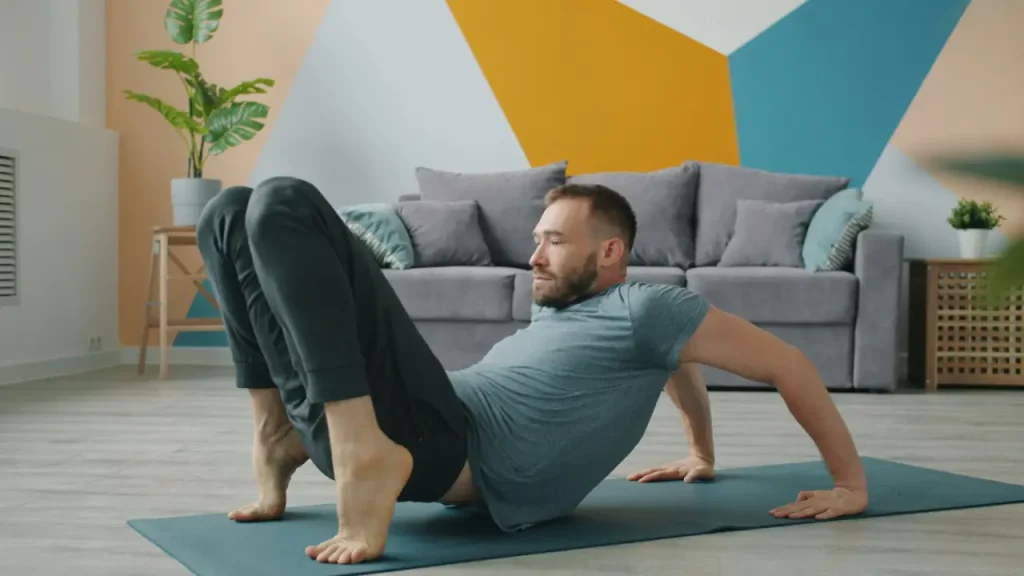
For some people, Pilates is an appealing way to become more active without immediately taking on high-impact exercise.
But suitability depends on the individual.
If you have significant joint pain, recent surgery, a major injury, cardiovascular problems or another medical condition that could affect exercise safety, get appropriate professional advice before starting a new programme.
What About Pilates for Older Adults?
Pilates can be particularly attractive later in life because it combines controlled movement, balance, strength and flexibility.
The evidence base is not perfect, but systematic reviews have found improvements in areas such as flexibility, balance and muscular endurance.
For older adults, the biggest benefit may not be losing a particular number of pounds.
It may be maintaining the ability to move confidently and independently.
What About Reformer Pilates?
Reformer Pilates uses specialised equipment to provide resistance through springs, straps and a moving carriage.
The machine can allow a wide range of exercises and resistance levels.
It can be an excellent way to learn or progress Pilates, but you do not need a reformer to benefit from Pilates.
Mat Pilates can also provide a challenging workout.
And if weight loss is your main goal, buying expensive equipment does not automatically make the exercise more effective.
Can Pilates Reduce Belly Fat?
No exercise can guarantee that you will lose fat from one specific part of the body.
Doing exercises that target your abdominal muscles can strengthen those muscles, but it does not mean the fat covering them will disappear specifically because you trained your abs.
Overall fat loss is influenced by energy balance, genetics and individual physiology.
Pilates can strengthen the core without providing a magical shortcut to a flat stomach.
Is Pilates Good for Posture?
Pilates places considerable emphasis on posture, alignment and controlled movement.
Some research suggests benefits for posture and related physical function, although the effect depends on the population and the programme used.
Better posture is also about more than simply “standing up straight”.
Strength, mobility, awareness and the way you move all matter.
Pilates vs Yoga: Which Is Better for Weight Loss?
Neither is automatically better.
Yoga and Pilates have different traditions and styles, and individual classes can range from gentle to physically demanding.
The best choice is often the one that you enjoy enough to practise consistently.
Some people prefer Pilates because of its emphasis on controlled strengthening and core work.
Others prefer yoga because they enjoy its combination of movement, flexibility, breathing and mindfulness.
And there is nothing stopping you from doing both.
What If Pilates Isn’t Enough for Weight Loss?
That’s completely fine.
You don’t need one exercise to do everything.
A more complete activity pattern could include:
- Pilates
- walking
- cycling
- swimming
- resistance training
- other aerobic activity
- everyday movement
The important thing is to choose activities that suit your health, preferences and current fitness.
A Practical Pilates-and-Weight-Loss Approach
Rather than treating Pilates as a fat-burning solution, think of it as one piece of a larger plan.
Step 1: Choose a Pilates routine you enjoy
This is more important than choosing the “hardest” programme available.
Step 2: Practise consistently
A manageable routine performed regularly is more useful than occasional heroic workouts.
Step 3: Keep moving outside Pilates
Walking and other everyday activity count.
Step 4: Include some aerobic activity
This gives you a different training stimulus and helps build overall fitness.
Step 5: Consider progressive resistance training
Especially if preserving or building muscle is important to you.
Step 6: Pair activity with a sensible eating pattern
Your overall diet still matters for creating the energy deficit needed for weight loss.
Step 7: Judge success by more than your weight
Look at strength, fitness, mobility, energy, confidence and consistency as well as the scale.
Frequently Asked Questions
Can Pilates make you lose weight?
It can contribute to weight loss, particularly when combined with an appropriate eating pattern and other physical activity. Research has found reductions in weight and body fat in some groups, but Pilates has not been shown to be consistently superior to other forms of exercise.
How many times a week should I do Pilates to lose weight?
There is no universal number. Two or three sessions per week can be a practical starting point for some people, but your overall activity pattern matters more than a specific number of Pilates sessions.
Does Pilates burn many calories?
Pilates is generally light to moderate in metabolic intensity, although this varies by session. A recent systematic review estimated roughly 3.8 kcal per minute on average, but the evidence is low certainty and highly heterogeneous.
Is Pilates better than running for weight loss?
Not necessarily. Running generally produces greater energy expenditure per unit of time, while Pilates offers other benefits such as muscular endurance, flexibility, balance and controlled strengthening.
Can Pilates flatten your stomach?
Pilates can strengthen abdominal and trunk muscles, but it cannot specifically remove belly fat. Overall fat loss and individual biology determine where body fat is lost.
Can I lose weight with Pilates alone?
Possibly, but it depends on your overall energy balance and activity pattern. Pilates is better viewed as one part of a healthy weight-management strategy than as a stand-alone fat-loss solution.
Is Pilates good for women over 50?
It can be. Pilates may help support flexibility, muscular endurance, balance and physical function, although individual needs differ.
Is reformer Pilates better for weight loss than mat Pilates?
There isn’t strong evidence that reformer Pilates is inherently superior for weight loss. The best option is the one that you enjoy, can perform safely and can practise consistently.
Can Pilates help preserve muscle while losing weight?
Pilates can provide muscular loading and may support strength and muscular endurance. However, if preserving or increasing muscle is a major goal, progressive resistance training may provide a more direct stimulus.
Should I eat less if I start Pilates?
Not automatically. Weight loss depends on your overall energy balance. The goal is to create a sensible, sustainable energy deficit rather than compensating for exercise by becoming excessively restrictive.
The Bottom Line
Pilates can be a useful part of a weight-loss plan.
It can improve muscular endurance, flexibility, balance, movement control and physical confidence, and some research suggests it can contribute to reductions in body weight and body fat.
But it is not a magic fat-burning workout.
The evidence is mixed, and current research does not show that Pilates consistently outperforms other forms of exercise for improving body composition.
The smartest approach is therefore not to ask:
“Is Pilates the best exercise for weight loss?”
Ask:
“Is Pilates an exercise I enjoy enough to do consistently, alongside a healthy eating pattern and a generally active lifestyle?”
For many people, the answer will be yes.
And that may be its biggest advantage.
Recommended Further Reading:
- Increase your metabolisl lose weight
- How Your Mindset Can Make Weight Loss Easier
- Why Sustainable Weight Loss Beats Short-Term Dieting
- How to Reward Yourself for Weight Loss Without Using Food
Medical Disclaimer
This article is intended for general educational purposes and is not a substitute for individual medical advice. If you have a medical condition, significant joint pain, a recent injury or surgery, cardiovascular problems, or another health issue that may affect exercise safety, seek advice from an appropriately qualified healthcare professional before starting a new exercise programme.