

Red wine and resveratrol have been linked with claims about heart health, ageing, antioxidants and cancer prevention for years.
The story sounds attractive: grapes contain resveratrol, resveratrol has interesting biological effects, and red wine contains some resveratrol. So it is tempting to conclude that drinking red wine must therefore be good for you.
The evidence does not support that simple chain of reasoning.
Resveratrol is a naturally occurring polyphenol found in grape skins and in foods such as some berries and peanuts. Researchers have studied it extensively, particularly as a supplement. Some recent reviews of randomised trials have found modest improvements in particular measurements, including blood pressure, cholesterol, inflammation, and metabolic outcomes. But results vary, effects are often small, and no broadly accepted clinical regimen exists for using resveratrol as a general treatment or disease-prevention supplement. Resveratrol clinical-trial review 2026 umbrella review
Red wine is a different question.
Although wine contains resveratrol, it also contains ethanol, and alcohol itself is associated with cancer and other health risks. Current NHS guidance no longer supports the old idea that moderate drinking is generally good for the heart, while WHO guidance emphasises that alcohol increases cancer risk and that no safe level can be established for cancer prevention. NHS: The risks of drinking too much WHO Europe: Alcohol and cancer
So the useful question is not “Is red wine healthy?”
It is:
What do we actually know about resveratrol, grapes and alcohol — and what should we do with that information?
What Is Resveratrol?
Resveratrol is a plant compound belonging to a group called polyphenols.
It is found most notably in grape skins, which is one reason red wine attracted so much attention. It is also found in smaller amounts in some berries and peanuts.
The important point is that finding a compound in a food is not the same as proving that consuming the food produces a specific health benefit.
Why Did Resveratrol Become So Famous?
Laboratory and animal research produced intriguing findings involving inflammation, oxidative stress, metabolism and cell signalling.
Those findings are useful for scientific research, but they do not automatically become human health recommendations.
A compound can affect a cell or animal model without producing the same effect when consumed by humans.
That is why human clinical trials matter.
Is Resveratrol an Antioxidant?
Resveratrol has antioxidant activity in laboratory experiments, but “antioxidant” is not a magic health category.
Many compounds can act as antioxidants in particular experimental settings.
What matters for human health is whether consuming the compound changes meaningful outcomes in people.
A laboratory result is therefore a starting point, not proof that a supplement prevents disease.
Does Resveratrol Prevent Cancer?
Laboratory research has explored resveratrol’s possible effects on processes involved in cancer biology.
That does not establish that taking a resveratrol supplement prevents cancer in humans.
A 2024 systematic review of clinical trials concluded that no conclusive clinical evidence supports recommending resveratrol in healthcare for a specific condition or endpoint. Brown et al., 2024
The research remains interesting, but it does not justify a cancer-prevention claim.
Can Resveratrol Improve Heart Health?
Researchers have investigated resveratrol for cardiovascular risk factors.
Some meta-analyses report modest changes in blood pressure, endothelial function or blood lipids in particular groups.
A 2026 umbrella review reported high-certainty evidence for some specific effects, including lower blood pressure among patients with type 2 diabetes and lower total cholesterol among overweight adults. It also reported possible benefits for several other outcomes.
That is interesting, but it is not the same as proving that resveratrol prevents heart attacks or strokes.
Changing a risk marker and improving a clinical outcome are not automatically the same thing.
What About Blood Pressure?
Some studies suggest that supplementation may lower blood pressure in particular groups.
The 2026 umbrella review found a high-certainty reduction in systolic and diastolic blood pressure among people with type 2 diabetes. 2026 umbrella review
Context matters: dose, duration, baseline health and the exact formulation can all influence results.
Resveratrol should not be used as a substitute for established treatment for hypertension.
Could Resveratrol Help With Cholesterol?
Evidence also suggests possible modest improvements in some lipid measurements.
The 2026 umbrella review reported reduced total cholesterol among overweight adults.
Again, a change in a blood measurement is not proof that a supplement prevents cardiovascular disease.
People with high cholesterol should follow appropriate medical and lifestyle advice rather than replacing established treatment with resveratrol.
Does Resveratrol Help With Weight Loss?
Some meta-analyses have found small reductions in BMI, waist circumference or body weight.
A 2024 umbrella meta-analysis reported reductions in BMI, waist circumference, and some inflammatory markers, while effects on overall body weight were less consistent.
A later critical umbrella review also found statistically significant reductions in body weight, BMI, waist circumference and body fat, but the effect sizes were small.
“Statistically significant” does not necessarily mean “large enough to make a major difference in everyday life”.
Resveratrol is not a replacement for sustainable weight-management habits.
Does Resveratrol Reduce Inflammation?
Researchers have studied resveratrol extensively in relation to inflammatory markers.
Some reviews report reductions in markers such as C-reactive protein and tumour necrosis factor-alpha.
That is a reason for further research, but it does not establish that taking resveratrol prevents inflammatory disease.
Inflammation is also a normal part of the immune response, so the goal is not simply to eliminate it.
Is Red Wine a Good Way to Get Resveratrol?
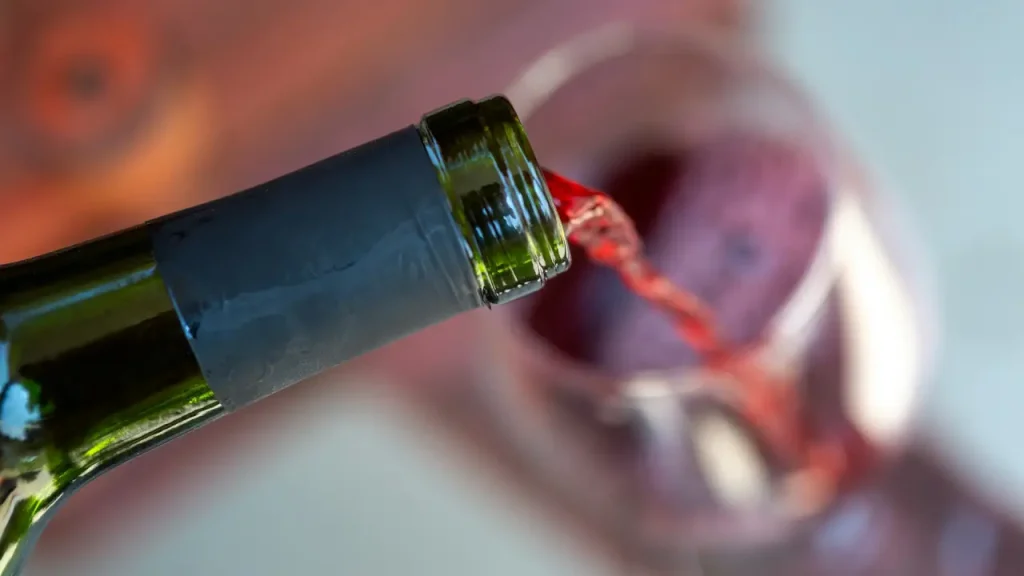
This is where the traditional red-wine story becomes misleading.
Yes, red wine contains resveratrol.
But drinking red wine also exposes you to alcohol.
You cannot make the alcohol “healthy” simply because the drink contains a plant compound with potentially useful biological effects.
The amount of resveratrol in wine also varies, and supplements can provide much larger amounts than normal dietary exposure.
If someone does not drink alcohol, there is no health reason to start drinking red wine for resveratrol.
What Was the “French Paradox”?
For years, the so-called “French Paradox” was used to explain why some French populations appeared to have relatively low rates of coronary heart disease despite diets that were sometimes described as high in saturated fat.
Red wine was often proposed as part of the explanation.
The problem is that population differences can reflect many factors, including diet, activity, smoking, healthcare, socioeconomic conditions and measurement methods.
The old belief that moderate alcohol consumption is broadly protective has also been weakened by better research.
The NHS now says that evidence for a protective effect from moderate drinking is less strong than previously thought. NHS
Is Red Wine Good for the Heart?
We need to separate wine from resveratrol.
Older observational studies sometimes found lower cardiovascular risk among moderate drinkers than among heavier drinkers or non-drinkers.
But observational research is vulnerable to confounding and other biases.
Current public-health guidance therefore does not recommend starting to drink alcohol for heart protection.
The WHO states that available evidence cannot establish a level of alcohol consumption at which possible cardiovascular benefits clearly outweigh cancer risks for an individual. WHO Europe
What About Cancer Risk From Red Wine?
This part is much clearer.
Alcohol itself increases the risk of several cancers.
WHO states that there is no safe level of alcohol consumption in relation to cancer risk and that even small amounts increase the risk of most alcohol-related cancers.
IARC identifies a causal relationship between alcohol consumption and cancers including those of the oral cavity, pharynx, larynx, oesophagus, liver, colorectum and female breast.
So red wine should not be presented as a cancer-prevention food because it contains resveratrol.
Does Moderate Drinking Still Have Any Health Benefit?
Some studies have reported possible associations between low alcohol consumption and particular cardiovascular outcomes.
However, alcohol increases cancer risk even at relatively low levels, and current evidence does not establish a universally safe level.
The NHS advises that people who drink regularly should not exceed 14 units a week, and recommends several drink-free days each week.
For cancer prevention, avoiding alcohol is the lower-risk choice.
Can You Get Resveratrol Without Drinking Alcohol?
Yes.
Resveratrol occurs naturally in foods including grapes, some berries and peanuts.
But you shouldn’t treat ordinary food intake as a therapeutic dose.
Grapes and berries are useful foods because they provide a mixture of nutrients and plant compounds, not because they are a simple resveratrol medicine.
What About Resveratrol Supplements?
Supplements are different from ordinary food.
Clinical trials often use defined doses of purified resveratrol that can be much higher than normal dietary exposure.
Recent reviews still show no consensus clinical regimen for resveratrol as a general treatment. A 2024 systematic review found no conclusive clinical evidence to support routine healthcare recommendations for resveratrol, despite a large body of research.
Keep that position in mind when reading supplement advertising.
Are Resveratrol Supplements Safe?
Resveratrol has generally been reasonably well tolerated in clinical studies, but that does not mean it is risk-free.
Higher doses can cause gastrointestinal symptoms and other adverse effects.
Supplement quality can also vary.
Anyone taking prescription medication, preparing for surgery, pregnant or breastfeeding, or managing a medical condition should discuss supplements with an appropriately qualified healthcare professional.
A dose used in a research study should not automatically become a personal self-prescribing instruction.
Why Laboratory Research Can Mislead
There is an important lesson here.
A substance can have impressive effects in a laboratory without becoming an effective medicine.
Cells can be exposed directly to concentrations that are difficult to achieve safely through food.
Animal studies can also use doses that do not translate neatly to human dietary intake.
That does not make laboratory research useless.
It means we need to follow the evidence through the stages:
laboratory finding → human trial → clinical outcome → real-world recommendation
Resveratrol has generated interesting findings at several points along that pathway.
It has not produced a simple “take this and live longer” conclusion.
Does Resveratrol Slow Ageing?
This is one of its most famous claims.
Early research linked resveratrol to cellular pathways associated with longevity, which sparked considerable interest in anti-ageing science.
Human research has produced a more complicated picture.
A 2025 meta-analysis examining SIRT1 found no significant overall effect of resveratrol supplementation on measured SIRT1 gene or protein expression and serum levels. SIRT1 meta-analysis
No established evidence shows that resveratrol supplements make healthy people live longer.
What Should You Do If You Enjoy Red Wine?

You do not need to turn the issue into a moral judgement.
Some adults choose to drink alcohol.
The useful message is simply to understand the risk accurately.
The NHS advises that regular drinkers stay within 14 units a week to keep alcohol-related risks low, spread drinking over three or more days if regularly drinking at that level, and have several drink-free days. NHS
Less alcohol is safer than more.
And nobody needs to start drinking red wine hoping to get resveratrol.
The Bigger Picture
Red wine and resveratrol became linked because the scientific story seemed almost too neat.
Red grapes contain resveratrol.
Resveratrol has interesting biological effects.
Therefore, red wine must be healthy.
But that conclusion skips the most important variable: alcohol.
Current evidence paints a more useful picture.
Resveratrol is a genuine research subject with potentially interesting effects on some metabolic, cardiovascular and inflammatory measures. Recent umbrella reviews suggest some of those effects may be real, although effects vary and the evidence is not yet strong enough to establish a standard general-health treatment.
Red wine, however, is not a health supplement.
Alcohol increases cancer risk, and the old claim that moderate drinking is broadly protective has become much less convincing.
So enjoy grapes, berries and other nutritious foods because they are nutritious foods.
Do not start drinking red wine because someone told you about resveratrol.
And don’t assume a promising supplement is a proven treatment.
That is a much more useful conclusion than the old “red wine is good for you” story.
For a wider look at antioxidants and nutrition, see Reducing Inflammation in Your Diet: What the Evidence Really Says.
For practical guidance about balanced eating, see Balanced Diet: The Evidence-Based Guide to Healthy Eating.
For information about dietary supplements and reference values, see Nutrition Terms Explained: RDA, DRI, EAR, AI and UL.
Medical Disclaimer
This information is provided for general educational purposes only. It is not intended to diagnose, treat or prevent any medical condition and should not be considered a substitute for advice from a qualified healthcare professional.
Resveratrol supplements are not established treatments for cancer, cardiovascular disease, ageing or weight loss. Evidence is evolving, and effects can vary by dose, formulation, health condition, and individual circumstances.
Alcohol carries health risks. People who drink should follow current low-risk drinking guidance, and people who do not drink should not start drinking for purported health benefits.
Speak with a doctor, pharmacist or other appropriately qualified healthcare professional before using supplements to manage a health condition or if you take prescription medicines.
Do not use this article as a substitute for individual medical assessment or professional guidance.