
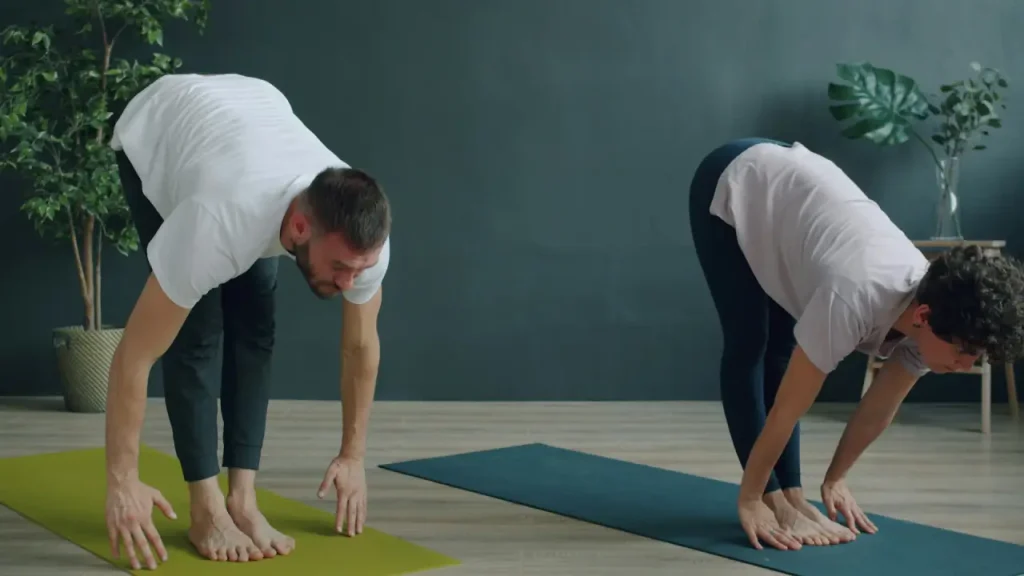
The Short Answer to: Do you need a gym to lose weight?
No. You do not need a gym membership to lose weight.
A gym can be useful. It can provide equipment, classes, coaching, structure and a social environment that helps you stay active.
But it is not a requirement.
Walking can count as exercise. Cycling can count. Swimming, dancing, gardening and home workouts all count as physical activity too.
You can also use simple equipment such as resistance bands and dumbbells to build strength at home.
The best exercise programme is not necessarily the one with the most equipment.
It is the one you can do consistently.
Why Do So Many People Think They Need a Gym?
The fitness industry can make exercise look complicated.
There are machines you’ve never seen before, specialist classes, personal trainers, supplements and programmes promising dramatic results.
None of that means you need a gym.
A gym is simply one environment in which you can exercise.
The basic principles of weight management remain the same whether you exercise in a commercial gym, at home or outdoors.
Physical activity can help you use energy, improve fitness and support long-term weight management. It also provides important health benefits that have nothing to do with the number on the scales.
That last point matters.
You should not exercise only because you want to lose weight.
A stronger, fitter and more capable body is worth having in its own right.
What Actually Causes Weight Loss?
Weight loss involves the relationship between the energy you consume and the energy your body uses.
Exercise contributes to the amount of energy you use, but it is only one part of the picture.
Food intake, portion sizes, appetite, everyday movement, sleep and other factors all matter.
This means joining a gym while continuing to eat substantially more energy than your body needs does not guarantee weight loss.
Equally, someone without a gym membership can lose weight by improving their eating habits and becoming more active.
That is why sustainable weight loss is about much more than finding the hardest workout.
You Can Lose Weight by Walking
Walking is one of the simplest ways to become more active.
You do not need specialist equipment.
You do not need a membership.
You can simply put on comfortable shoes and walk.
If you have been inactive, start with what you can comfortably manage.
That might be ten minutes.
It might be five minutes.
It might mean several short walks during the day.
The important thing is to build gradually.
As your fitness improves, you can increase the duration, distance or pace.
Walking can also be divided into shorter periods throughout the day, which can make becoming more active much easier.
Home Exercise Can Be Surprisingly Effective

You can create a useful exercise routine at home with very little equipment.
For example:
- treadmill walking
- exercise-bike sessions
- resistance-band exercises
- dumbbell exercises
- bodyweight exercises
- chair-based exercises
- mobility exercises
- balance work
The equipment matters less than what you actually do with it.
A simple resistance band that you use regularly is more valuable than expensive equipment that gathers dust.
The same applies to a gym membership.
Consistency beats impressive equipment.
Strength Training Is Especially Valuable
If your only goal is to make the scales fall, you might concentrate entirely on cardio.
That would miss an important part of the picture.
Strength training helps you maintain and develop muscle.
That is especially useful during weight loss, when you want to reduce excess body fat while preserving as much muscle as possible.
Strength training can also improve:
- strength
- balance
- physical function
- confidence
- mobility
- everyday capability
You do not need a bodybuilding programme.
Resistance bands, dumbbells and bodyweight exercises can all be useful.
Start with movements that are appropriate for your ability and progress gradually.
What About Cardio?
Cardiovascular exercise is valuable too.
Walking, cycling, swimming and similar activities can raise your heart rate and breathing while increasing energy expenditure.
Regular aerobic activity can improve cardiovascular fitness and provide important health benefits.
You do not have to run.
You do not even need to become exhausted.
The right intensity depends on your current fitness, health and abilities.
For someone starting from a sedentary lifestyle, a comfortable walk may be a far better starting point than an ambitious gym session.
Start where you are.
Then build.
How Much Exercise Do You Need?
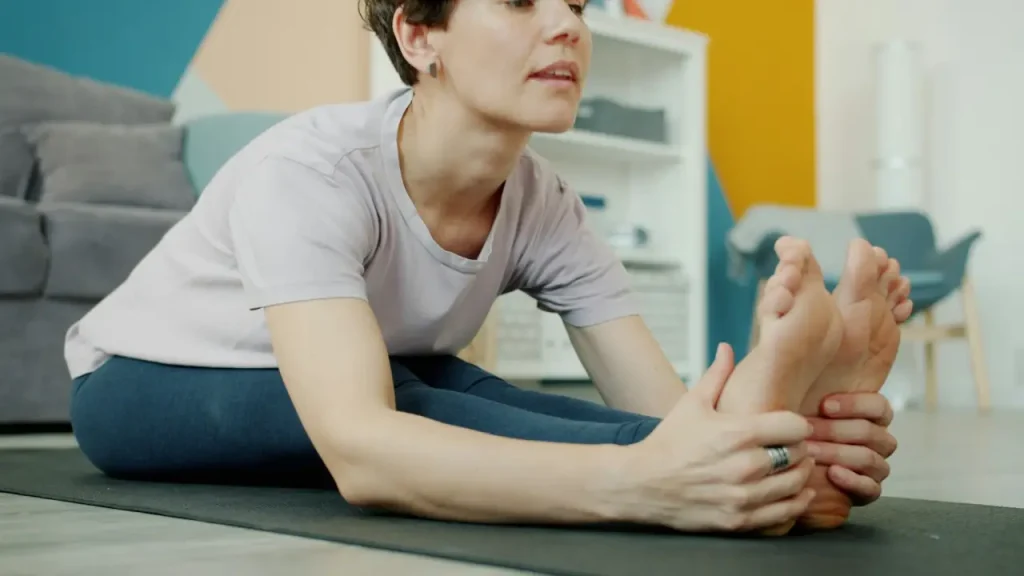
Current guidance commonly recommends that adults work towards at least 150 minutes of moderate-intensity aerobic activity each week, or an equivalent amount of vigorous activity.
Adults should also perform muscle-strengthening activity involving the major muscle groups on at least two days each week.
Older adults should additionally include activities that support balance and coordination, particularly when mobility is limited.
But these are targets to work towards.
They are not a pass-or-fail test.
Some activity is better than none.
If you currently do almost nothing, increasing your movement is already progress.
Do You Have to Exercise Every Day?
No.
You can spread activity across the week.
You can have easier days and more active days.
You can also combine formal exercise with ordinary movement.
For example:
Monday: Walking and strength training
Tuesday: Walking
Wednesday: Cycling
Thursday: Walking and strength training
Friday: Light activity
Saturday: Longer walk or another enjoyable activity
Sunday: Rest and gentle movement
There is no single perfect schedule.
A sustainable schedule is the one that fits your life.
Everyday Movement Counts Too
This is easy to overlook.
You might exercise for 30 minutes and then spend the rest of the day sitting.
That is not an argument against exercise.
It is an argument for moving more throughout the day.
Try:
- getting up regularly from your desk
- walking while talking on the phone
- doing household jobs
- taking the stairs when appropriate
- walking to nearby destinations
- gardening
- taking short walks after meals
- moving during television breaks
Individually, these activities may seem small.
Collectively, they can make a useful contribution to your total physical activity.
When Is a Gym Actually Worth Joining?
A gym can be an excellent choice.
You might enjoy the atmosphere.
You might want access to heavier weights.
You might prefer exercise classes.
You might want coaching.
You might find that going somewhere creates accountability.
You might simply enjoy exercising around other people.
All of those are good reasons.
The important distinction is this:
Join because the gym helps you stay active, not because you believe you need a gym in order to lose weight.
A Gym Can Give You More Options
Commercial gyms may provide:
- treadmills
- exercise bikes
- rowing machines
- resistance machines
- free weights
- cable machines
- exercise classes
- swimming pools
- trainers
More options can be useful.
But more options do not automatically produce better results.
A simple programme you follow consistently can beat a complicated programme you abandon after two weeks.
What If You Hate Gyms?
Then do not join one.
Seriously.
There is no prize for forcing yourself to spend hours in a place you dislike.
Find movement you can tolerate or, ideally, enjoy.
Try walking.
Try cycling.
Try swimming.
Try dancing.
Try gardening.
Try home strength training.
Try exercising with a friend.
Try a class somewhere else.
The easier an activity is to keep doing, the more useful it becomes in the long term.
What If You Are Very Unfit?
This is where people often make their biggest mistake.
They decide to lose weight.
They join a gym.
They immediately attempt hard workouts.
They become exhausted and sore.
They lose enthusiasm.
Then they stop.
A better approach is to start below your maximum.
If ten minutes is challenging, start with ten minutes.
If five minutes is all you can manage safely, start there.
Gradually build your duration, frequency or intensity.
You are not trying to prove how hard you can work on day one.
You are trying to still be active months from now.
You Do Not Have to Exercise Until You Are Exhausted

A workout does not only count if you finish it gasping.
More is not automatically better.
The right amount of activity depends on your current ability, goals and health.
A sensible workout can leave you feeling that you have achieved something without making you miserable for the next two days.
That is particularly important when exercise is supposed to become a permanent part of your lifestyle.
Exercise Should Support Your Diet — Not Punish It
Another common mistake is using exercise as punishment for eating.
“I ate too much, so I need to exercise for an hour.”
“I had dessert, so I have to burn it off.”
That mindset can make exercise miserable.
Exercise is not punishment.
It is one of the ways you look after your body.
You do not have to earn your food.
Instead, build a sensible eating pattern and use physical activity to support your health, fitness and weight-management goals.
Can Exercise Alone Make You Lose Weight?
Exercise can contribute to weight loss, but relying on exercise alone can be difficult.
Physical activity increases energy expenditure, but people may also compensate by eating more or becoming less active later.
That is why successful weight-management programmes usually combine healthy eating, regular physical activity and behaviour changes.
Exercise is extremely valuable.
It simply is not the whole equation.
What Is Better: Cardio or Strength Training?
Both have value.
Aerobic exercise is useful for cardiovascular fitness and energy expenditure.
Strength training helps build and maintain muscle and supports strength and physical function.
You do not need to choose one and reject the other.
A combination is often sensible:
Cardio: walking, cycling or swimming.
Strength: resistance bands, dumbbells or other resistance exercises.
Everyday movement: regular activity throughout the day.
Recovery: enough rest and sleep.
That gives you a much more complete approach than focusing on weight alone.
Can a Home Treadmill Replace a Gym?
For many people, yes.
A treadmill gives you a convenient way to walk indoors regardless of the weather.
You can begin at a comfortable pace and gradually increase the duration.
You can also combine treadmill walking with resistance-band or dumbbell training.
The same principle applies to an exercise bike.
You do not need a building full of machines to become more active.
What About Resistance Bands?
Resistance bands are inexpensive, portable and versatile.
They can be used for many upper- and lower-body exercises.
They are particularly useful at home because they take up very little space.
As with any resistance training, the challenge should be appropriate for you and should increase gradually.
Good technique matters more than showing off how much resistance you can use.
What If Your Main Goal Is to Lose Belly Fat?
A gym cannot selectively remove fat from your stomach.
You cannot choose exactly where your body loses fat first.
As overall body fat falls, your waist measurement may decrease, but the timing varies between people.
That is another reason to measure progress in several ways.
Track things such as:
- waist measurement
- fitness
- walking ability
- strength
- energy
- how your clothes fit
- consistency with healthy habits
The scales are useful.
They are simply not the complete story.
How to Build a Simple No-Gym Routine
You could start with something as simple as:
Three Days a Week
Walk for 20–30 minutes at a comfortable pace.
Two Days a Week
Complete a short full-body resistance session using bands, dumbbells or bodyweight exercises.
Every Day
Look for opportunities to move.
Stand up regularly.
Take short walks.
Do ordinary household activities.
Every Week
Allow time for recovery and activities you genuinely enjoy.
As your fitness improves, gradually increase the challenge.
You do not need a perfect programme before you begin.
The Biggest Mistake: Waiting for the Perfect Plan
You do not need:
- the perfect gym
- the perfect shoes
- the perfect equipment
- the perfect programme
- the perfect body
- the perfect level of fitness
You need a starting point.
You can improve the plan later.
A short walk today is more useful than researching gyms for another month.
A simple home workout you actually perform is more valuable than an expensive membership you never use.
Action beats perfection.
The Bottom Line
Do you need a gym to lose weight? No.
A gym is one possible environment for exercise.
It is not a weight-loss requirement.
You can lose weight and become fitter by walking, cycling, exercising at home, using resistance bands or dumbbells, swimming, dancing, gardening and becoming more active during the day.
A gym may be worthwhile if it motivates you, gives you access to equipment you enjoy or provides the structure and support you need.
But do not join one because you believe you cannot lose weight without it.
Choose the exercise environment that makes it easiest for you to keep moving.
The best exercise programme is the one you can keep doing.
Frequently Asked Questions
Can I lose weight without joining a gym?
Yes. Weight loss does not require a gym membership. Healthy eating, sensible portions and regular physical activity can all contribute to weight management.
Is walking enough to lose weight?
Walking can contribute to weight loss and provides important health benefits. Its effect on weight depends on how much you walk, your overall activity and your eating pattern.
Can I build muscle at home?
Yes. Resistance bands, dumbbells and bodyweight exercises can all be used for strength training at home.
Is a gym better than exercising at home?
Not necessarily. A gym provides more equipment and sometimes additional support, but the best option is the one you can use consistently.
How much exercise should I do each week?
A common target for adults is at least 150 minutes of moderate-intensity aerobic activity per week, plus muscle-strengthening activity on at least two days. Build towards this gradually if you are currently inactive.
Should I do cardio or weights first?
Either can work. The important thing is to include the types of activity that support your goals and abilities.
Do I need to work out every day?
No. You can spread activity throughout the week and include recovery days. Regular movement on non-workout days is still useful.
Can I lose belly fat by doing abdominal exercises?
Abdominal exercises can strengthen your core, but they do not selectively remove fat from your stomach. Overall fat loss is what changes body-fat levels.
What if I am too unfit to exercise?
Start with a level that you can manage safely and comfortably, even if that means only a few minutes at first. Increase gradually.
What if I do not enjoy exercise?
Try different forms of movement. Walking, cycling, swimming, dancing, gardening and home exercise are all legitimate forms of physical activity. You do not need to become a gym enthusiast.
Suggested Further Reading:
- Why Sustainable Weight Loss Beats Short-Term Dieting
- 6 Weight Loss Tips That Actually Work
- Lose Weight Without Starving Yourself
- 7 Ways to Reduce Your Appetite
- Can You Really Boost Your Metabolism to Lose Weight?
- Late Night Eating: Will It Make You Gain Weight?
- How to Reward Yourself for Weight Loss Without Using Food
Medical Disclaimer
This article is for general educational purposes and is not a substitute for individual medical advice. If you have a medical condition, significant mobility limitations, chest pain, unexplained breathlessness, balance problems or another concern that could affect exercise safety, speak with an appropriate healthcare professional before making major changes to your activity level.