
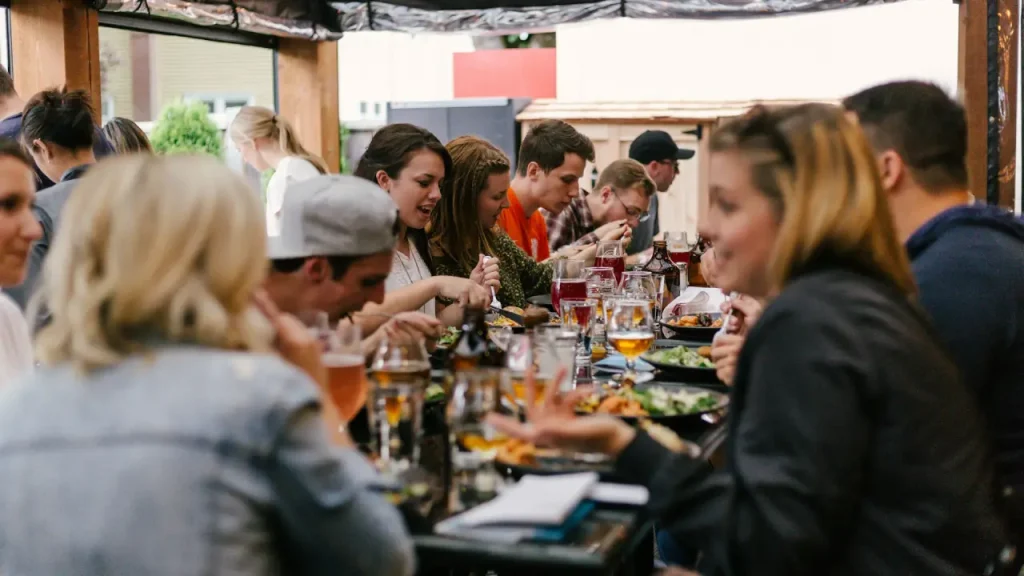
Holiday weight loss doesn’t have to mean avoiding the foods you love or spending the festive and holiday season worrying about calories.
There may be family meals, parties, restaurant visits, travel, special treats and routines that look nothing like the rest of the year.
So does staying healthy mean refusing the foods you love, skipping meals before a big dinner or spending the entire holiday worrying about calories?
No.
A much more sensible goal is to enjoy the holidays while keeping enough of your normal habits in place that you don’t feel as though you have completely abandoned your progress.
For some people, that may mean continuing to lose a little weight.
For others, simply maintaining their current weight until normal routines return may be a very worthwhile success.
Current guidance from the CDC recommends planning ahead for changes in routine, avoiding becoming excessively hungry, choosing smaller portions of higher-calorie foods, keeping active and creating opportunities for social activities that do not revolve entirely around eating.
The holidays do not have to become a battle between enjoying yourself and looking after your health.
Decide What Success Looks Like
Before the holidays arrive, decide what you realistically want to achieve.
Perhaps you want to continue losing weight.
Perhaps you want to maintain your current weight.
Perhaps you simply want to avoid turning a few festive meals into several weeks of overeating.
There is no rule saying that every period of your life has to produce weight loss.
Maintaining your weight during a period when your normal routines are disrupted can be a sensible and realistic objective.
The important thing is to choose the goal deliberately rather than arriving at the end of the holidays wondering what happened.
Don’t Try to Be Perfect
One of the biggest mistakes is creating a plan so strict that normal life immediately breaks it.
You might decide:
No desserts.
No alcohol.
No bread.
No Christmas dinner.
Exercise every single day.
That sounds disciplined.
It can also be completely unrealistic.
A better approach is to expect some flexibility.
You will probably eat foods you don’t normally eat.
You may have larger meals.
You may miss a workout.
None of those things automatically means you’ve failed.
Healthy weight management is about your overall pattern, not whether every individual meal is perfect.
Don’t Starve Yourself Before a Big Meal
It can seem logical to skip breakfast and lunch so you can “save” calories for a huge evening meal.
For many people, this simply creates intense hunger.
By the time dinner arrives, you’re much more likely to eat quickly, take larger portions and continue eating because the food is available.
The CDC specifically advises against skipping meals to save up for a holiday feast because becoming very hungry can make overeating more likely.
Instead, eat normally or use a lighter, balanced meal or snack if appropriate.
You don’t need to arrive at the dinner table starving.
Eat Normally Before the Celebration
A simple strategy is to keep your earlier meals reasonably similar to your normal routine.
For example:
Breakfast
Oats with yoghurt and fruit.
Lunch
A vegetable- and protein-rich soup, salad, sandwich or wrap.
Before a Party
A small, satisfying snack if you’re hungry.
This leaves room for the special meal without creating an all-day cycle of restriction followed by overeating.
Choose the Foods You Actually Love
Holiday meals can contain far more food than you could possibly want.
You don’t need to eat everything simply because it is available.
Look at the choices first.
Then choose the foods that you genuinely look forward to.
The CDC recommends taking smaller portions of higher-calorie foods and focusing on favourite foods rather than feeling obliged to sample everything.
This is a useful distinction:
Eat what is special to you.
Don’t eat something simply because it happens to be on the table.
Use Portions Instead of Food Bans
There is a big difference between:
“I can’t eat that.”
and:
“I can have some and enjoy it.”
A smaller portion of your favourite dessert may be considerably more satisfying than trying to suppress the craving and then eating several alternative foods afterwards.
This doesn’t mean you should measure every crumb.
It simply means recognising that portions can be adjusted without turning food into a list of moral categories.
The CDC similarly recommends enjoying favourite holiday foods while keeping portions sensible.
Holiday Weight Loss Can be Easy Just Build a Balanced Plate

When you’re faced with a large holiday meal, start by looking for the foods that will make the meal satisfying without relying entirely on rich or highly processed foods.
A useful framework is:
Vegetables or salad + protein + a sensible portion of carbohydrate + foods you particularly want to enjoy.
That could mean:
- turkey or another protein
- plenty of vegetables
- potatoes or another carbohydrate
- stuffing or another favourite side
- gravy
- a portion of dessert
There is no need to construct the “perfect” plate.
The idea is simply to make the meal balanced enough that you can enjoy it without feeling as though you’ve eaten nothing but treats.
Don’t Forget the Drinks
Alcohol and sugary drinks can contribute a surprising amount of energy.
And because drinks don’t always provide the same feeling of fullness as food, it can be easy to overlook them.
You don’t have to avoid alcohol completely unless you have a specific reason to do so.
But alternating alcoholic drinks with water, choosing lower-calorie options where appropriate and being aware of how much you’re drinking can make a meaningful difference.
The CDC recommends choosing water or low- or no-calorie drinks in holiday travel situations and limiting sugary drinks.
Slow Down and Enjoy the Meal
Holiday meals are often social occasions.
Try not to eat as though you’re racing to finish.
Put the fork down occasionally.
Talk to people.
Taste the food.
Notice when you’re becoming comfortably satisfied.
The CDC’s holiday eating guidance encourages eating slowly and allowing time before deciding whether you want more.
This can help you enjoy the meal rather than simply consuming as much as possible because it is there.
Don’t Let Grazing Take Over the Day
One big meal is one thing.
Constantly picking at food from morning until bedtime is another.
Holiday leftovers, bowls of sweets, biscuits on the coffee table and nibbles left out for guests can create a background stream of eating.
Try asking yourself:
Am I hungry, or is the food simply available?
That small pause can be surprisingly useful.
If you’re genuinely hungry, eat.
If you’re not, you don’t need to eat simply because someone has put another plate in front of you.
Deal With Leftovers Sensibly
Leftovers are part of the fun.
They can also turn one celebratory meal into several days of continuous grazing.
Instead of eating leftovers casually throughout the day, turn them into proper meals.
For example:
- leftover turkey with vegetables and potatoes
- chicken or turkey in a wholegrain sandwich with salad
- vegetables added to soup
- leftover meat and vegetables used in a balanced stir-fry
Put portions away rather than leaving everything sitting on the kitchen counter.
This turns “holiday food everywhere” into something much more manageable.
Keep Moving
You don’t need to exercise to punish yourself for eating.
Physical activity is valuable because it supports health, fitness, mood and healthy weight management.
The CDC recommends looking for opportunities to add movement during the holidays, including group walks, active games and other activities that get people moving.
Try making movement part of the celebration.
Go for a walk with family.
Take the stairs.
Walk around while shopping.
Dance.
Play with the children.
Go outside after a meal.
A few minutes here and there still count.
Don’t Make Exercise a Punishment
Avoid thinking:
“I ate too much, so I have to burn it off.”
That can create an unhealthy relationship between food and exercise.
Exercise doesn’t need to be punishment for eating.
It’s something your body benefits from regardless of what you had for dinner.
The holidays are an excellent time to make activity social rather than treating it as another chore.
Make Some Activities About More Than Food
It is easy for holidays to become one long sequence of meals and snacks.
They don’t have to.
The CDC recommends planning activities that don’t revolve around eating, such as walking, visiting places, seasonal outdoor activities or volunteering.
Think about traditions you could create that involve:
- a family walk
- a board-game afternoon
- a visit to a local attraction
- a film
- dancing
- a winter hike
- volunteering
- playing outdoors
The goal isn’t to avoid food.
It’s to remember that food isn’t the entire holiday.
Don’t Let One Indulgent Meal Become an Indulgent Week
This is one of the most important ideas in the article.
You may eat more than usual at Christmas dinner.
Fine.
The problem begins when the thinking becomes:
“I’ve already blown it, so I’ll start again in January.”
That turns one meal into several days or even weeks of overeating.
Instead, return to your normal routine at the next meal.
There is no need for a detox.
No need to fast.
No need for a punishing workout.
Just get back to normal.
What About the Scale?
The scale can move during the holidays even if you haven’t gained a large amount of body fat.
Changes in carbohydrate intake, salt, alcohol, meal size and digestion can all affect body weight temporarily.
So don’t panic because the number is higher after a large festive meal.
Look at the trend over time.
If weighing yourself during the holidays causes unnecessary stress, you may prefer to focus on your routine and return to regular weighing once your normal schedule resumes.
What If You Actually Gain Weight?
Don’t turn it into a catastrophe.
You don’t need to punish yourself.
Return to your normal eating pattern and activity.
Avoid the temptation to crash diet immediately afterwards.
The CDC recommends maintaining consistent eating patterns and planning ahead for weekends, vacations and special occasions because changes in routine can make weight management more difficult.
Think of the holidays as a temporary change in routine rather than a complete abandonment of your habits.
Travelling During the Holidays
Travel can make healthy choices more difficult because food options may be limited and routines disappear.
Planning ahead helps.
Take useful snacks with you where practical, such as:
- fruit
- unsalted nuts
- yoghurt
- vegetables
- other foods that fit your normal eating pattern
Drink water regularly.
When travelling by car, take opportunities to stop and move around.
At airports, walking rather than automatically taking a shuttle where practical can add movement to an otherwise sedentary journey.
The CDC specifically recommends packing healthier snacks and taking activity breaks during holiday travel.
Dealing With Family and Social Pressure
Sometimes the hardest part isn’t the food.
It’s another person saying:
“Go on, have another one!”
You don’t need to argue.
A simple:
“No thanks, I’m satisfied.”
is enough.
You can enjoy someone’s hospitality without accepting every offer.
And remember that other people’s eating choices are not your responsibility.
Nor are your choices theirs.
What If You Have a Difficult Relationship With Food?
This advice is not intended to encourage restrictive dieting.
If you have a history of an eating disorder, binge eating or significant distress around food, holiday food advice can sometimes make things harder rather than easier.
In that situation, individual professional support is more appropriate than following generic weight-loss rules.
The goal should be a healthy relationship with food, not greater fear of eating.
A Simple Holiday Game Plan
You don’t need a complicated checklist.
Before the holidays:
Decide what success means.
During the holidays:
Eat normally between special occasions.
Don’t arrive at meals excessively hungry.
Choose the foods you genuinely enjoy.
Keep portions sensible.
Stay active.
Drink mindfully.
Enjoy yourself without demanding perfection.
After the holidays:
Return to your normal routine.
That’s it.
A Better Holiday Mindset
Try replacing:
“I must not gain an ounce.”
with:
“I’m going to enjoy the holidays while keeping as many of my healthy habits as I reasonably can.”
Replace:
“I’ve ruined my diet.”
with:
“That was one meal. I’ll return to my normal routine next.”
Replace:
“I need to burn off what I ate.”
with:
“Movement is good for me, so I’ll keep moving.”
That shift in mindset can make the whole holiday period feel much less stressful.
Frequently Asked Questions
Can I eat Christmas dinner and still lose weight?
Yes. A single festive meal does not prevent weight loss. Your overall eating pattern and energy balance over time are more important.
Should I skip breakfast before a big Christmas meal?
There is no need to starve yourself beforehand. For many people, arriving excessively hungry makes overeating more likely. A normal or lighter balanced meal earlier in the day can be a better strategy.
Can I eat dessert during the holidays?
Absolutely. Choose desserts you genuinely enjoy and consider having a sensible portion rather than trying to ban them completely.
Is it better to avoid alcohol during the holidays?
Alcohol contains calories and can make healthy choices more difficult, so moderation is useful. Some people may need to avoid alcohol completely for medical or personal reasons.
Should I exercise after eating a large meal?
You don’t need to exercise as punishment for eating. A gentle walk can be an enjoyable way to move, aid your routine and spend time with other people.
How can I avoid holiday weight gain?
Plan ahead, avoid excessive hunger, choose sensible portions, keep active and return to your usual routine after special occasions.
What if I overeat?
Don’t panic. One meal doesn’t ruin your progress. Avoid compensating with extreme restriction and simply return to your normal eating pattern at the next opportunity.
Why does my weight increase so quickly after a holiday meal?
Short-term changes in food intake, fluids, sodium, carbohydrate stores and digestion can affect the number on the scale. A temporary increase does not automatically represent an equivalent increase in body fat.
Should I try to lose weight over Christmas?
That’s entirely personal. Continuing to lose weight may be appropriate for some people, while maintaining weight through a disruptive period may be a perfectly worthwhile goal for others.
How can I enjoy holiday food without overeating?
Look at all the options first, choose the foods you really want, take sensible portions and eat slowly enough to notice when you’re satisfied.
The Bottom Line
You don’t have to choose between enjoying the holidays and looking after your health.
You can eat your favourite foods.
You can enjoy a festive meal.
You can have dessert.
You can have a drink if you choose.
You can relax.
The trick is not to turn those occasional indulgences into an uninterrupted eating marathon.
Keep some normal routines.
Don’t starve yourself before celebrations.
Choose foods you genuinely enjoy.
Keep portions sensible.
Stay active.
And if you have one meal where you eat more than planned, don’t turn it into a reason to abandon the entire holiday.
Just enjoy the occasion and get back to your normal routine afterwards.
The holidays are part of your life — not a six-week test of your willpower.
Recommended Further Reading:
- 5 Evidence-Based Weight Loss Tips That Actually Work
- Weight Loss Mindset: How to Make Weight Loss Easier
- Calories and Carbohydrates for Weight Loss: What You Really Need to Know
- Food Cravings: Why They Happen and How to Manage Them
- 7 Ways to Reduce Your Appetite Naturally and Manage Hunger
- Healthy Weight Loss for Women: A Practical, Evidence-Based Guide
Medical Disclaimer
This article is intended for general educational purposes and is not a substitute for individual medical advice. If you have a medical condition, take medication that affects your weight or metabolism, have a history of an eating disorder, are pregnant or breastfeeding, or have concerns about your relationship with food, speak with an appropriately qualified healthcare professional.