
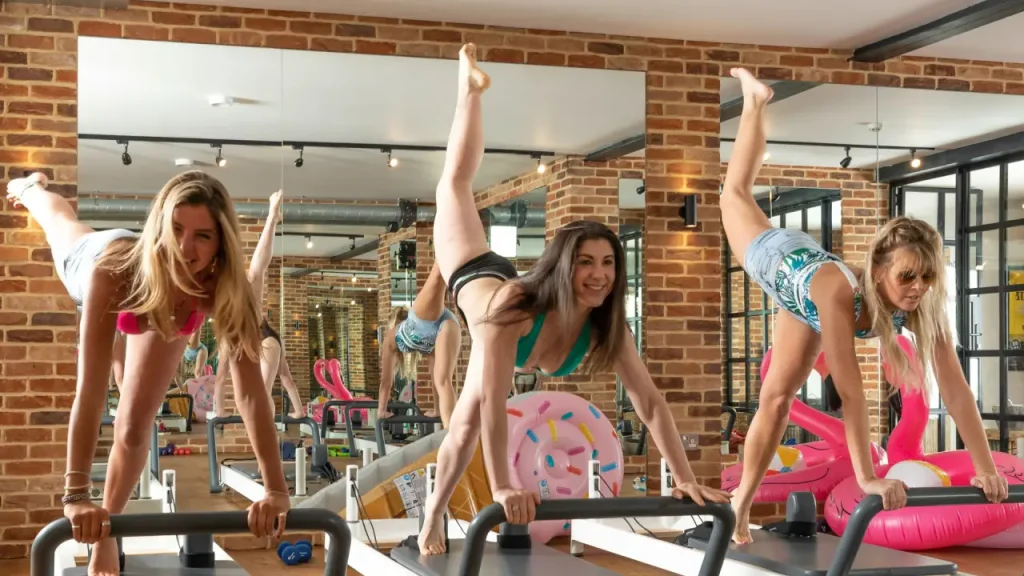
The Pilates reformer can look slightly intimidating the first time you see one. There is a sliding carriage, springs, straps, a footbar and enough moving parts to make you wonder whether you have accidentally wandered into a particularly elegant piece of gym machinery.
The good news is that the idea behind it is much simpler than it looks.
A reformer gives you a way to perform Pilates exercises against adjustable resistance while controlling the movement of your body. It can be used for gentle, beginner-friendly work as well as challenging strength, mobility and coordination exercises.
The real question is not whether a reformer is a magic fitness machine. It isn’t.
The better question is whether Pilates reformer exercises are a useful addition to your fitness routine — and for many people, they can be.
What Is a Pilates Reformer?
A Pilates reformer is a piece of exercise equipment associated with the Pilates method developed by Joseph Pilates.
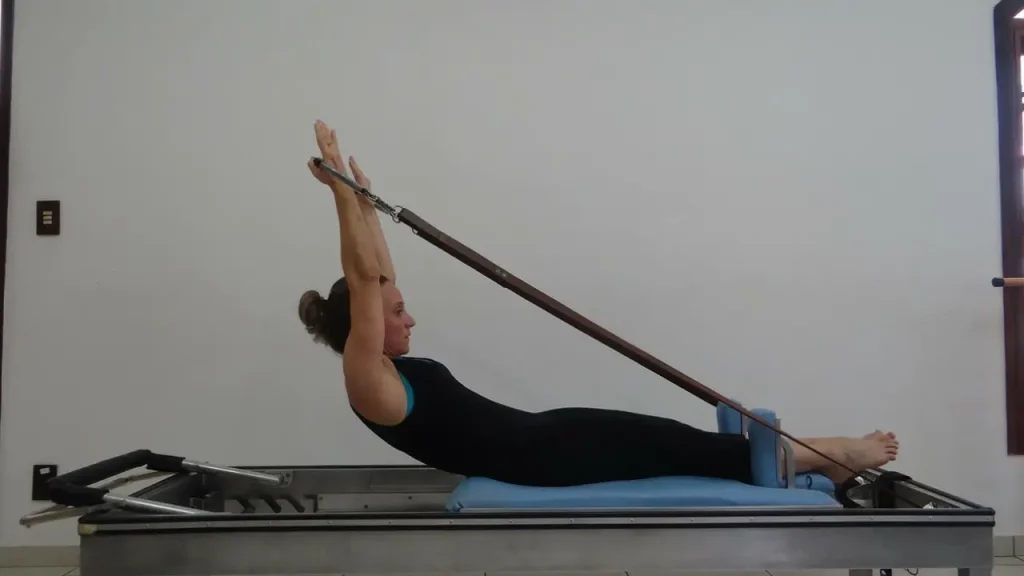
The central part of the machine is a padded carriage that moves along rails within a frame. The carriage is connected to springs that provide resistance. Depending on the exercise, you may push the carriage with your feet, pull it with your hands using straps, or use your body position to control the movement.
The main parts usually include:
- a moving carriage
- adjustable resistance springs
- a footbar
- shoulder rests
- straps or ropes with handles
- a frame and rail system
The combination of a moving surface and adjustable resistance allows the same basic exercise to be made easier or harder.
That versatility is one reason the reformer has remained popular.
The original Natural Health Kingdom article described the reformer as a versatile piece of equipment with a carriage, footbar, springs and straps. That basic description still holds true, but the machine is better understood today as a tool for controlled resistance exercise rather than as a miracle piece of equipment. [Source: original Natural Health Kingdom article]
How Do Pilates Reformer Exercises Work?
The reformer changes the resistance you experience during an exercise.
The springs can assist movement in some positions and make movement more demanding in others. The unstable, moving carriage also means that you often have to control your body rather than simply moving a weight from one fixed point to another.
That can make relatively small movements surprisingly challenging.
A good reformer session normally places emphasis on:
- controlled movement
- coordination
- muscular endurance
- joint range of motion
- balance and stability
- breathing and concentration
It is less about moving the heaviest possible weight and more about performing a movement with control.
That distinction is important.
The reformer is not a replacement for every other form of exercise. A balanced fitness programme can still include aerobic activity and progressive resistance training outside Pilates.
What Are the Benefits of Pilates Reformer Exercises?
Research into Pilates as a whole suggests several potentially useful benefits, although the quality and certainty of the evidence vary between outcomes.
A systematic review comparing Pilates with other exercise approaches found that Pilates can improve muscle strength, balance and flexibility, but did not establish that it is superior to other forms of exercise for increasing strength.
An umbrella review of systematic reviews found promising benefits across several areas, including balance, sleep quality, body composition and some musculoskeletal outcomes, while also noting that the certainty of evidence was often low to moderate.
That gives us a much more useful way of looking at Pilates: it can be effective, but it does not need to be declared “the best” exercise to be worthwhile.
1. It Can Build Strength and Muscular Endurance
Reformer exercises provide resistance while asking you to control your body through a range of movement.
That can challenge the muscles of the legs, hips, back, shoulders and trunk.
The amount of resistance can be changed, which makes it possible to progress rather than simply repeating exactly the same workload forever.
2. It Can Improve Balance and Control
Because the carriage moves, maintaining position can require coordination and control.
Research in older adults has found that Pilates can improve static and dynamic postural balance, although the certainty of evidence is not high enough to make exaggerated claims about preventing falls.
For everyday life, better balance and movement control can be useful goals in their own right.
3. It May Help Flexibility and Mobility
Many Pilates exercises take the body through controlled ranges of motion rather than keeping joints fixed in one position.
Systematic reviews have reported improvements in flexibility and physical function in some groups.
That does not mean that Pilates magically stretches every tight muscle. Progress still depends on consistent practice and individual factors.
4. It Encourages Core and Trunk Control
The reformer is often associated with “core” training.
That description is reasonable, but it is worth avoiding the idea that every reformer exercise isolates the abs.
Pilates generally asks the trunk to remain organised and controlled while the arms and legs move. This can make abdominal, back and hip muscles important contributors to many exercises.
A systematic review has found evidence that Pilates can influence core muscle activation, particularly in research involving people with chronic non-specific low back pain, although this does not mean it should be treated as a universal cure for back problems.
5. It Is Often Low Impact
Many reformer exercises are performed lying, sitting, kneeling or otherwise supported rather than through repeated jumping and running.
That can make reformer Pilates attractive to people who prefer lower-impact exercise.
However, low impact does not automatically mean suitable for everybody. Existing injuries, pain, balance problems or other health considerations can change what is appropriate.
What Pilates Reformer Exercises Can You Do?
There are a great many reformer exercises and variations. The exact exercises and names can differ between Pilates schools and instructors.
Some common examples include:
Footwork
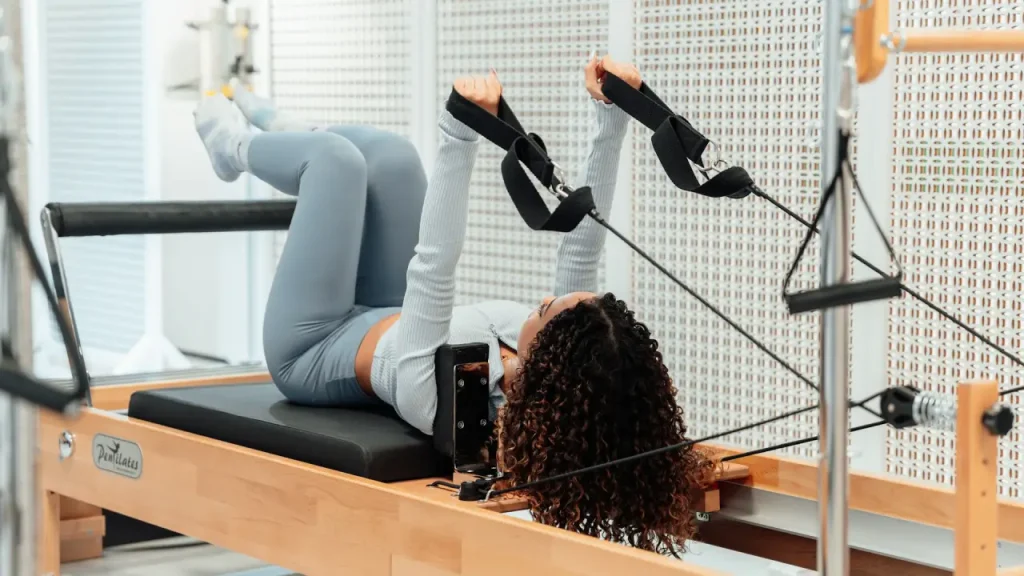
You lie on the carriage and use your feet against the footbar to move the carriage.
Footwork can be varied by changing foot position and spring resistance, making it useful for practising controlled leg movement.
The Hundred
The Hundred is a well-known Pilates exercise involving rhythmic arm movements and controlled breathing.
On a reformer it can be adapted in several ways depending on experience and the equipment being used.
Leg and Foot Strap Exercises
Straps can be attached to the feet, allowing exercises involving the hips and legs.
These movements can challenge control, mobility and muscular endurance while the springs provide resistance or assistance.
Bridging
Reformer bridging variations can combine hip extension with controlled carriage movement.
This can challenge the glutes, hamstrings and trunk while requiring careful control.
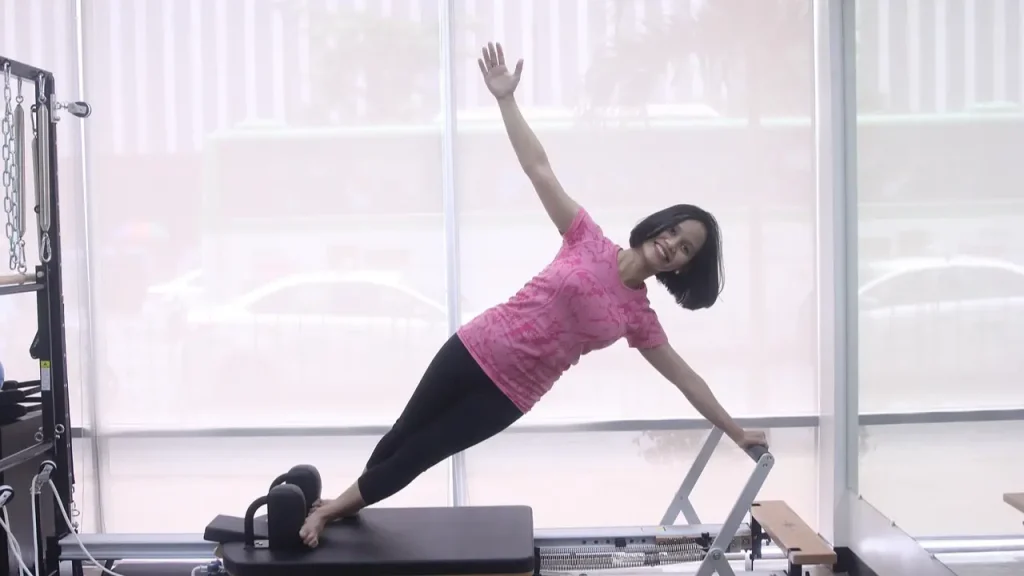
Long Stretch and Plank Variations
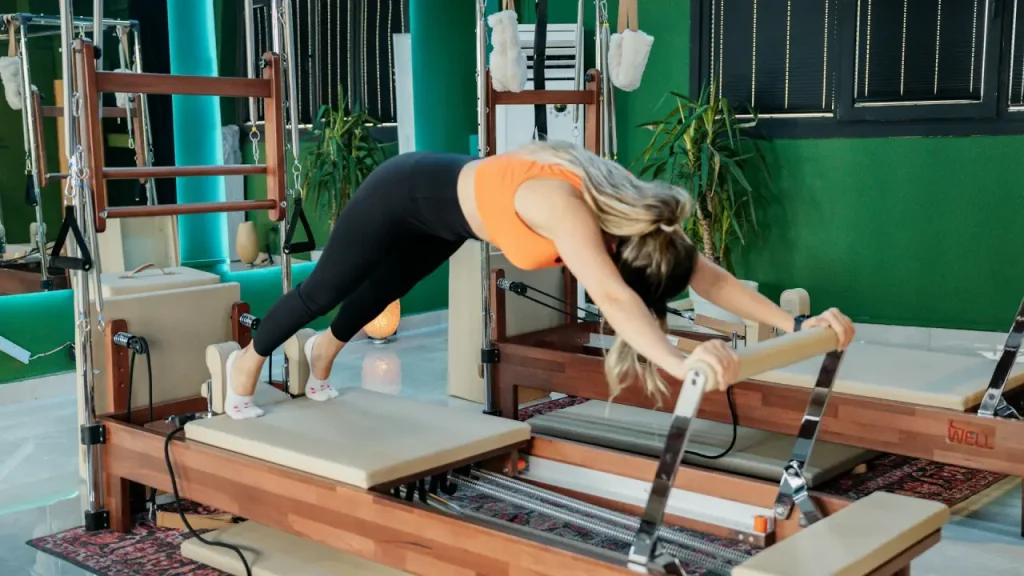
Some reformer exercises place the body in a plank-like position while the carriage moves underneath.
These can be demanding and are generally better learned with appropriate instruction.
Arm and Upper-Body Work
The straps can also be used for upper-body exercises.
Depending on the movement, these may challenge the shoulders, arms, upper back and trunk while requiring the body to remain stable.
The important point is that the reformer is not simply an “ab machine”. It can be used to train the body as a whole.
Do You Need a Reformer to Do Pilates?
No.
Pilates can be performed using a mat and little or no equipment.
The reformer simply gives you another way to introduce resistance, support and movement options.
The original article made much the same point: Pilates can be performed without a reformer, while the machine opens up additional exercise possibilities.
That means you do not need to buy an expensive machine just because Pilates has become fashionable.
For many people, attending reformer classes is the more sensible way to find out whether they actually enjoy it.
Is a Pilates Reformer Good for Beginners?
It can be.
One of the advantages of working with an instructor is that exercises can be modified according to your experience and ability.
A beginner does not need to start with the hardest exercises available.
You can learn how to:
- adjust the equipment
- understand the spring resistance
- control the carriage
- use the straps safely
- develop good movement technique
- progress gradually
The original Natural Health Kingdom article recommended learning the basics with a trained instructor before trying to work independently. That remains a sensible principle.
Should You Learn on Your Own or Use an Instructor?
For simple mat-based Pilates, many people use books, apps or videos successfully.
The reformer is different because the equipment introduces springs, straps, moving parts and unfamiliar body positions.
For a complete beginner, an instructor can be useful for showing you how to set the machine up and correcting technique before bad habits become established.
This becomes particularly important if you have pain, an injury, balance difficulties or another condition that may affect exercise selection.
The goal is not to become dependent on an instructor forever.
The goal is to learn enough good technique that you understand what you are doing.
Can Pilates Reformer Exercises Help With Back Pain?
This is an area where the research needs to be handled carefully.
A 2023 systematic review and meta-analysis found that Pilates can reduce pain and disability in people with chronic non-specific low back pain, but it was not clearly superior to other forms of exercise.
That is encouraging, but it does not mean that every person with back pain should immediately climb onto a reformer.
Persistent or significant pain deserves proper assessment, particularly if symptoms are severe, worsening or associated with other concerning signs.
Pilates can be part of a sensible exercise programme for some people, but it should not be marketed as a guaranteed treatment.
Is Reformer Pilates Good for Older Adults?
This is another area where Pilates may have something useful to offer.
A systematic review and meta-analysis involving older adults found improvements in balance, strength, flexibility and physical function compared with control groups.
A more recent review also found evidence that Pilates can improve static and dynamic postural balance in older adults.
That does not mean every older adult needs reformer Pilates.
It does mean that controlled, progressive exercise that challenges strength, balance and movement can be a worthwhile part of staying active as we age.
Is a Pilates Reformer Worth Buying for Home Use?
This is where we return to the original question: do you really need one?
Probably not — at least not until you know that you enjoy reformer Pilates and will actually use the machine.
A home reformer can be useful for someone who practises regularly and has the space, budget and motivation to use it.
But it is an expensive way to store an impressive-looking coat rack.
Before buying one, consider:
- the amount of space you have
- the quality and adjustability of the machine
- whether replacement parts and servicing are available
- whether you have enough experience to use it confidently
- whether you would realistically use it several times a week
For most beginners, trying several classes first is a much better test than buying equipment immediately.
Can Pilates Reformer Exercises Help You Lose Weight?
They can contribute to an active lifestyle, but it would be a mistake to treat reformer Pilates as a special fat-burning shortcut.
Pilates is not primarily a high-intensity cardiovascular exercise.
Its main strengths are controlled resistance exercise, movement quality, strength, flexibility, balance and body control.
Weight loss depends on the overall relationship between energy intake, energy expenditure, activity, sleep and other factors.
Some research suggests Pilates can influence body composition, but the evidence is not strong enough to support the kind of dramatic transformation promises often used in fitness marketing.
In other words: Pilates can be part of getting fitter and healthier. It does not repeal the laws of energy balance.
Pilates Reformer Exercises vs Mat Pilates
The two approaches share the same broad exercise method, but the equipment changes the experience.
Mat Pilates relies mainly on bodyweight, gravity and sometimes small pieces of equipment.
Reformer Pilates adds adjustable spring resistance and a moving carriage.
Neither is automatically better.
The best option is the one you can perform safely, enjoy consistently and progress with over time.
Some people prefer the simplicity of mat work. Others love the feedback and variety of the reformer.
There is room for both.
What Should You Look for in a Reformer Class?
A good beginner-friendly class should feel challenging without feeling chaotic.
Look for an instructor who:
- explains how the equipment works
- demonstrates exercises clearly
- offers easier and harder variations
- pays attention to technique
- encourages controlled movement rather than rushing
- asks about injuries or limitations when appropriate
The original Natural Health Kingdom article also emphasised choosing a properly trained instructor and paying attention to the quality of the studio and the level of supervision.
That advice is still worth keeping.
A Sensible Way to Start
You do not need to become a Pilates expert overnight.
A sensible starting point would be to attend a beginner reformer class and concentrate on learning the equipment and the basic movement principles.
Do not worry about keeping up with the most experienced person in the room.
Your first job is simply to learn how to move well.
As your technique improves, the exercises can become more challenging.
That progression is far more useful than trying to prove how much punishment you can tolerate on your first day.
The Bottom Line
Pilates reformer exercises are not a miracle cure, a secret shortcut to a perfect body or a replacement for every other kind of exercise.
They are a versatile form of controlled resistance exercise that can help develop strength, muscular endurance, balance, flexibility, coordination and movement control.
The research supports several potential benefits, but it also reminds us to keep our claims sensible. Pilates can work without being “the best” exercise on the planet.
The reformer itself is simply a tool.
Used well, it can make Pilates more varied and progressively challenging. Used as an expensive piece of furniture, it will probably improve neither your strength nor your posture.
For beginners, the smartest route is usually to learn the fundamentals from a competent instructor, discover whether you enjoy the method and then decide how much Pilates you want in your life.
Different bodies, different goals and different preferences.
There is no magic machine — but there can be a very good workout.
Recommended Further Reading:
- Why Is Exercise Motivation So Difficult? How to Stay Consistent
- Is Pilates Effective for Weight Loss? What the Evidence Says
Medical Disclaimer
The information in this article is provided for general educational purposes only. It is not intended to diagnose, treat, cure or prevent any medical condition and should not be considered a substitute for advice from a qualified healthcare professional.
Exercise is not suitable for everyone. If you have an existing medical condition, an injury, persistent pain, or any concerns about starting or changing an exercise programme, speak with your doctor or another appropriately qualified healthcare professional first.
Stop exercising and seek professional advice if you experience unusual or significant pain, dizziness, chest pain, severe shortness of breath or other concerning symptoms.
Do not rely on this article as a substitute for individual medical assessment or professional guidance.
Research Notes
The rewrite above was based on the original Natural Health Kingdom article, which introduced the reformer, described its carriage, springs, footbar and straps, and recommended learning the fundamentals with a trained instructor. The original article was published in January 2015 and contained several additional Pilates-related sections; those were not retained where their claims were outdated or too strong.
Additional research checked for this rewrite included systematic reviews and meta-analyses covering muscle strength, balance, flexibility, posture, core activation, low back pain, and outcomes in older adults.