

A visible six-pack has become one of the most heavily marketed goals in the fitness world.
There are programmes promising fast results, special foods claiming to reveal your abs, workouts designed to “burn belly fat” and countless photos that make it look as though everyone else discovered the secret except you.
The reality is rather less dramatic.
Visible abdominal muscles depend on a combination of factors, including the amount of muscle you have developed, your overall body-fat level, genetics, your eating pattern, your activity level and how consistently you train.
There is no guaranteed six-pack programme that works in the same amount of time for everybody.
The good news is that you do not need one.
A sensible combination of resistance training, abdominal exercises, regular physical activity and sustainable nutrition can help you become stronger, fitter and leaner without turning your life into a permanent fitness competition.
What Does “Visible Abs” Actually Mean?
Everybody has abdominal muscles.
The six-pack appearance comes from the shape and development of the rectus abdominis, combined with the amount and distribution of tissue covering those muscles.
This means you can have strong abdominal muscles without having highly visible abs.
It also means two people with similar levels of fitness may look very different.
Genetics influence factors such as:
- where your body stores fat
- how your body loses fat
- the shape and arrangement of your abdominal muscles
- muscle-building potential
- your natural body composition
That is why comparing your stomach with somebody else’s is rarely useful.
The goal should be to improve your own strength, fitness and health rather than trying to copy another person’s physique.
Do You Need to Lose Belly Fat to See Your Abs?
Usually, reducing overall body fat is an important part of making abdominal muscles more visible.
Your body does not allow you to choose exactly where fat comes off first.
Some people lose fat relatively easily from their waist.
Others notice changes in their face, arms or legs before their stomach changes much at all.
This is one reason “lose belly fat fast” is such a frustrating search.
You can influence your overall body composition through nutrition and activity, but you cannot reliably order your body to remove fat from one exact location on demand.
Research on local fat loss is not completely black and white. A 2011 randomised trial found that six weeks of abdominal exercises improved abdominal muscle endurance but did not reduce abdominal fat. A small 2023 trial found greater trunk-fat reduction in a group combining abdominal endurance exercise with treadmill work than in treadmill exercise alone. Taken together, the evidence does not justify promising reliable spot reduction from doing lots of abdominal exercises.
The practical lesson is simple:
Train your abs because they are muscles worth strengthening, and manage your overall body composition if your goal is greater definition.
How Do You Train Your Abs?

You do not need hundreds of sit-ups every day.
Your abdominal muscles respond to progressive resistance and challenging movement just like other muscles.
Useful exercises include:
- crunch variations
- reverse crunches
- hanging knee or leg raises
- planks and side planks
- cable or band exercises
- controlled compound exercises that require your trunk to brace
Choose exercises you can perform with good technique and gradually make them more challenging.
That might mean adding resistance, increasing repetitions, improving control or progressing to a more demanding variation.
The aim is to give the muscles a reason to adapt.
How Often Should You Train Your Abs?
More is not automatically better.
Your abdominal muscles are part of your overall training programme, so there is little reason to hammer them every day simply because you want to see them.
A few focused sessions each week can fit comfortably into a broader strength programme.
What matters more is consistency and progression.
There is also an important distinction between training your abs and training for visible abs.
Abdominal exercises develop the muscles.
They do not automatically remove the fat covering them.
You need both sides of the equation if your goal is a more defined stomach.
Why Full-Body Strength Training Matters
It is easy to become obsessed with the stomach when pursuing visible abs.
But your body is not a collection of separate parts.
A good resistance-training programme should develop your major muscle groups.
Current CDC guidance recommends that adults perform muscle-strengthening activity on at least two days a week, working all major muscle groups, including the abdomen.
Full-body strength training can help you:
- build and maintain muscle
- improve strength
- support physical function
- increase your overall training capacity
- make your fitness routine more balanced
It also stops your six-pack goal from becoming the only thing you care about.
What About Cardio?
Cardio can absolutely have a place in a programme aimed at improving body composition.
Walking, cycling, swimming, jogging and other aerobic activities can increase energy expenditure and contribute to overall health.
The CDC currently recommends that adults build towards at least 150 minutes of moderate-intensity aerobic activity each week, or 75 minutes of vigorous activity, alongside muscle-strengthening activity on at least two days. Activity can also be spread across the week and broken into smaller amounts.
But there is no requirement to find a “magic” cardio workout for your abs.
Choose something you enjoy and can perform consistently.
A brisk walk that you actually do is more useful than an extreme interval programme you abandon after two weeks.
HIIT Is Not Magic
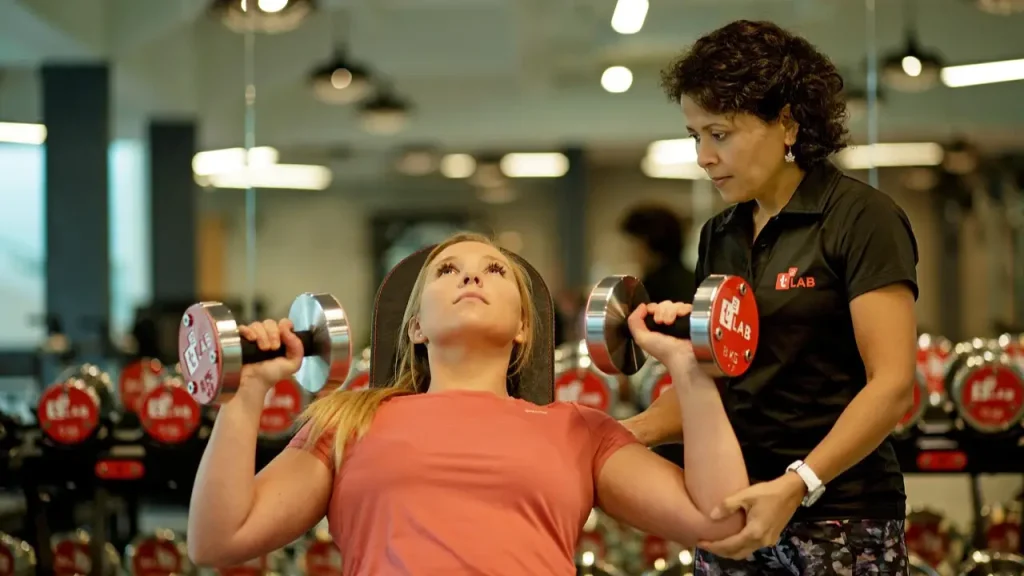
High-intensity interval training can be an effective form of exercise.
It can improve cardiovascular fitness and provide a time-efficient workout.
But the phrase “HIIT burns belly fat faster” is often used as marketing rather than a universal rule.
You do not need to make every workout brutally intense to improve your body composition.
Your total activity, nutrition, recovery and consistency matter.
This is also where our supporting article What Type of Cardio Is Best for Getting Visible Abs? will fit nicely into the cluster.
What Should You Eat to Get Visible Abs?
There is no special “six-pack diet”.
You need an eating pattern that supports your goals and is realistic enough to maintain.
If you need to lose body fat, that generally means creating an energy deficit over time.
But that does not mean starving yourself.
A useful foundation includes:
- vegetables and fruit
- high-fibre foods
- wholegrains and other minimally processed carbohydrates
- beans, peas and lentils
- suitable sources of protein
- nuts and seeds
- healthy fats
- foods you genuinely enjoy
Protein deserves attention because adequate protein can help support muscle maintenance while losing weight.
The exact amount you need depends on factors such as your body size, activity level and overall diet.
You do not need to live on chicken breast, broccoli and sadness.
Do Certain Foods Burn Belly Fat?
No individual food has a special ability to command your body to burn abdominal fat.
You will find plenty of products marketed as fat burners, metabolism boosters and hormone balancers.
Be sceptical.
The overall pattern of your diet matters much more than whether one ingredient has been given superhero status.
The CDC notes that healthy weight management is supported by healthy eating, regular physical activity, sufficient sleep and stress management. It also notes that people who lose weight at a gradual, steady pace are more likely to keep it off than people who lose weight more quickly.
Can You Lose Weight Too Quickly?
Yes.
Trying to force rapid changes can create an unpleasant cycle of severe restriction, hunger, fatigue and eventually giving up.
A slower approach may feel less exciting, but it is often much easier to maintain.
The CDC describes gradual, steady weight loss of around 1 to 2 pounds per week as more likely to be maintained than faster loss. That is a general public-health guide, not a promise that everybody should or will lose weight at that exact rate.
Your rate of progress will depend on your starting point and many other factors.
How Long Does It Take to Get Visible Abs?

There is no universal answer.
If you already have a relatively low body-fat level and some abdominal muscle, changes may become noticeable sooner.
If you have more body fat to lose or are starting with very little muscle, it can take considerably longer.
Your results can also be affected by:
- genetics
- age
- sex
- starting body composition
- training history
- food intake
- sleep
- stress
- consistency
- how aggressively you try to lose weight
Be suspicious of claims promising a six-pack in two weeks or a month.
The right timetable is the one that allows you to make progress without wrecking your health, relationship with food or ability to maintain your routine.
Our supporting article How Long Does It Take to Get Visible Abs? will go into the subject in more detail.
Why Some People Get Abs More Easily Than Others
It is tempting to assume that anybody with visible abs simply works harder.
That is not true.
People start with different bodies.
Two people can follow similar diets and exercise programmes and develop noticeably different levels of abdominal definition.
Genetics influence body-fat distribution, muscle shape and other characteristics that affect appearance.
That is not an excuse to do nothing.
It is a reason to measure progress against yourself.
You might never look exactly like a fitness model.
You can still become stronger, fitter and healthier.
Don’t Let Social Media Set Your Expectations
Fitness photographs can create unrealistic expectations.
Lighting, posing, dehydration, timing, clothing, camera angles and selective posting can all affect how a body looks.
Someone may look extremely lean in one photograph and completely ordinary in everyday life.
That matters because a physique that looks effortless on screen may have involved years of training, highly controlled nutrition or professional preparation.
Do not judge your normal Tuesday-morning stomach against somebody else’s carefully selected photograph.
What About Genetics?
Genetics cannot be changed.
But that does not mean your efforts do not matter.
You can control:
How often you move.
How you train.
What and how much you eat.
How well you recover.
How consistently you follow your plan.
Those factors can make a substantial difference even though everybody’s final appearance will be different.
The Role of Sleep
Sleep is easy to overlook because it does not feel like exercise.
But it is part of the bigger picture.
The CDC includes enough sleep and stress management alongside healthy eating and physical activity when discussing healthy weight management.
Poor sleep can also make it harder to manage hunger, energy and training.
You do not need a perfect sleep schedule.
You do need to take sleep seriously.
Stress and Visible Abs
Stress does not magically create belly fat overnight.
But stress can influence sleep, eating behaviour, activity and recovery.
If you are constantly exhausted and relying on extreme workouts and restrictive dieting, your plan may become impossible to maintain.
A better approach is to build a routine that leaves room for ordinary life.
The six-pack should fit into your life.
Your entire life should not have to fit around the six-pack.
What Does a Sensible Week Look Like?
There is no single perfect routine, but a balanced week could look something like:
Monday: Full-body strength + short abdominal session
Tuesday: Brisk walk or other moderate cardio
Wednesday: Full-body strength
Thursday: Easy movement or rest
Friday: Full-body strength + short abdominal session
Saturday: Longer walk, cycling, swimming or another enjoyable activity
Sunday: Rest or gentle movement
You can adjust the details according to your ability, schedule and goals.
The important point is that you do not need to train your stomach for hours every day.
A Beginner Approach
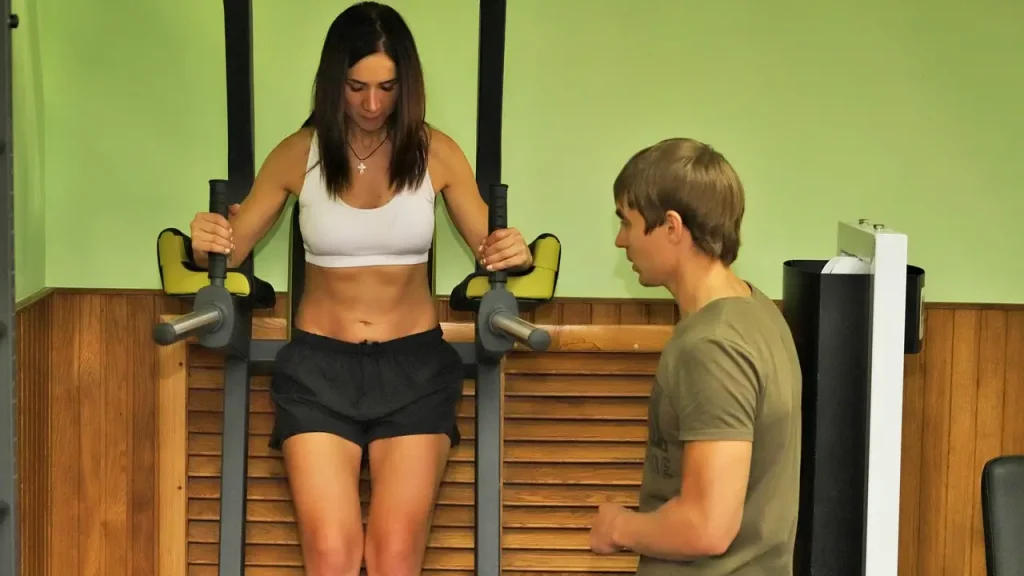
If you are currently inactive, start where you are.
Do not copy an advanced athlete’s programme.
Begin with manageable sessions and gradually increase what you do.
For example:
Strength: 2 sessions per week
Cardio: several short walks or other enjoyable aerobic sessions
Abs: 2 short sessions
Daily movement: reduce long periods of sitting where practical
As your fitness improves, increase duration, resistance, repetitions or training frequency gradually.
The CDC recommends building activity gradually and emphasises that some physical activity is better than none.
Common Six-Pack Mistakes
1. Looking for a shortcut
There isn’t a reliable shortcut that removes the need for training and sensible nutrition.
2. Doing endless crunches
More repetitions do not compensate for ignoring the rest of your training.
3. Trying to spot-reduce belly fat
You cannot reliably decide where your body will lose fat.
4. Eating far too little
Severe restriction is difficult to sustain and can undermine training and wellbeing.
5. Doing extreme amounts of cardio
More exercise is not automatically better.
6. Changing everything at once
Make adjustments gradually so you can see what works.
7. Comparing yourself with other people
Your starting point and genetics are not the same as theirs.
8. Giving up because results are slow
Body composition changes take time.
What About Six-Pack Programmes?
There are good exercise programmes and terrible ones.
The word “programme” by itself tells you very little.
Before paying for one, ask:
- Does it explain how training progresses?
- Does it include the whole body rather than just abs?
- Does it allow for rest and recovery?
- Does it make realistic claims?
- Does it fit your current fitness level?
- Does it avoid promising dramatic results in an impossible timeframe?
You should be able to improve your fitness without purchasing a miracle.
Is a Six-Pack a Healthy Goal?
It can be.
Wanting stronger abdominal muscles or a leaner physique is not inherently unhealthy.
The problem begins when appearance takes priority over health.
Warning signs include:
- increasingly restrictive eating
- exercising despite injury or illness
- feeling guilty whenever you miss a workout
- constantly checking your stomach
- fear of eating normal foods
- allowing fitness to interfere with work, relationships or everyday life
There is nothing healthy about becoming extremely lean at any cost.
A strong body and a healthy relationship with food and exercise are more important than having visible abdominal lines.
What Actually Works?

Strip away the marketing and the answer is surprisingly ordinary.
Strength train consistently.
Train your abdominal muscles progressively.
Do regular aerobic activity.
Eat a sustainable diet that supports your goals.
Reduce overall body fat gradually if needed.
Get enough sleep.
Recover properly.
Be patient.
Current public-health guidance supports regular aerobic activity, muscle strengthening and gradually building activity rather than waiting for a perfect plan.
There is no need to make the process complicated.
The Bottom Line
Getting visible abs is possible for many people, but it is not a one-size-fits-all project.
The muscles need to be developed.
Overall body composition matters.
Nutrition matters.
Regular movement matters.
Recovery matters.
Genetics matter too.
You cannot guarantee a particular appearance or timetable, and doing more crunches will not magically melt the fat covering your stomach.
Instead, build a balanced fitness routine, eat in a way you can sustain and give your body enough time to adapt.
The fastest route is rarely the most useful one.
The better target is consistent progress you can live with.
And if you eventually earn the six-pack along the way, excellent.
If you do not, but you become stronger, fitter and healthier, that is still a very good result.
Recommended Further Reading:
- Foods That Can Sabotage Your Six-Pack Goals
- Foods That Can Sabotage Your Six-Pack Goals
- Best Six-Pack Workout Programs: What Actually Works?
Medical Disclaimer
This article is for general educational purposes and is not a substitute for personalised medical advice, diagnosis or treatment. If you have a medical condition, an injury, concerns about weight loss or questions about starting vigorous exercise, speak with an appropriately qualified healthcare professional.